Introduction
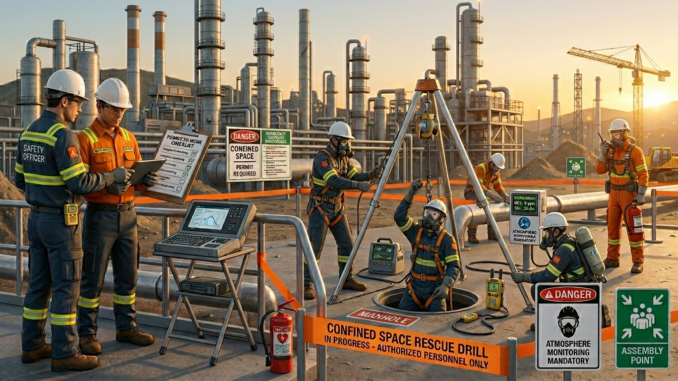
Confined Space Emergency Response is a critical topic in Safety Officer Test Preparation. Volume 2 builds upon foundational knowledge and focuses on advanced emergency response strategies, rescue planning, and real-world confined space hazards.
This content has been carefully generalized for training purposes and does not reference any specific company standards directly. Instead, it reflects widely accepted international EHS practices applicable across major construction and industrial environments.
Under the Safety Officer Test Preparation category, confined space emergency response remains a high-priority topic due to its complexity and high-risk nature. This volume focuses on deeper operational understanding, decision-making skills, and scenario-based responses expected in professional examinations.
Advanced Understanding of Confined Space Risk
Confined spaces present dynamic hazards that can change rapidly. Unlike general work areas, confined environments may deteriorate within seconds due to gas release, oxygen depletion, or equipment failure.
Safety officers must understand that risk in confined space is not static. Continuous monitoring, supervision, and emergency preparedness are essential.
Key Advanced Hazards
- Sudden oxygen displacement
- Toxic gas layering
- Explosion due to vapor accumulation
- Mechanical entrapment
- Engulfment from loose material
- Heat stress and dehydration
A strong exam concept: hazards can change even after initial gas testing.
Emergency Response Planning (Advanced Level)
Emergency response planning must be proactive, structured, and fully documented.
Critical Planning Elements
- Detailed rescue plan before entry
- Identification of rescue methods
- Availability of trained rescue team
- Equipment readiness verification
- Emergency communication protocol
- Coordination with medical facilities
A key exam principle:
No confined space entry should begin without a rescue plan.
Types of Emergency Response Strategies
1. Self-Rescue Strategy
This is the fastest and safest response when conditions allow.
Workers must:
- Recognize alarm signals
- Exit immediately
- Follow designated escape route
2. Non-Entry Rescue Strategy
This is the most preferred rescue method in confined space operations.
Advantages:
- No additional exposure to rescuers
- Faster execution
- Lower risk of multiple casualties
3. Entry Rescue Strategy
This is a high-risk method and requires specialized training.
Requirements include:
- Certified rescue team
- Breathing apparatus (SCBA)
- Continuous atmospheric monitoring
- Backup rescue team
Exam tip: entry rescue should always be the last option.
Roles and Responsibilities in Emergency Response
Safety Officer
- Ensure compliance with procedures
- Verify emergency readiness
- Monitor work conditions
- Stop unsafe operations
Standby Attendant
- Maintain continuous communication
- Monitor entrants
- Do not enter confined space
- Initiate emergency response
Entry Supervisor
- Authorize entry
- Ensure all conditions are safe
- Suspend work if hazards arise
Rescue Team
- Execute rescue operations
- Use proper PPE and equipment
- Coordinate with medical team
Incident Command System (ICS)
An organized command structure is essential during emergencies.
Key Positions
- Incident Commander
- Safety Officer
- Rescue Team Leader
- Communication Coordinator
- Medical Team Leader
The Incident Commander is responsible for overall decision-making and coordination.
Emergency Equipment – Advanced Knowledge
Candidates should be familiar with the function and use of:
Rescue Systems
- Tripod and davit arm systems
- Mechanical winches
- Full body harness
- Lifelines
Breathing Equipment
- SCBA (Self-Contained Breathing Apparatus)
- Escape sets
Monitoring Equipment
- Multi-gas detectors
- Oxygen analyzers
Support Equipment
- Ventilation blowers
- Emergency lighting
- First aid kits
Exam tip: know not only names but also uses of equipment.
Emergency Response Procedure (Step-by-Step)
- Identify emergency situation
- Stop all work immediately
- Raise alarm
- Evacuate personnel
- Assess situation from outside
- Initiate non-entry rescue if possible
- Activate rescue team
- Provide medical support
- Secure area
- Report incident
This sequence is frequently tested in exams.
Advanced Scenario-Based Questions
Scenario 1
A worker collapses inside a confined space and gas detector shows high toxicity.
Correct response:
- Do not enter immediately
- Raise alarm
- Start non-entry rescue
- Call trained rescue team
Scenario 2
Ventilation system fails during work.
Correct response:
- Stop work
- Evacuate workers
- Re-test atmosphere
- Resume only after safe conditions
Scenario 3
Communication lost with entrant.
Correct response:
- Stop work
- Attempt communication backup
- Prepare rescue team
- Do not allow unauthorized entry
Safety Officer Test Questions and Answers
Q1
What is the safest rescue method?
Answer: Non-entry rescue
Q2
Who controls emergency response?
Answer: Incident Commander
Q3
When should work be stopped?
Answer: When unsafe conditions arise
Q4
What is the role of standby attendant?
Answer: Monitor and initiate emergency response
Q5
What is required before entry?
Answer: Permit, gas test, rescue plan
Common Exam Mistakes
- Attempting rescue without planning
- Ignoring communication failure
- Not understanding rescue hierarchy
- Forgetting permit suspension rules
Avoid these mistakes for better results.
Interview Preparation Tips
- Explain answers clearly
- Use practical examples
- Show understanding of safety principles
- Follow logical response sequence
Quick Revision Checklist
- Confined space definition
- Hazard identification
- Rescue methods
- Emergency steps
- Roles and responsibilities
- Equipment knowledge
Conclusion
Confined Space Emergency Response is one of the most critical competencies for Safety Officers in both exams and real-world operations.
Candidates should practice scenario-based questions and focus on practical understanding rather than memorization.
This structured approach will help in clearing exams and performing effectively in real job situations.
- Confined space emergency response requires proper planning before entry.
- Effective confined space emergency response reduces fatal risks.
- Safety officers must understand confined space emergency response procedures.

1 Trackback / Pingback