Table of Contents
ToggleSafety Officer Test Preparation
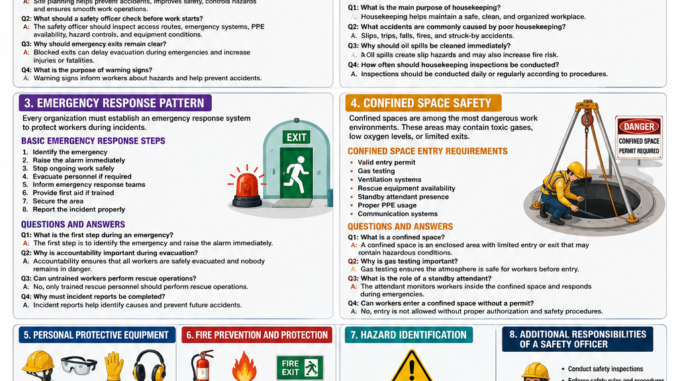
Safety Officer Test Preparation is essential for candidates who want to succeed in workplace safety examinations and improve their understanding of industrial safety procedures. This guide provides detailed preparation material covering site planning, usage housekeeping, confined space safety, emergency response systems, PPE requirements, fire prevention, and hazard identification.
By studying this Safety Officer Test Preparation guide regularly, candidates can improve their confidence, strengthen practical knowledge, and prepare effectively for professional safety officer exams.
The goal is to help you understand emergency response systems, especially in high-risk areas such as confined spaces. You will also learn how organizations expect safety officers to respond during emergencies, manage worksite safety, and maintain proper housekeeping standards.
This preparation material is written for study and practice purposes only. Use this guide to review concepts repeatedly, build confidence through scenario practice, and improve your understanding of site safety procedures.
Safety Officer Test Preparation
Site Planning
Safety Officer Test Preparation Site planning is one of the most important responsibilities of a safety officer. Proper planning helps reduce accidents, improves workflow, and ensures workers can perform their tasks safely.
A well-planned worksite should include:
- Safe access and exit routes
- Emergency assembly points
- Proper storage areas
- Clear traffic management systems
- Fire protection arrangements
- Hazard identification controls
- Safe placement of equipment and materials
Safety officers must inspect the site regularly and ensure that unsafe conditions are corrected immediately.
Important Site Planning Guidelines
Safety Officer Test Preparation
- Keep emergency exits clear at all times
- Separate pedestrian walkways from vehicle routes
- Install warning signs in hazardous areas
- Ensure proper lighting during night work
- Maintain safe distances between equipment and workers
- Verify that scaffolding and ladders are safely installed
Questions and Answers
Q1: Why is site planning important in construction and industrial work?
Answer: Site planning helps prevent accidents, improves safety, controls hazards, and ensures smooth work operations.
Q2: What should a safety officer check before work starts?
Answer: The safety officer should inspect access routes, emergency systems, PPE availability, hazard controls, and equipment conditions.
Q3: Why should emergency exits remain clear?
Answer: Blocked exits can delay evacuation during emergencies and increase injuries or fatalities.
Q4: What is the purpose of warning signs?
Answer: Warning signs inform workers about hazards and help prevent accidents.
Usage Housekeeping
Safety Officer Test Preparation Good housekeeping is essential for maintaining a safe workplace. Poor housekeeping causes slips, trips, falls, fire hazards, and equipment damage.
A clean worksite reflects strong safety management and improves worker efficiency.
Good Housekeeping Practices
- Remove waste materials regularly
- Store tools properly after use
- Clean oil spills immediately
- Keep walkways free from obstruction
- Arrange cables safely
- Dispose of hazardous waste according to procedures
Safety officers should conduct daily housekeeping inspections and encourage workers to maintain cleanliness.
Common Housekeeping Hazards
- Loose materials on walkways
- Improper waste disposal
- Scattered tools
- Slippery floors
- Exposed electrical cables
Questions and Answers
Q1: What is the main purpose of housekeeping?
Answer: Housekeeping helps maintain a safe, clean, and organized workplace.
Q2: What accidents are commonly caused by poor housekeeping?
Answer: Slips, trips, falls, fires, and struck-by accidents.
Q3: Why should oil spills be cleaned immediately?
Answer: Oil spills create slip hazards and may also increase fire risk.
Q4: How often should housekeeping inspections be conducted?
Answer: Inspections should be conducted daily or regularly according to company procedures.
Emergency Response Pattern
Every organization must establish an emergency response system to protect workers during incidents such as fires, gas leaks, confined space emergencies, and medical situations.
Safety officers must understand emergency response procedures thoroughly because they are responsible for guiding workers during emergencies.
Basic Emergency Response Steps
- Identify the emergency
- Raise the alarm immediately
- Stop ongoing work safely
- Evacuate personnel if required
- Inform emergency response teams
- Provide first aid if trained
- Secure the area
- Report the incident properly
Responsibilities of a Safety Officer During Emergencies
- Coordinate evacuation
- Communicate with emergency teams
- Account for workers at assembly points
- Prevent unauthorized entry into dangerous areas
- Assist rescue operations safely
Questions and Answers
Q1: What is the first step during an emergency?
Answer: The first step is to identify the emergency and raise the alarm immediately.
Q2: Why is accountability important during evacuation?
Answer: Accountability ensures that all workers are safely evacuated and nobody remains in danger.
Q3: Can untrained workers perform rescue operations?
Answer: No, only trained rescue personnel should perform rescue operations.
Q4: Why must incident reports be completed?
Answer: Incident reports help identify causes and prevent future accidents.
Confined Space Safety
Safety Officer Test Preparation Confined spaces are among the most dangerous work environments. These areas may contain toxic gases, low oxygen levels, or limited exits.
Examples include:
- Storage tanks
- Manholes
- Pipelines
- Underground vaults
- Silos
Safety officers must ensure that all confined space procedures are followed before workers enter these areas.
Confined Space Entry Requirements
- Valid entry permit
- Gas testing
- Ventilation systems
- Rescue equipment availability
- Standby attendant presence
- Proper PPE usage
- Communication systems
Gas Testing Requirements
Safety Officer Test Preparation Atmospheric testing must be completed before entry.
The atmosphere should be checked for:
- Oxygen levels
- Flammable gases
- Toxic gases
Questions and Answers
Q1: What is a confined space?
Answer: A confined space is an enclosed area with limited entry or exit that may contain hazardous conditions.
Q2: Why is gas testing important?
Answer: Gas testing ensures the atmosphere is safe for workers before entry.
Q3: What is the role of a standby attendant?
Answer: The attendant monitors workers inside the confined space and responds during emergencies.
Q4: Can workers enter a confined space without a permit?
Answer: No, entry is not allowed without proper authorization and safety procedures.
Personal Protective Equipment (PPE)
Safety Officer Test Preparation Personal Protective Equipment protects workers from workplace hazards. Safety officers must ensure workers use correct PPE according to the task.
Common PPE Items
- Safety helmets
- Safety glasses
- Gloves
- Respirators
- Safety shoes
- Hearing protection
- Full body harnesses
PPE Inspection
Workers should inspect PPE before use.
Damaged PPE must:
- Be removed immediately
- Be reported to supervisors
- Be replaced before work continues
Questions and Answers
Q1: Why is PPE important?
Answer: PPE protects workers from injuries and hazardous exposures.
Q2: When should PPE be inspected?
Answer: PPE should be inspected before every use.
Q3: What should workers do if PPE is damaged?
Answer: They should stop using it and replace it immediately.
Q4: Which PPE is used for fall protection?
Answer: A full body harness is commonly used for fall protection.
Fire Prevention and Protection
Fire safety is a critical responsibility for every safety officer. Fires can cause serious injuries, equipment damage, and operational shutdowns.
Common Causes of Workplace Fires
- Electrical faults
- Flammable liquids
- Smoking in restricted areas
- Hot work activities
- Poor housekeeping
Fire Prevention Measures
- Maintain fire extinguishers
- Store flammable materials safely
- Conduct fire drills regularly
- Keep escape routes clear
- Inspect electrical systems
Types of Fire Extinguishers
- Water extinguisher
- Foam extinguisher
- CO2 extinguisher
- Dry chemical extinguisher
Questions and Answers
Q1: What should workers do after hearing a fire alarm?
Answer: Workers should stop work and proceed to the assembly point safely.
Q2: Why are fire drills important?
Answer: Fire drills prepare workers for emergency evacuation procedures.
Q3: Which extinguisher is commonly used for electrical fires?
Answer: CO2 extinguishers are commonly used for electrical fires.
Q4: Why should flammable materials be stored properly?
Answer: Proper storage reduces fire and explosion risks.
Hazard Identification
Hazard identification is one of the main duties of a safety officer. Hazards must be identified before work begins.
Types of Workplace Hazards
- Physical hazards
- Chemical hazards
- Electrical hazards
- Biological hazards
- Ergonomic hazards
Hazard Control Methods
- Elimination
- Substitution
- Engineering controls
- Administrative controls
- PPE
Questions and Answers
Q1: What is hazard identification?
Answer: Hazard identification is the process of finding and evaluating workplace dangers.
Q2: What is the best hazard control method?
Answer: Elimination is the most effective control method.
Q3: Why are risk assessments important?
Answer: Risk assessments help prevent accidents and injuries.
Q4: What is an ergonomic hazard?
Answer: An ergonomic hazard involves poor body positioning or repetitive movements that may cause injury.
Scenario Practice for Safety Officer Test
Scenario 1
A worker enters a confined space without authorization.
What should the safety officer do?
Answer:
The safety officer should stop the work immediately, remove the worker safely, investigate the violation, and ensure proper permit procedures are followed.
Scenario 2
A fire starts near stored flammable materials.
What should the safety officer do first?
Answer:
Raise the alarm, initiate evacuation, and contact emergency response personnel immediately.
Scenario 3
Workers are not wearing proper PPE during grinding work.
What should the safety officer do?
Answer:
Stop the task, instruct workers to wear proper PPE, and ensure compliance before restarting work.
Final Preparation Tips
To prepare effectively for a Safety Officer Test:
- Study safety procedures daily
- Practice questions repeatedly
- Understand emergency response systems
- Learn confined space requirements carefully
- Improve hazard identification skills
- Practice workplace scenarios
- Review housekeeping standards regularly
Confidence develops through continuous practice and understanding. Safety officers must not only memorize answers but also understand how to apply safety procedures in real situations.
This guide is intended to help candidates build strong knowledge, improve workplace awareness, and prepare confidently for professional safety officer examinations.
References and Last Reviewed
- OSHA 29 CFR 1926 Subpart C – General Safety and Health Provisions: osha.gov/1926SubpartC
Jurisdiction: United States – OSHA construction industry standards (29 CFR 1926). Verify local/site-specific requirements where this differs from your jurisdiction.
Last technically reviewed: September 2026
Reviewed by: EHS Guidelines Editorial Team
This article is educational. Apply current official rules, approved site procedures, manufacturer instructions and competent-person assessment for your actual worksite.

2 Trackbacks / Pingbacks