Safety Officer Test Preparation
Introduction
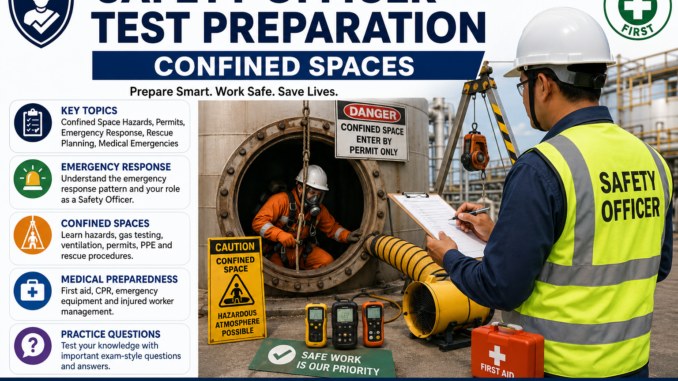
Safety Officer Test Preparation is essential for candidates who want to work in industrial projects, construction environments, and operational facilities. This guide is designed as a structured preparation resource for individuals preparing for a Safety Officer test in a company or organizational environment.
Many organizations evaluate candidates through written exams and interviews that focus on confined spaces, emergency response systems, medical preparedness, hazard identification, and workplace safety responsibilities. This Safety Officer Test Preparation guide explains what to expect during the examination and how to improve confidence through repeated practice and real workplace scenarios.
The purpose of this material is to help candidates understand confined space safety procedures, emergency response patterns, and rescue planning without referencing specific company systems or copyrighted operational standards. The information is presented in a generalized professional format suitable for training and exam preparation.
Use this Safety Officer Test Preparation guide regularly, review the questions repeatedly, and practice different scenarios to improve understanding and confidence.
Why Confined Spaces Are Important in Safety Officer Test Preparation
Confined spaces are considered one of the most dangerous work environments in industrial operations. Because of the high risk involved, confined space topics appear frequently in Safety Officer Test Preparation examinations.
A confined space is an area that:
- Has limited entry and exit
- Is not designed for continuous occupancy
- May contain hazardous atmospheres
- Can create rescue difficulties during emergencies
Examples include:
- Storage tanks
- Pipelines
- Sewers
- Vessels
- Underground chambers
- Silos
Safety Officers must understand how to identify hazards and protect workers inside these locations.
Common Confined Space Hazards
Oxygen Deficiency
Oxygen deficiency is one of the most dangerous confined space hazards. Low oxygen levels can cause:
- Dizziness
- Fatigue
- Unconsciousness
- Death
Normal oxygen levels should remain around 20.9%.
Safety Officer Test Preparation Question
Q: What is the acceptable oxygen percentage before confined space entry?
Answer: Approximately 20.9%.
Toxic Gas Exposure
Confined spaces may contain dangerous gases such as:
- Hydrogen sulfide
- Carbon monoxide
- Methane
These gases can be deadly even at low concentrations.
Safety Officer Test Preparation Question
Q: Why is gas testing important before entry?
Answer: Gas testing identifies toxic gases, oxygen deficiency, and flammable atmospheres before workers enter the confined space.
Flammable Atmospheres
Flammable gases and vapors can cause explosions if ignition sources are present.
Possible ignition sources include:
- Welding sparks
- Electrical equipment
- Static electricity
Safety Officer Test Preparation Question
Q: What should be controlled before hot work inside confined spaces?
Answer: Gas levels, ventilation, permits, and ignition sources.
Emergency Response Pattern in Organizations
Understanding emergency response procedures is an important part of Safety Officer Test Preparation.
Most organizations follow a structured emergency response pattern during workplace incidents.
Step 1 – Incident Identification
The emergency may be identified through:
- Worker communication
- Alarm systems
- Gas detectors
- Supervisors
- CCTV monitoring
Step 2 – Emergency Notification
The Safety Officer must immediately notify:
- Supervisors
- Rescue teams
- Medical personnel
- Emergency coordinators
Communication systems may include radios, alarms, and emergency phones.
Step 3 – Area Isolation
Hazardous areas should be isolated to prevent additional injuries.
Isolation methods include:
- Barricading
- Equipment shutdown
- Vehicle restrictions
- Lockout procedures
Step 4 – Rescue Operations
Only trained rescue personnel should enter confined spaces during emergencies.
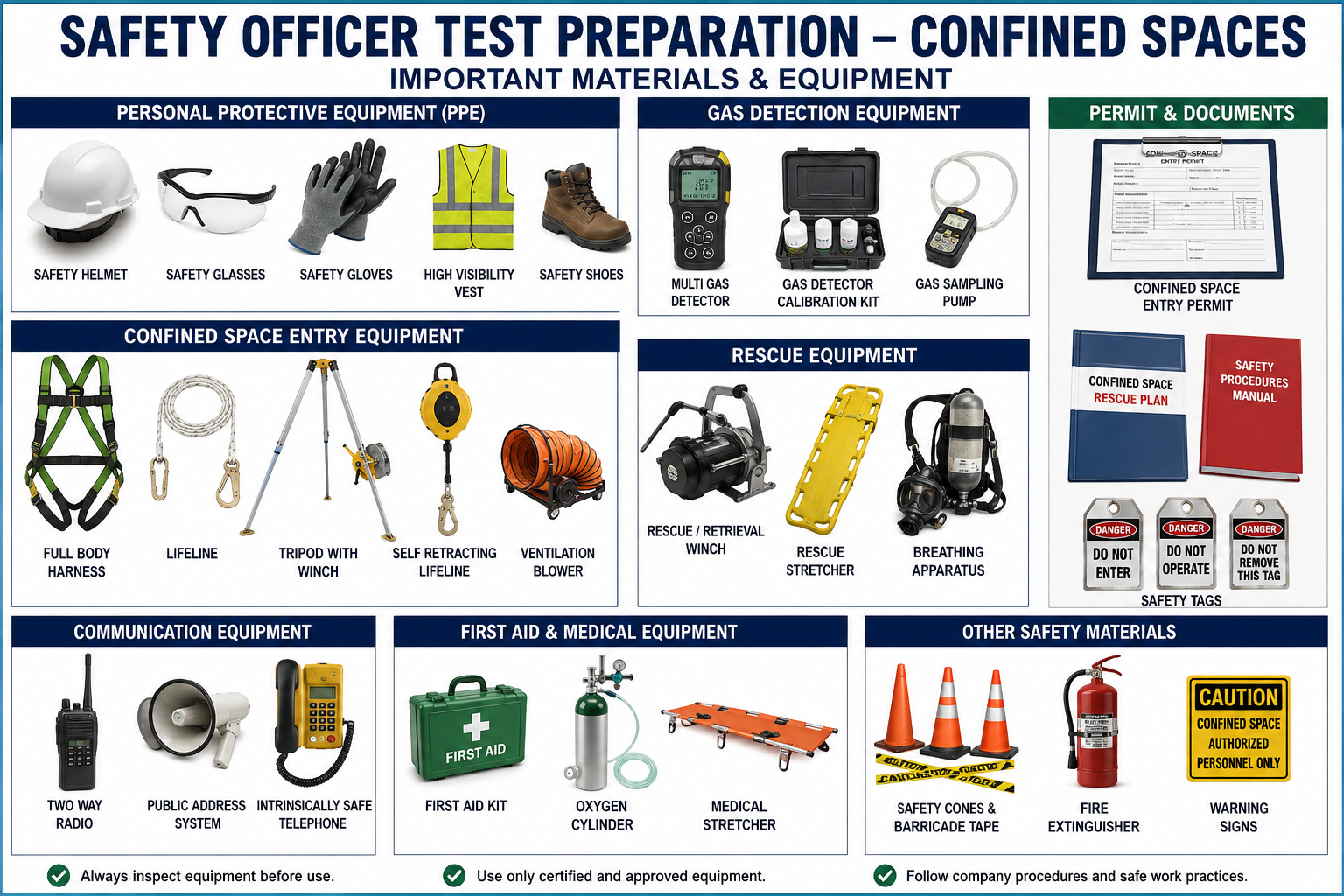
Proper rescue equipment includes:
- Harnesses
- Retrieval systems
- Gas detectors
- Breathing apparatus
- Communication equipment
Step 5 – Investigation and Reporting
After the emergency, organizations conduct investigations to determine:
- Root causes
- Unsafe acts
- Unsafe conditions
- Corrective actions
Permit Requirements for Confined Spaces
Permit systems are a major topic in Safety Officer Test Preparation exams.
Before confined space work begins, organizations generally require:
- Entry permits
- Gas testing records
- Rescue plans
- Worker authorization
- Communication systems
- PPE verification
The Safety Officer must verify that all permit conditions are completed before entry approval.
Responsibilities of a Safety Officer in Confined Spaces
A Safety Officer has several responsibilities before, during, and after confined space work.
Before Entry
The Safety Officer should:
- Review permits
- Verify gas testing
- Check PPE
- Confirm rescue readiness
- Inspect ventilation systems
During Entry
The Safety Officer should monitor:
- Worker behavior
- Gas readings
- Communication systems
- Ventilation performance
- Permit compliance
After Work Completion
The Safety Officer should:
- Close permits
- Inspect the area
- Remove barricades safely
- Prepare reports if necessary
Medical Emergency Preparedness
Medical preparedness is another important section in Safety Officer Test Preparation.
Industrial sites should maintain:
- First aid kits
- Stretchers
- Oxygen cylinders
- Emergency showers
- Eye wash stations
Only trained personnel should provide medical treatment during emergencies.
Scenario-Based Safety Officer Test Preparation
Scenario practice helps candidates improve decision-making skills during emergencies.
Scenario 1 – Worker Collapse Inside a Tank
A worker becomes unconscious during tank cleaning activities.
Correct Response
- Stop all work immediately
- Inform rescue teams
- Conduct atmospheric testing
- Use retrieval equipment
- Arrange medical support
Incorrect Response
- Entering without authorization
- Ignoring gas testing
- Delaying emergency communication
Scenario 2 – Toxic Gas Alarm Activation
Gas detectors activate alarms during confined space entry.
Correct Response
- Evacuate workers immediately
- Stop all activities
- Recheck atmospheric conditions
- Inform supervisors
- Investigate the source
Safety Officer Test Preparation Question
Q: What should workers do when gas alarms activate?
Answer: Evacuate immediately and follow emergency procedures.
Scenario 3 – Heat Stress Inside a Confined Space
A worker experiences dizziness and weakness during high-temperature work.
Correct Response
- Move the worker to a cool area
- Provide water if conscious
- Contact medical support
- Reduce heat exposure
- Monitor worker condition
Personal Protective Equipment for Confined Spaces
PPE requirements commonly include:
- Hard hats
- Safety glasses
- Gloves
- Respirators
- Safety harnesses
- Protective clothing
Safety Officer Test Preparation Question
Q: Why are safety harnesses important in confined spaces?
Answer: They assist rescue teams during emergency retrieval operations.
Top Safety Officer Test Preparation Questions and Answers
Q1: What is a confined space?
Answer: A space with limited entry and exit that is not designed for continuous occupancy.
Q2: What is the purpose of gas testing?
Answer: To identify oxygen levels, toxic gases, and flammable atmospheres.
Q3: Why are standby attendants required?
Answer: To monitor workers and activate emergency response if needed.
Q4: What is the first step during an emergency?
Answer: Assess the situation and identify hazards.
Q5: Why are permits important?
Answer: They ensure safety requirements are completed before work begins.
Q6: What causes oxygen deficiency?
Answer: Chemical reactions, rusting, gas displacement, and poor ventilation.
Q7: What equipment is commonly used during confined space rescue?
Answer: Harnesses, retrieval systems, gas detectors, and breathing apparatus.
Q8: Why should unauthorized rescue attempts be avoided?
Answer: Untrained rescue attempts can create additional fatalities.
Best Tips for Passing a Safety Officer Test
Study Daily
Review confined space topics regularly.
Understand Real Workplace Scenarios
Most examinations focus on practical situations.
Learn Emergency Response Procedures
Understand:
- Rescue planning
- Gas testing
- Medical emergencies
- Hazard identification
Practice Questions Repeatedly
Repeated revision improves memory and confidence.
Improve Communication Skills
Safety Officers must communicate clearly during emergencies.
Conclusion
Safety Officer Test Preparation for confined spaces requires strong understanding of hazard identification, emergency response systems, gas testing, rescue planning, and workplace medical preparedness.
Organizations expect Safety Officers to manage emergencies professionally, protect workers, and follow safe operating procedures in high-risk environments. Candidates preparing for examinations should focus on practical learning, repeated question practice, and scenario-based preparation.
This Safety Officer Test Preparation guide can be used as a structured study resource to improve knowledge and confidence before appearing in workplace safety examinations.
References and Last Reviewed
- OSHA 29 CFR 1926 Subpart AA – Confined Spaces in Construction: osha.gov/1926SubpartAA
Jurisdiction: United States – OSHA construction industry standards (29 CFR 1926). Verify local/site-specific requirements where this differs from your jurisdiction.
Last technically reviewed: September 2026
Reviewed by: EHS Guidelines Editorial Team
This article is educational. Apply current official rules, approved site procedures, manufacturer instructions and competent-person assessment for your actual worksite.


2 Trackbacks / Pingbacks