Introduction
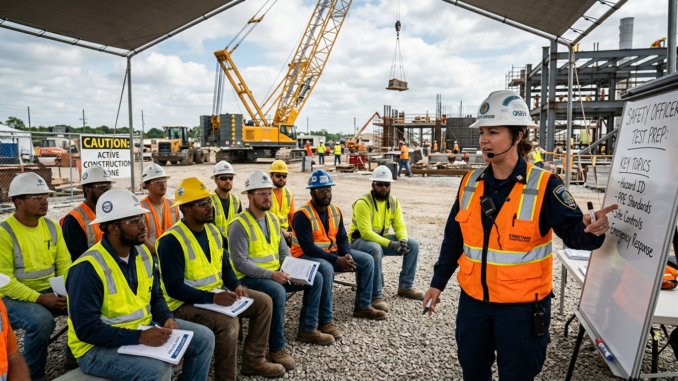
Safety Officer Test Preparation is essential for candidates preparing for safety exams in a company or organizational environment. Since many industrial safety exams are based on real-world procedures, this material focuses on practical understanding rather than memorization.
The goal of this Safety Officer Test Preparation guide is to help you understand emergency response systems, especially in high-risk areas such as confined spaces. You will also learn how organizations expect safety officers to respond during emergencies and manage contractor personnel effectively.
Contractor Personnel Safety Responsibilities in Safety Officer Test Preparation
In any company or organization, contractor personnel play a critical role in maintaining a safe work environment. Safety officers must ensure that all workers understand and follow safety procedures as part of their Safety Officer Test Preparation.
Key Responsibilities:
- Follow all company safety policies and procedures
- Attend safety inductions and toolbox talks
- Use proper Personal Protective Equipment (PPE)
- Report unsafe conditions immediately
- Stop work if a hazardous situation arises
- Follow permit-to-work systems
- Participate in emergency drills
Contractors must also understand that safety is a shared responsibility. A safety officer ensures compliance, but each worker must actively contribute to maintaining a safe workplace.
Practice Questions & Answers
Q1: What is the primary responsibility of contractor personnel regarding safety?
A: To follow company safety procedures and report any unsafe conditions.
Q2: When should a worker stop work?
A: When they identify a hazardous or unsafe situation.
Q3: Why is PPE important?
A: It protects workers from potential hazards and reduces injury risks.
Emergency Response System for Safety Officer Test Preparation
Every organization has a structured emergency response system. Understanding this is a key part of Safety Officer Test Preparation.
Key Elements of Emergency Response:
- Emergency alarm systems
- Communication channels
- Emergency response teams
- Evacuation procedures
- Assembly points
- Incident command structure
The response system is designed to minimize damage, protect lives, and restore normal operations quickly.
Emergency Roles
- Incident Commander: Leads the emergency response
- Fire Team: Handles fire-related incidents
- Rescue Team: Assists injured or trapped workers
- Medical Team: Provides first aid and medical support
Practice Questions & Answers
Q1: What is the purpose of an emergency response system?
A: To manage emergencies effectively and protect people and property.
Q2: Who leads the emergency response?
A: The Incident Commander.
Q3: What should workers do when they hear an alarm?
A: Stop work immediately and follow evacuation procedures.
Emergency Response Pattern in Safety Officer Test Preparation
Organizations follow structured steps during emergencies. This topic is very important in Safety Officer Test Preparation exams.
Typical Emergency Response Pattern:
- Detection of Hazard
- Raise Alarm
- Notify Emergency Team
- Evacuate Area
- Emergency Response Action
- Medical Assistance
- Incident Control and Recovery
Each step must be executed quickly and efficiently to reduce risks.
Practice Questions & Answers
Q1: What is the first step in an emergency?
A: Detection of the hazard.
Q2: Why is evacuation important?
A: To move people away from danger.
Q3: What happens after emergency control?
A: Recovery and investigation.
Confined Space Safety in Safety Officer Test Preparation
Confined space safety is one of the most critical topics in Safety Officer Test Preparation.
Examples of Confined Spaces:
- Tanks
- Vessels
- Silos
- Pipelines
- Manholes
Hazards in Confined Spaces:
- Oxygen deficiency
- Toxic gases
- Flammable atmospheres
- Limited entry/exit
- Engulfment risks
Safety Requirements:
- Confined space entry permit
- Gas testing before entry
- Continuous monitoring
- Standby attendant outside
- Rescue plan in place
- Proper ventilation
Practice Questions & Answers
Q1: What is a confined space?
A: An enclosed area with limited entry and exit, not designed for continuous occupancy.
Q2: Why is gas testing required?
A: To detect hazardous atmospheres before entry.
Q3: Who stays outside during confined space work?
A: The standby attendant.
Permit-to-Work System in Safety Officer Test Preparation
Permit systems are frequently asked topics in Safety Officer Test Preparation tests.
Types of Permits:
- Hot Work Permit
- Cold Work Permit
- Confined Space Entry Permit
- Electrical Work Permit
- Excavation Permit
Purpose of Permit System:
- Identify hazards
- Ensure safety precautions
- Authorize work safely
- Prevent accidents
Practice Questions & Answers
Q1: What is a permit-to-work system?
A: A formal safety procedure to control hazardous work.
Q2: Name one type of permit.
A: Hot Work Permit.
Q3: Who issues the permit?
A: Authorized personnel.
Hazard Identification and Risk Assessment for Safety Officer Test Preparation
Hazard identification is a core concept in Safety Officer Test Preparation.
Steps in Risk Assessment:
- Identify hazards
- Determine who may be harmed
- Evaluate risks
- Implement control measures
- Review regularly
Control Measures:
- Elimination
- Substitution
- Engineering controls
- Administrative controls
- PPE
Practice Questions & Answers
Q1: What is hazard identification?
A: The process of finding potential dangers.
Q2: What is the first step in risk assessment?
A: Identify hazards.
Q3: What is the last control method?
A: PPE.
Fire Safety
Fire is a major hazard in industrial environments. Safety officers must be prepared to prevent and respond to fires.
Fire Triangle:
- Heat
- Fuel
- Oxygen
Removing any one of these elements will stop a fire.
Fire Prevention Tips:
- Proper storage of flammable materials
- Regular inspection of equipment
- Good housekeeping
- Fire extinguishers available
Practice Questions & Answers
Q1: What are the three elements of fire?
A: Heat, fuel, oxygen.
Q2: How can fire be prevented?
A: By controlling ignition sources and flammable materials.
Q3: What should you do in case of fire?
A: Raise alarm and follow emergency procedures.
Personal Protective Equipment (PPE) in Safety Officer Test Preparation
Understanding PPE is a basic requirement in Safety Officer Test Preparation.
Types of PPE:
- Helmet
- Safety shoes
- Gloves
- Goggles
- Respirators
- Ear protection
Importance of PPE:
- Protects workers
- Reduces injuries
- Ensures compliance
Practice Questions & Answers
Q1: What is PPE?
A: Equipment used to protect workers from hazards.
Q2: Is PPE the first control method?
A: No, it is the last.
Q3: Name one PPE item.
A: Helmet.
Test Preparation Tips
To succeed in a Safety Officer Test, follow these strategies:
- Study safety procedures thoroughly
- Understand real-life scenarios
- Practice questions regularly
- Focus on high-risk areas like confined spaces
- Learn emergency response steps
- Stay calm and confident during the test
Conclusion
This Safety Officer Test Preparation guide provides a structured approach to passing your exam successfully.
Review the questions repeatedly, practice different scenarios, and strengthen your understanding of workplace safety. With consistent effort and proper preparation, you can confidently pass your test and perform effectively as a safety officer.
References and Last Reviewed
- OSHA 29 CFR 1926 Subpart C – General Safety and Health Provisions: osha.gov/1926SubpartC
Jurisdiction: United States – OSHA construction industry standards (29 CFR 1926). Verify local/site-specific requirements where this differs from your jurisdiction.
Last technically reviewed: September 2026
Reviewed by: EHS Guidelines Editorial Team
This article is educational. Apply current official rules, approved site procedures, manufacturer instructions and competent-person assessment for your actual worksite.

Be the first to comment