Purpose
Synthetic Webbed Slings Safety Officer Test Preparation is an essential topic for candidates preparing for Safety Officer examinations in construction projects, industrial plants, warehouses, manufacturing facilities, and maintenance operations. Synthetic webbed slings are widely used because they are lightweight, flexible, easy to handle, and less likely to damage delicate loads. However, improper selection, poor inspection, overloading, or incorrect lifting techniques can result in serious accidents, dropped loads, equipment damage, and severe injuries.
Every Safety Officer is responsible for ensuring that lifting accessories are inspected before use, workers follow approved lifting procedures, and defective slings are immediately removed from service. Understanding the inspection process, rejection criteria, safe lifting practices, and emergency response procedures is essential not only for passing the Safety Officer Test but also for maintaining a safe workplace.
This guide explains the basic principles of synthetic webbed sling safety, inspection requirements, hazard identification, and practical workplace applications. It also includes scenario-based questions that help candidates develop practical decision-making skills for real lifting operations.
Learning Objectives
After completing this Synthetic Webbed Slings Safety Officer Test Preparation guide, candidates should be able to:
- Understand the purpose of synthetic webbed slings.
- Identify different types of synthetic webbed slings.
- Perform pre-use inspections.
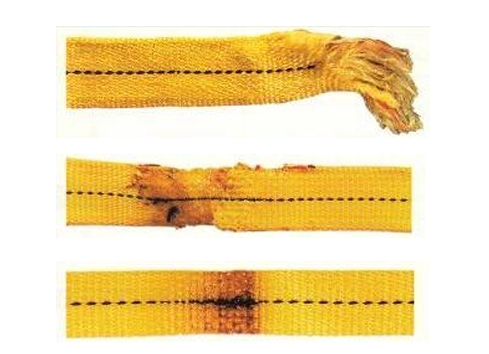
- Recognize damaged or defective slings.
- Understand safe lifting practices.
- Identify workplace hazards during lifting operations.
- Explain the responsibilities of a Safety Officer.
- Respond appropriately to lifting emergencies.
- Answer practical and scenario-based examination questions confidently.
What Are Synthetic Webbed Slings?
Synthetic webbed slings are lifting accessories manufactured from high-strength synthetic fibers such as polyester or nylon. They are designed to lift loads safely without causing damage to painted, polished, or delicate surfaces. Their flexibility allows them to wrap around loads easily, making them suitable for many industrial lifting operations.
Unlike wire rope or chain slings, synthetic webbed slings are lightweight, corrosion-resistant, and easy to store. However, they are more vulnerable to cuts, abrasion, chemical damage, excessive heat, and ultraviolet (UV) exposure. Therefore, regular inspection and proper handling are essential.
Applications of Synthetic Webbed Slings
Synthetic webbed slings are commonly used for:
- Construction lifting operations
- Equipment installation
- Warehouse material handling
- Steel fabrication work
- Machinery relocation
- Mechanical maintenance activities
- Loading and unloading materials
- Lifting painted or finished equipment
- Industrial shutdown projects
Before every lifting operation, the correct sling type and capacity must be selected according to the weight and shape of the load.
Types of Synthetic Webbed Slings
Flat Web Slings
Flat web slings are commonly used for general lifting operations. They provide excellent load support and distribute pressure evenly across the load surface.
Common Uses
- Machinery
- Steel components
- Pipes
- Fabricated structures
- Equipment crates
Endless Web Slings
Endless web slings form a continuous loop without fixed lifting eyes. Their design allows wear to be distributed around the entire sling, increasing service life when rotated regularly.
Advantages
- Flexible positioning
- Longer service life
- Multiple hitch configurations
- Better load balance
Inspection Requirements
One of the most important responsibilities of a Safety Officer is ensuring that all lifting accessories are inspected before every use.
A visual inspection should be carried out by a competent person before each lifting operation. The inspection helps identify defects that may cause sling failure during lifting.
The following items should always be checked:
- Identification tag is attached and readable.
- Rated lifting capacity is clearly marked.
- No cuts or tears.
- No punctures.
- No broken stitching.
- No excessive abrasion.
- No melted fibers.
- No chemical burns.
- No heat damage.
- End fittings are secure.
- No deformation of hardware.
- Sling is clean and dry.
Any defective sling should be removed from service immediately.
Common Hazards
Several hazards are associated with synthetic webbed slings.
Chemical Damage
Exposure to acids, alkalis, solvents, or industrial chemicals weakens synthetic fibers and significantly reduces lifting capacity.
Workers should never use a sling that has been exposed to unknown chemicals.
Heat Damage
Synthetic materials lose strength when exposed to excessive heat.
Never use synthetic webbed slings near:
- Welding operations
- Cutting activities
- Open flames
- Hot metal surfaces
- Steam lines
Cuts and Abrasion
Sharp edges are one of the leading causes of sling failure.
Whenever sharp edges cannot be avoided, suitable edge protection must be installed between the sling and the load.
Overloading
Every sling has a Working Load Limit (WLL).
Exceeding this limit may cause immediate sling failure.
Always verify:
- Actual load weight
- Sling capacity
- Hitch type
- Sling angle
before beginning the lift.
Safe Lifting Practices
Every lifting operation should follow safe work procedures.
Safety Officers should ensure that:
- Workers inspect slings before use.
- Only approved lifting accessories are used.
- Loads are balanced properly.
- Correct hitch methods are selected.
- Tag lines are used when necessary.
- Personnel remain outside the lifting zone.
- Crane operators maintain smooth lifting movements.
- No one stands beneath suspended loads.
Safe lifting depends on planning, communication, and continuous supervision.
Responsibilities of the Safety Officer
During lifting operations, the Safety Officer should:
- Verify lifting plans.
- Inspect synthetic webbed slings before use.
- Confirm workers are trained.
- Check lifting equipment certification.
- Ensure exclusion zones are established.
- Stop unsafe lifting operations immediately.
- Monitor weather conditions when working outdoors.
- Verify emergency response arrangements.
- Record defective equipment and remove it from service.
A proactive Safety Officer helps prevent incidents before they occur.
Conclusion
Synthetic Webbed Slings Safety is one of the most important subjects in Safety Officer Test Preparation because safe lifting operations depend on the proper selection, inspection, and use of lifting equipment. A Safety Officer must be able to identify damaged slings, verify their working load limits, ensure workers follow approved lifting procedures, and stop unsafe operations immediately. Regular inspections, proper storage, protection from sharp edges, chemicals, and excessive heat significantly reduce the risk of lifting accidents. By understanding the principles covered in this guide and practicing the scenario-based questions regularly, candidates can build the knowledge and confidence required to perform safely in the workplace and succeed in the Safety Officer Test.
Be the first to comment