Introduction
Diving operations are among the most specialized and high-risk activities performed in industrial facilities, offshore projects, ports, marine construction, underwater inspection, maintenance work, and infrastructure development. These operations expose workers to hazards that are rarely encountered in normal construction activities, including increased water pressure, drowning, decompression sickness, underwater entanglement, limited visibility, equipment malfunction, and communication failure.
A Safety Officer plays a vital role in ensuring that diving activities are carried out safely by identifying hazards, implementing preventive measures, verifying equipment readiness, and ensuring compliance with company procedures and applicable industry standards. Proper planning, effective communication, and emergency preparedness are essential before any dive begins.
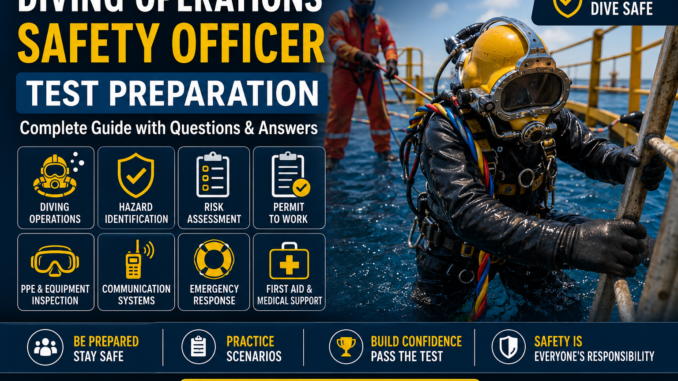
This Diving Operations Safety Officer Test Preparation guide is designed to help candidates understand the key concepts commonly covered in Safety Officer examinations. Rather than memorizing answers, candidates should focus on understanding the principles of safe diving operations, recognizing workplace hazards, and applying appropriate control measures during real-life situations.
Diving Operations Safety Officer Test Preparation Purpose
The Diving Operations Safety Officer Test Preparation guide helps candidates understand workplace hazards, emergency response procedures, risk assessment, permit-to-work requirements, and safe diving practices. It is designed to improve practical knowledge and examination confidence.
Candidates should review each section carefully, practice the scenario-based questions, and develop confidence in making safe decisions during diving-related activities.
What Are Diving Operations?
This Diving Operations Safety Officer Test Preparation guide explains real workplace scenarios, safety responsibilities, and industry best practices. Candidates can strengthen their understanding by reviewing each topic and practicing the included questions regularly.
Unlike recreational diving, industrial diving is conducted under strict supervision using approved procedures, qualified personnel, and emergency response plans. Every dive must be carefully planned to minimize risks and protect everyone involved.
Before diving begins, the organization must ensure that all personnel understand the work scope, hazards, emergency procedures, communication methods, and environmental conditions.
Role of a Safety Officer During Diving Operations
Diving Operations Safety Officer Test Preparation The Safety Officer is responsible for monitoring safety throughout the entire diving operation. Their duties include verifying that all required permits have been approved, ensuring risk assessments are completed, inspecting work areas, confirming emergency arrangements, and monitoring compliance with company safety procedures.
A Safety Officer should also verify that:
- Qualified and medically fit divers are assigned to the task.
- Diving equipment has been inspected before use.
- Emergency rescue equipment is available.
- Weather and water conditions are suitable.
- Communication systems are functioning properly.
- First aid and emergency medical support are available.
- Unauthorized personnel remain outside restricted areas.
- Review the Diving Operations Safety Officer Test Preparation guide before every study session.
- Practice hazard identification.
- Learn emergency response procedures.
- Understand permit-to-work requirements.
- Review communication procedures.
- Practice scenario-based questions.
The Safety Officer must continuously monitor the work and stop operations immediately if unsafe conditions develop.
Responsibilities of the Diving Team
Diving Operations Safety Officer Test Preparation Safe diving operations require teamwork. Every member has clearly defined responsibilities.
Diving Supervisor
The Diving Supervisor has overall responsibility for planning, coordinating, and supervising the diving operation. No dive should begin without the supervisor’s approval.
Diver
The diver performs assigned underwater tasks while following approved procedures and maintaining communication with the surface team.
Standby Diver
A standby diver must remain fully equipped and ready to enter the water immediately in case of an emergency involving the working diver.
Tender or Surface Support Personnel
Surface personnel assist divers by managing umbilical lines, monitoring communication systems, handling equipment, and supporting emergency response if required.
Safety Officer
The Safety Officer independently monitors compliance with safety requirements and identifies hazards before they lead to incidents.
Hazards Associated with Diving Operations
Diving Operations Safety Officer Test Preparation Diving operations involve multiple hazards that require careful planning and control.
Drowning
Equipment failure, unconsciousness, panic, or entanglement can result in drowning if immediate rescue is not available.
Decompression Sickness
Ascending too quickly may allow dissolved gases to form bubbles inside the body, causing severe pain, paralysis, or even death. Divers must always follow approved decompression procedures.
Barotrauma
Pressure changes may damage the ears, lungs, sinuses, or other body tissues if pressure equalization is not maintained.
Limited Visibility
Poor underwater visibility increases the possibility of collisions, entanglement, and navigation errors.
Strong Water Currents
Currents may pull divers away from the work area or make underwater tasks extremely difficult.
Entanglement
Divers may become trapped in ropes, cables, fishing nets, underwater structures, or debris.
Equipment Failure
Malfunction of breathing systems, communication equipment, or air supply systems can rapidly become life-threatening.
Marine Life
Certain aquatic animals may present hazards through bites, stings, or defensive behavior.
Cold Water Exposure
Extended exposure to cold water may cause hypothermia, reducing physical and mental performance.
Risk Assessment Before Diving
Every Diving Operations Safety Officer Test Preparation program should emphasize hazard identification and effective risk control before diving activities begin.
The assessment should identify:
- Scope of work
- Water depth
- Current strength
- Visibility
- Weather conditions
- Water temperature
- Underwater obstructions
- Marine traffic
- Electrical hazards
- Contaminated water
- Emergency rescue arrangements
After hazards are identified, suitable control measures should be implemented before work starts.
The Safety Officer should verify that all identified risks have been addressed and communicated during the pre-job briefing.
Permit to Work Requirements
Understanding PPE requirements is an important part of Diving Operations Safety Officer Test Preparation because proper equipment protects divers from workplace hazards.
The permit confirms that:
- Hazards have been identified.
- Required precautions are in place.
- Work boundaries are established.
- Emergency plans are available.
- Responsible persons have approved the work.
If work conditions change significantly, the permit should be reviewed and revalidated before operations continue.
Personal Protective Equipment (PPE)
Divers require specialized protective equipment appropriate for the work being performed.
Typical diving PPE may include:
- Diving helmet or full-face mask
- Diving suit
- Gloves
- Boots
- Buoyancy control equipment
- Breathing apparatus
- Weight system
- Communication equipment
- Personal flotation devices where applicable
Surface personnel should also wear appropriate PPE such as hard hats, safety footwear, gloves, eye protection, and life jackets when working near water.
The Safety Officer should ensure that all PPE is inspected before use and maintained according to manufacturer recommendations.
Diving Equipment Inspection
Before every dive, all equipment should undergo a comprehensive inspection.
Items commonly inspected include:
- Air supply systems
- Compressors
- Cylinders
- Regulators
- Umbilical hoses
- Communication systems
- Emergency breathing equipment
- Lifting equipment
- Winches
- Harnesses
- Rescue equipment
Defective equipment should never be used and must be removed from service immediately until repaired or replaced.
Communication During Diving Operations
Reliable communication between the diver and the surface team is essential for safe operations.
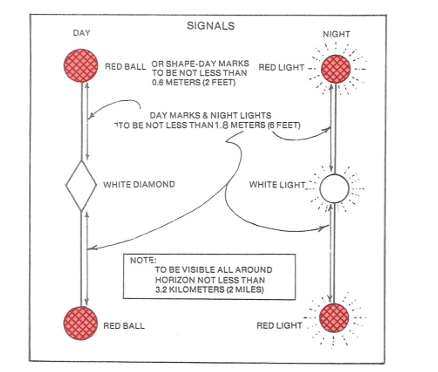
Communication systems should be tested before entering the water and continuously monitored throughout the dive. Standard communication signals should be understood by all team members.
If communication is lost, work should stop immediately, and emergency procedures should be followed according to company requirements.
Be the first to comment