Safety Officer Test Preparation
Introduction
Excavation refers to removing soil, rock, or earth to create trenches, pits, foundations, or underground work areas. Shoring is a protective support system used to prevent trench or excavation collapse.
Excavation and Shoring operations are considered high-risk activities because workers may become trapped or injured if proper precautions are not followed.
What is Excavation and Shoring?
Excavation refers to removing soil, rock, or earth to create trenches, pits, foundations, or underground work areas. Shoring is a protective support system used to prevent trench or excavation collapse.
Purpose of Excavation and Shoring Safety
The purpose of Excavation and Shoring safety procedures is to:
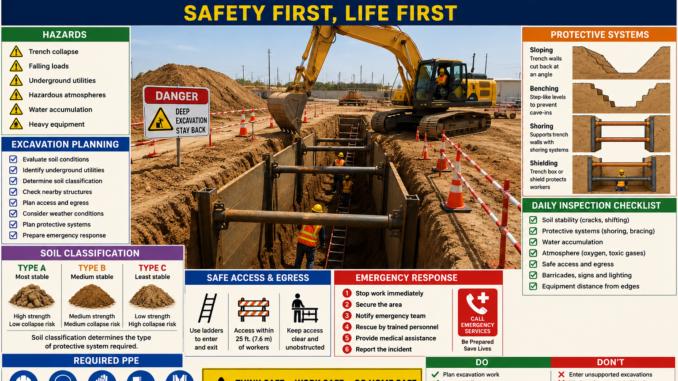
- Prevent trench collapse
- Protect workers from falling soil
- Control underground hazards
- Prevent utility damage
- Maintain safe access and egress
- Ensure emergency readiness
Common Excavation Hazards
Trench Collapse
Soil collapse is one of the most dangerous excavation hazards.
Underground Utilities
Excavation work may damage:
- Electric cables
- Gas pipelines
- Water lines
- Communication cables
Falling Loads
Heavy equipment and materials near trench edges may fall into excavations.
Hazardous Atmospheres
Confined excavations may contain:
- Low oxygen levels
- Toxic gases
- Flammable vapors
Water Accumulation
Water inside excavations weakens soil stability and increases collapse risks.
Excavation Planning Requirements
Proper planning is essential before excavation work begins.
Excavation Competent Person
A trained competent person must evaluate:
- Soil conditions
- Excavation depth
- Nearby structures
- Underground utilities
- Traffic conditions
- Weather impacts
Soil Classification
Soil classification determines the type of protective system required.
Stable Rock
Strong natural rock formations.
Type A Soil
Most stable soil with high strength.
Type B Soil
Medium stability soil.
Type C Soil
Loose or unstable soil with the highest collapse risk.
Protective Systems in Excavation and Shoring
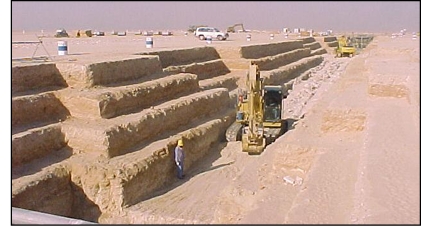
Protective systems prevent trench collapse and worker injuries.
Sloping
Sloping cuts trench walls at an angle to reduce collapse risks.
Benching
Benching creates step-like levels in excavation walls.
Shoring
Shoring uses hydraulic, timber, or metal supports to stabilize excavation walls.
Shielding
Trench boxes or shields protect workers inside excavations.
Safe Access and Egress
Workers must safely enter and exit excavations.
Ladder Requirements
- Ladders must extend above trench level
- Access points should be within safe distance
- Ladders must remain stable
Walkways and Barricades
Install barricades, warning signs, and safe walkways around excavations.
Excavation Inspection Requirements
Daily inspections are mandatory.
Inspection Checklist
Check Soil Stability
Look for cracks or shifting soil.
Check Protective Systems
Inspect shoring, sloping, and trench boxes.
Check Water Accumulation
Remove standing water immediately.
Check Atmosphere
Test for oxygen deficiency or toxic gases when necessary.
Check Heavy Equipment Distance
Keep machinery away from trench edges.
Confined Space Hazards in Excavation
Some excavations may become confined spaces due to:
- Limited entry
- Poor ventilation
- Hazardous atmospheres
Common Confined Space Hazards
- Oxygen deficiency
- Toxic gas exposure
- Heat stress
- Restricted escape routes
Safety Precautions
- Atmospheric testing
- Ventilation systems
- Emergency rescue plans
- Continuous monitoring
- Standby personnel
Emergency Response Pattern for Excavation Incidents
Step 1 – Stop Work Immediately
Stop all excavation activities during emergencies.
Step 2 – Secure the Area
Prevent unauthorized personnel from entering the excavation zone.
Step 3 – Notify Emergency Team
Contact emergency responders immediately.
Step 4 – Rescue Procedures
Only trained rescue personnel should perform trench rescues.
Step 5 – Provide Medical Assistance
Arrange medical treatment for injured workers.
Step 6 – Incident Reporting
Document the incident according to organization procedures.
Heavy Equipment Safety Near Excavations
Common Equipment
- Excavators
- Bulldozers
- Loaders
- Dump Trucks
Safety Precautions
- Maintain safe distance from trench edges
- Use spotters when reversing
- Avoid overloading trench edges
- Inspect equipment regularly
Barricades and Warning Signs
Barricade Requirements
- Use warning tape or fencing
- Install reflective signs at night
- Restrict unauthorized entry
Lighting Requirements
Provide proper lighting during night operations.
Personal Protective Equipment (PPE)
Required PPE
- Safety helmet
- Safety shoes
- Reflective vest
- Gloves
- Eye protection
- Respiratory protection when needed
Responsibilities of Safety Officers
Main Responsibilities
- Conduct site inspections
- Verify work permits
- Monitor protective systems
- Ensure worker training
- Conduct toolbox talks
- Stop unsafe work
- Ensure emergency preparedness
Toolbox Talk Topics
Safety officers can conduct toolbox talks on:
- Trench collapse prevention
- Soil classification
- Confined space hazards
- Safe excavation entry
- Emergency response procedures
- Underground utility protection
Excavation and Shoring Safety Questions and Answers
Question 1: What is the main hazard in excavation work?
Answer: Trench collapse is the main hazard.
Question 2: Why is soil classification important?
Answer: It determines the correct protective system for excavation safety.
Question 3: What is shoring used for?
Answer: Shoring supports excavation walls and prevents collapse.
Question 4: Who should inspect excavations daily?
Answer: A trained competent person should conduct inspections.
Question 5: Why must heavy equipment stay away from trench edges?
Answer: Heavy loads may cause trench collapse.
Question 6: What should workers do if water accumulates in an excavation?
Answer: Stop work and remove water immediately.
Question 7: What are common confined space hazards in excavations?
Answer: Oxygen deficiency and toxic gases.
Question 8: Why are barricades important around excavations?
Answer: Barricades prevent unauthorized entry and accidental falls.
Question 9: What PPE is required during excavation work?
Answer: Helmet, safety shoes, gloves, reflective vest, and eye protection.
Question 10: What should happen first during an excavation emergency?
Answer: Stop work immediately and secure the area.
Scenario-Based Practice Questions
Scenario 1: Cracks Appear in a Trench Wall
Question
A trench wall develops visible cracks during excavation work. What should the safety officer do?
Answer
Stop work immediately, evacuate workers, and inspect the trench before continuing operations.
Scenario 2: Strange Smell Inside an Excavation
Question
Workers detect a strange smell inside a deep excavation. What is the likely hazard?
Answer
There may be toxic gas accumulation or oxygen deficiency.
Scenario 3: Heavy Rain During Excavation Activities
Question
Heavy rain begins during excavation activities. What action should be taken?
Answer
Stop work, inspect soil stability, and remove workers until conditions are safe.
Conclusion
Excavation and Shoring activities are among the most hazardous operations in industrial and construction environments. Safety officers must understand trench safety, soil classification, confined space hazards, emergency response procedures, and protective systems to prevent serious incidents.
Proper planning, inspections, worker training, and emergency preparedness are essential for safe excavation operations. Use this Excavation and Shoring Safety Officer Test Preparation guide regularly, review the practice questions repeatedly, and apply scenario-based learning to improve workplace safety knowledge and examination performance.
References and Last Reviewed
- OSHA 29 CFR 1926 Subpart P – Excavations: osha.gov/1926SubpartP
Jurisdiction: United States – OSHA construction industry standards (29 CFR 1926). Verify local/site-specific requirements where this differs from your jurisdiction.
Last technically reviewed: September 2026
Reviewed by: EHS Guidelines Editorial Team
This article is educational. Apply current official rules, approved site procedures, manufacturer instructions and competent-person assessment for your actual worksite.

Be the first to comment