Painting and Coating Safety Officer Test Preparation Purpose
Purpose
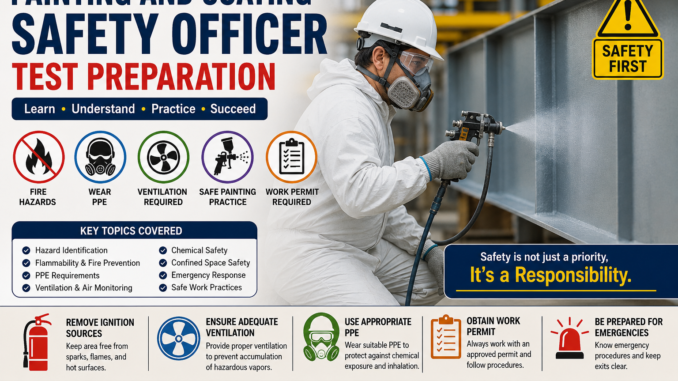
Painting and Coating Safety Officer Test Preparation is an important topic for candidates preparing for Safety Officer interviews and examinations. These Painting and Coating Safety Officer Test Preparation questions help candidates understand workplace hazards, fire prevention, PPE requirements, and permit systems.
A Safety Officer must understand how to identify these hazards, ensure proper control measures are implemented, and verify that all work is carried out according to company safety procedures and applicable regulations.
For Safety Officer examinations, candidates should focus on hazard identification, risk assessment, permit requirements, emergency preparedness, personal protective equipment (PPE), ventilation, and safe handling of coating materials.
Proper Painting and Coating Safety Officer Test Preparation enables candidates to answer technical interview questions confidently and apply safe work practices at industrial sites.
References
Painting and coating work should always follow applicable company safety procedures and recognized industry standards. Typical references include:
- Company Work Permit System
- Hazard Communication Program
- Chemical Safety Procedures
- Waste Management Guidelines
- Fire Prevention Procedures
- Personal Protective Equipment Requirements
- Confined Space Entry Procedures
- Working at Height Requirements
- Emergency Response Procedures
- Industrial Coating Best Practices
Safety Officers should always use the latest approved company procedures before starting any painting or coating activity.
Flammability Hazards of Coating Materials
Understanding flammability hazards is one of the most important topics in Painting and Coating Safety Officer Test Preparation because solvent vapors can easily ignite if proper controls are not implemented.
Before beginning painting work, the Safety Officer should evaluate the work area and eliminate all possible ignition sources. Adequate ventilation must be provided to prevent vapor accumulation, particularly inside enclosed spaces.
Electrical tools and lighting used in hazardous locations should be suitable for environments where flammable vapors may be present.
Proper storage of paint containers, safe handling of chemicals, and immediate cleanup of spills are essential for preventing fires and explosions.
Smoking should never be allowed near painting operations.
Safety Officer Guidance
Before work begins, ensure that:
- Work permits have been approved.
- Hazards have been identified.
- Risk assessment has been completed.
- Workers understand the job.
- Fire extinguishers are available.
- Emergency exits remain accessible.
- Good ventilation is maintained.
- PPE is inspected.
- Emergency contact numbers are available.
Personal Protective Equipment (PPE)
PPE selection is frequently tested during Painting and Coating Safety Officer Test Preparation examinations and interviews.
Depending on the work environment, painters should wear:
- Safety helmet
- Chemical-resistant gloves
- Safety goggles
- Face shield when required
- Protective coveralls
- Safety shoes
- Respiratory protection suitable for paint vapors
- Hearing protection if working near noisy equipment
PPE should be inspected before every shift and replaced if damaged.
Ventilation Requirements
Poor ventilation allows hazardous vapors to accumulate, increasing the risk of fire and health problems.
Mechanical ventilation should be provided when natural airflow is insufficient.
Air monitoring may be required before workers enter enclosed areas.
Continuous ventilation should remain in operation until the atmosphere is confirmed safe.
Fire Prevention
Fire prevention questions are among the most common topics in Painting and Coating Safety Officer Test Preparation, especially in refinery and construction safety interviews.
A Safety Officer should verify that:
- No smoking is permitted.
- Welding is not performed near painting work unless properly controlled.
- Electrical equipment is safe for the work area.
- Flammable materials are stored correctly.
- Spill kits are available.
- Fire extinguishers are inspected and accessible.
- Emergency evacuation routes remain clear.
Chemical Safety
Workers should understand the hazards of every coating material they use.
Chemical containers should always be:
- Properly labeled
- Closed when not in use
- Stored in approved locations
- Protected from heat and sunlight
Mixing incompatible chemicals can create dangerous reactions and should never occur without authorization.
Confined Space Considerations
Painting inside tanks, vessels, pits, or other enclosed areas presents additional hazards.
Before entry:
- Obtain a Confined Space Entry Permit.
- Test the atmosphere.
- Provide continuous ventilation.
- Assign an attendant outside.
- Maintain communication.
- Prepare rescue equipment.
- Monitor oxygen and hazardous gases throughout the work.
Emergency Response Pattern
If an emergency occurs:
- Stop work immediately.
- Raise the alarm.
- Notify supervisors.
- Evacuate personnel if necessary.
- Isolate ignition sources.
- Use fire extinguishers only if trained and safe.
- Call the emergency response team.
- Provide first aid if qualified.
- Secure the incident area.
- Report the incident according to company procedures.
Important Points for Safety Officer Test
Remember these key facts:
- Most paints contain hazardous chemicals.
- Solvent vapors can ignite easily.
- Good ventilation reduces exposure.
- PPE protects workers from chemical contact.
- Work permits help control hazards.
- Fire prevention begins before work starts.
- Confined spaces require additional controls.
- Emergency preparedness saves lives.
Scenario-Based Questions
Scenario 1
A painter starts spray painting inside a storage tank without ventilation.
Question:
What should the Safety Officer do?
Answer:
Stop the work immediately, arrange atmospheric testing, provide ventilation, obtain the required permit, and ensure workers wear appropriate respiratory protection.
Scenario 2
Paint thinner spills onto the floor.
Question:
What is the first action?
Answer:
Remove ignition sources, isolate the area, clean the spill using the approved procedure, and dispose of waste properly.
Scenario 3
Workers are painting close to hot work activities.
Question:
Is this acceptable?
Answer:
No. Painting involving flammable vapors should not be conducted near uncontrolled ignition sources. Work should be coordinated to eliminate the risk.
The following Painting and Coating Safety Officer Test Preparation MCQs are designed to improve your exam performance.
Painting and Coating Safety MCQs
1. What is the primary hazard during spray painting?
A. Noise
B. Dust
C. Flammable vapors
D. Sunlight
Answer: C
2. Which PPE is most important during spray painting?
A. Respirator
B. Baseball cap
C. Sandals
D. Cotton gloves
Answer: A
3. Before entering a confined space for painting, what must be done?
A. Start painting immediately
B. Test the atmosphere
C. Remove PPE
D. Close ventilation
Answer: B
4. What should be removed before painting begins?
A. Safety signs
B. Fire extinguishers
C. Ignition sources
D. Ventilation
Answer: C
5. Why is ventilation important?
A. To reduce hazardous vapor concentration
B. To increase paint drying time
C. To make noise
D. To reduce lighting
Answer: A
Interview Questions
Q1: Why are solvent-based paints considered hazardous?
Answer: They release flammable vapors and may expose workers to harmful chemicals.
Q2: What is the role of a Safety Officer during painting work?
Answer: To identify hazards, verify permits, inspect PPE, monitor safe work practices, and ensure emergency preparedness.
Q3: Why is atmospheric testing necessary in confined spaces?
Answer: To verify that oxygen levels are safe and that hazardous gases or vapors are not present.
Q4: What should be checked before spray painting starts?
Answer: Work permits, ventilation, PPE, fire protection, chemical storage, emergency arrangements, and worker competency.
Revision Notes
- Always perform a risk assessment before painting.
- Use the appropriate work permit.
- Remove ignition sources from the work area.
- Ensure adequate ventilation.
- Wear suitable PPE.
- Store chemicals safely.
- Follow company emergency procedures.
- Monitor confined spaces continuously.
- Keep fire extinguishers readily available.
- A Safety Officer should stop work immediately if unsafe conditions are identified.
Painting and Coating Safety Officer Test Preparation requires a strong understanding of fire hazards, chemical safety, ventilation, confined space controls, PPE, emergency response, and permit systems. Regular practice of MCQs and workplace scenarios helps Safety Officers prepare successfully for examinations and perform safely in industrial environments.


1 Trackback / Pingback