Safety Officer Test Preparation
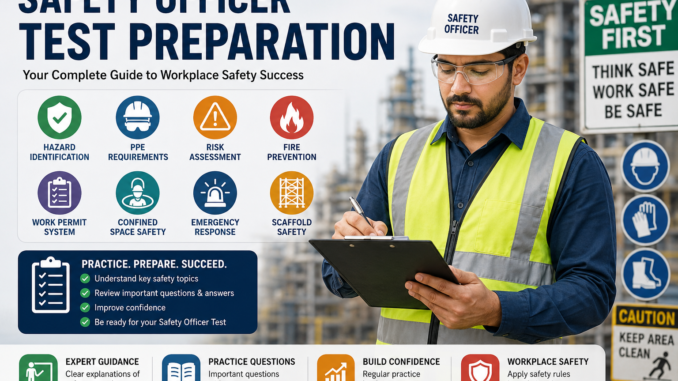
Safety Officer Test preparation is important for candidates who want to work on industrial, construction, oil & gas, and company project sites. This guide is designed to help applicants understand workplace safety rules, emergency response procedures, confined space requirements, PPE standards, hazard control methods, and safety responsibilities during field operations.
This Safety Officer Test preparation resource explains the most common topics included in company safety examinations. Every section contains explanations followed by practical questions and answers to improve understanding and confidence before attending the test.
Use this structured preparation guide regularly, revise the questions repeatedly, and practice workplace scenarios to improve your performance during the Safety Officer Test.
Why Safety Officer Test Preparation is Important
A Safety Officer Test evaluates how well a candidate understands workplace hazards, emergency response systems, risk assessment procedures, and safe work practices. Organizations use these tests to ensure workers and safety officers can maintain safe working conditions on project sites.
Good preparation helps candidates:
- Understand workplace safety rules
- Identify hazards correctly
- Apply emergency procedures properly
- Improve confidence during interviews and tests
- Reduce mistakes during field operations
- Learn company safety standards
Safety Officer Test Topics Covered
The Safety Officer Test commonly includes:
- Hazard identification
- PPE requirements
- Fire prevention
- Emergency response
- Confined space safety
- Work permit systems
- Risk assessment
- Scaffold safety
- Electrical safety
- Lifting operations
- Incident reporting
- Toolbox talks
- Fall protection
- Lockout and tagout procedures
Safety Officer Test and Hazard Identification
Hazard identification is one of the most important sections of the Safety Officer Test. A hazard is anything that can cause injury, illness, property damage, or environmental harm.
Common workplace hazards include:
- Slippery surfaces
- Electrical exposure
- Falling objects
- Confined spaces
- Unsafe scaffolds
- Chemical exposure
- Poor housekeeping
Safety officers must identify hazards before work starts and implement control measures.
Questions and Answers
Q1: What is a hazard?
Answer: A hazard is anything that can cause injury, illness, or damage.
Q2: What is risk?
Answer: Risk is the chance that a hazard may cause harm.
Q3: What is the first step in hazard control?
Answer: Hazard identification.
Q4: Why is housekeeping important?
Answer: Good housekeeping prevents slips, trips, falls, and fire hazards.
Safety Officer Test and Personal Protective Equipment
Personal Protective Equipment (PPE) protects workers from workplace hazards. PPE must always match the job requirements and workplace conditions.
Common PPE includes:
- Safety helmet
- Safety shoes
- Gloves
- Safety goggles
- Face shield
- Ear protection
- Reflective vest
- Respiratory protection
Workers should inspect PPE before use and replace damaged equipment immediately.
Questions and Answers
Q1: What does PPE stand for?
Answer: Personal Protective Equipment.
Q2: Why are safety helmets important?
Answer: They protect the head from falling objects and impact injuries.
Q3: When should PPE be inspected?
Answer: Before every use.
Q4: What PPE is used for welding work?
Answer: Welding helmet, gloves, face shield, apron, and safety shoes.
Safety Officer Test and Confined Space Safety
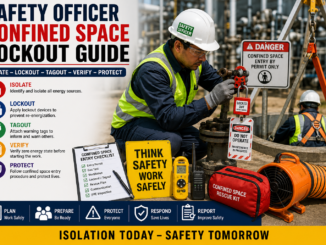
Confined spaces are enclosed areas with limited entry and exit that may contain hazardous atmospheres. Workers must follow strict safety procedures before entering confined spaces.
Examples include:
- Tanks
- Silos
- Pipelines
- Underground pits
- Storage vessels
Important confined space precautions include:
- Gas testing
- Ventilation
- Entry permit
- Standby attendant
- Emergency rescue plan
- Communication system
Questions and Answers
Q1: What is a confined space?
Answer: An enclosed area with limited access and possible hazardous conditions.
Q2: Why is gas testing important?
Answer: It checks oxygen levels and detects toxic or flammable gases.
Q3: What is required before entering a confined space?
Answer: A confined space entry permit.
Q4: Why is ventilation necessary?
Answer: To remove harmful gases and maintain safe oxygen levels.
Safety Officer Test and Emergency Response
Emergency response preparation is essential on every worksite. Workers must know how to react during emergencies such as fire, gas leaks, injuries, or chemical spills.
Emergency response procedures include:
- Raising the alarm
- Reporting emergencies
- Evacuation procedures
- Emergency assembly points
- Fire extinguisher use
- First aid response
- Rescue coordination
Safety officers should regularly conduct drills and training sessions.
Questions and Answers
Q1: What should you do first during an emergency?
Answer: Raise the alarm and inform emergency personnel.
Q2: What is an emergency assembly point?
Answer: A safe location where workers gather during evacuation.
Q3: Why are emergency drills important?
Answer: They prepare workers for real emergencies.
Q4: What should be checked before using a fire extinguisher?
Answer: Pressure level, safety pin, and extinguisher type.
Safety Officer Test and Work Permit System
A work permit system controls hazardous activities and ensures safety precautions are followed before work starts.
Common permit types include:
- Hot work permit
- Cold work permit
- Electrical work permit
- Excavation permit
- Confined space permit
- Lifting permit
The permit identifies hazards, control measures, and responsible personnel.
Questions and Answers
Q1: What is a hot work permit?
Answer: A permit used for welding, cutting, and spark-producing work.
Q2: Why is a permit system important?
Answer: It controls hazards and ensures safety procedures are followed.
Q3: Who authorizes a permit?
Answer: The responsible supervisor or authorized person.
Q4: What should workers do before signing a permit?
Answer: Review all hazards and safety precautions.
Safety Officer Test and Scaffold Safety
Scaffolds provide temporary access for workers at height. Unsafe scaffolds can lead to serious accidents.
Scaffold safety rules include:
- Proper inspection
- Guardrails installation
- Safe access
- Stable foundation
- Load control
- Tagging system
Only trained personnel should erect or inspect scaffolds.
Questions and Answers
Q1: What is the purpose of a scaffold tag?
Answer: It shows scaffold inspection status.
Q2: What color tag indicates a safe scaffold?
Answer: Green tag.
Q3: Why are guardrails important?
Answer: They prevent falls from height.
Q4: Who can inspect scaffolds?
Answer: A trained and competent person.
Safety Officer Test and Fire Prevention
Fire hazards exist on almost every worksite. Proper fire prevention methods reduce the chance of accidents and property damage.
Fire prevention measures include:
- Good housekeeping
- Safe storage of flammable materials
- Fire extinguisher inspection
- Electrical safety
- Hot work control
- Smoking restrictions
Questions and Answers
Q1: What are the three elements of fire?
Answer: Heat, fuel, and oxygen.
Q2: What extinguisher is used for electrical fires?
Answer: CO2 extinguisher.
Q3: Why should flammable materials be stored properly?
Answer: To reduce fire risk.
Q4: What should workers do after hot work activities?
Answer: Conduct a fire watch inspection.
Safety Officer Test and Toolbox Talks
Toolbox talks are short safety meetings conducted before work activities begin. They help workers understand job hazards and safety precautions.
Toolbox talks usually cover:
- Job hazards
- PPE requirements
- Weather conditions
- Emergency procedures
- Safe work methods
Questions and Answers
Q1: What is a toolbox talk?
Answer: A short workplace safety discussion before starting work.
Q2: Why are toolbox talks important?
Answer: They improve safety awareness and reduce accidents.
Q3: Who conducts toolbox talks?
Answer: Supervisors or safety officers.
Q4: When are toolbox talks usually conducted?
Answer: Before the work shift begins.
Safety Officer Test and Fall Protection
Falls are one of the leading causes of workplace injuries. Proper fall protection systems are essential when working at height.
Fall protection includes:
- Full body harness
- Lifeline
- Anchor points
- Guardrails
- Safety nets
Workers must inspect fall protection equipment before use.
Questions and Answers
Q1: When is fall protection required?
Answer: When working at height according to company safety rules.
Q2: What is a full body harness used for?
Answer: To protect workers from falling injuries.
Q3: Why should anchor points be inspected?
Answer: To ensure they can support the required load.
Q4: What should workers do before using a harness?
Answer: Inspect it for damage.
Conclusion
Safety Officer Test preparation requires understanding workplace hazards, emergency response procedures, confined space rules, PPE requirements, scaffold safety, and permit systems. Candidates who regularly practice questions and review safety procedures can improve their confidence and performance during examinations.
This Safety Officer Test guide provides a structured learning approach for candidates preparing for company project safety examinations. Continue reviewing the questions, practice real workplace scenarios, and strengthen your understanding of industrial safety standards.
References and Last Reviewed
- OSHA 29 CFR 1926 Subpart C – General Safety and Health Provisions: osha.gov/1926SubpartC
Jurisdiction: United States – OSHA construction industry standards (29 CFR 1926). Verify local/site-specific requirements where this differs from your jurisdiction.
Last technically reviewed: September 2026
Reviewed by: EHS Guidelines Editorial Team
This article is educational. Apply current official rules, approved site procedures, manufacturer instructions and competent-person assessment for your actual worksite.

3 Trackbacks / Pingbacks