Safety Officer Test Preparation
Introduction
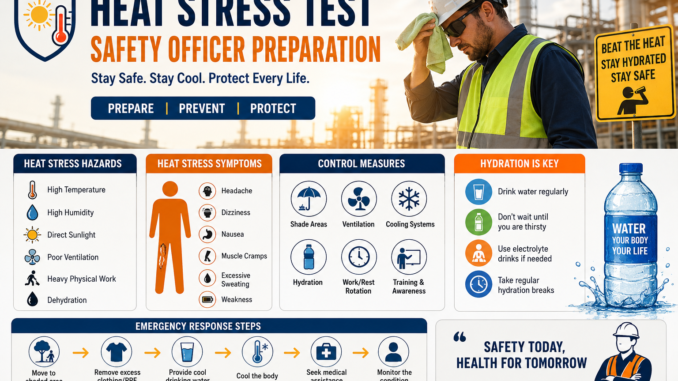
Heat Stress Test preparation is important for every safety officer working in construction, oil and gas, industrial plants, factories, and high-temperature environments.
What is Heat Stress?
Heat stress happens when the body cannot cool itself properly due to high temperature, humidity, direct sunlight, or heavy physical work.
Common Causes of Heat Stress
- High air temperature
- High humidity
- Direct sunlight exposure
- Poor ventilation
- Heavy physical activity
- Lack of drinking water
- Wearing heavy PPE
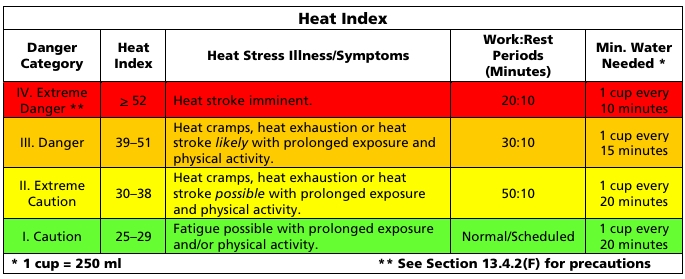
Heat Stress Danger Category
The heat stress danger category is determined by the heat index at the workplace.
Importance of Heat Stress Monitoring
Safety officers should:
- Monitor temperature and humidity
- Communicate heat stress levels to workers
- Use warning signs and colored flags
- Inform supervisors about heat hazards
- Ensure workers follow hydration procedures
Heat Stress Control Measures
During periods of high heat stress potential, proper control measures must be implemented.
Engineering Controls for Heat Stress
Shade Areas
Designated shaded rest areas should be provided near work locations.
Local Ventilation
Fans and portable air movers can help improve airflow.
Portable Air Cooling Systems
Portable cooling systems should be used in extremely hot enclosed areas.
Administrative Controls for Heat Stress
Scheduling
Heavy work activities should be scheduled during cooler parts of the day.
Acclimatization
Workers should gradually adapt to hot environments over several days.
Water Replacement and Hydration
Workers should drink water frequently throughout the shift.
Hydration Guidelines
- Drink water before feeling thirsty
- Avoid dehydration
- Use electrolyte drinks when necessary
- Take regular hydration breaks
- Avoid excessive caffeine
Work and Rest Rotation
Work/rest schedules should be adjusted according to heat conditions.
Personal Monitoring
Employees should monitor coworkers for signs of heat illness.
Heat Stress Symptoms Every Safety Officer Should Know
Heat Exhaustion Symptoms
- Heavy sweating
- Weakness
- Headache
- Dizziness
- Nausea
- Muscle cramps
Heat Stroke Symptoms
- High body temperature
- Confusion
- Loss of consciousness
- Hot dry skin
- Rapid pulse
Heat Stress Prevention Methods
Proper PPE Selection
Safety officers should ensure workers use lightweight and breathable PPE.
Rest Breaks
Frequent breaks help workers recover from heat exposure.
Worker Training
Employees should receive training about:
- Heat stress hazards
- Emergency procedures
- Hydration requirements
- Heat illness symptoms
- Reporting procedures
Confined Space Heat Stress Hazards
Confined spaces can become extremely dangerous during hot weather.
Safety Precautions for Confined Spaces
- Proper ventilation
- Continuous gas monitoring
- Emergency rescue readiness
- Cooling equipment availability
- Worker rotation schedules
Emergency Response During Heat Stress Incidents
Every organization should have emergency response procedures for heat-related illnesses.
Emergency Response Steps
- Move the worker to a shaded or cool area
- Remove excess PPE
- Provide cool drinking water
- Apply cooling methods
- Contact medical support immediately
- Monitor breathing and consciousness
Heat Stress Test Questions and Answers
Q1: What is heat stress?
Answer: Heat stress is a condition where the body cannot cool itself properly due to high temperature, humidity, and physical workload.
Q2: What are the main causes of heat stress?
Answer: High temperature, humidity, direct sunlight, poor ventilation, dehydration, and heavy physical work.
Q3: What is the purpose of acclimatization?
Answer: Acclimatization helps workers gradually adapt to hot working conditions safely.
Q4: What is heat stroke?
Answer: Heat stroke is a severe heat-related illness where body temperature rises dangerously high and requires immediate emergency treatment.
Q5: Why is hydration important during hot work?
Answer: Hydration prevents dehydration, heat exhaustion, fatigue, and heat stroke.
Q6: What engineering controls reduce heat stress?
Answer: Shade areas, fans, ventilation systems, and portable cooling equipment.
Q7: What should a safety officer do during high heat conditions?
Answer: Monitor workers, enforce hydration breaks, adjust schedules, and ensure emergency readiness.
Q8: Why are confined spaces dangerous during heat exposure?
Answer: Confined spaces trap heat and reduce airflow, increasing the risk of heat-related illnesses.
Q9: What are the symptoms of heat exhaustion?
Answer: Sweating, dizziness, weakness, nausea, headache, and muscle cramps.
Q10: What should be included in a heat stress emergency response plan?
Answer: Medical response procedures, cooling methods, rescue arrangements, communication systems, and worker monitoring.
Scenario-Based Heat Stress Test Questions
Scenario 1: Worker Becomes Dizzy Under Direct Sunlight
Question
What should the safety officer do?
Answer
Stop the work immediately, move the worker to a shaded area, provide water, cool the body, and contact medical assistance if symptoms continue.
Scenario 2: High-Temperature Confined Space Entry
Question
What precautions are required?
Answer
Ventilation, gas testing, hydration, cooling equipment, standby rescue personnel, and work/rest rotation schedules.
Heat Stress Test Preparation Tips
- Study heat stress categories carefully
- Learn symptoms of heat-related illnesses
- Practice emergency response scenarios
- Understand hydration requirements
- Review confined space heat hazards
- Practice multiple-choice questions daily
- Focus on worker protection methods
Conclusion
Heat Stress Test preparation is essential for every safety officer responsible for protecting workers in hot environments. Understanding heat stress categories, hydration rules, engineering controls, acclimatization, emergency response procedures, and confined space hazards helps safety officers perform their duties effectively.
Use this Heat Stress Test guide regularly, review the questions repeatedly, and practice workplace scenarios to improve confidence and exam performance.
SEO Tip: Main keyword “Heat Stress Test Preparation” ko H1 mein rakhein aur H2 headings mein variations use karein. Is structure se article Google aur AI search results dono mein behtar perform karega
Be the first to comment