Introduction
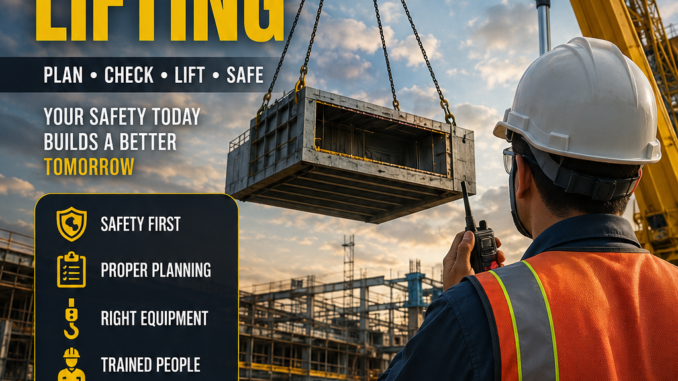
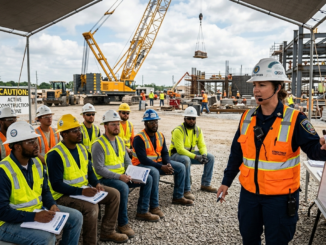
Crane Safety Test preparation is an essential part of Safety Officer Test Preparation. The Crane Safety Test evaluates a candidate’s knowledge of safe lifting operations, crane inspections, rigging practices, hazard identification, lifting equipment, and emergency response. Understanding these topics helps Safety Officers prevent workplace accidents and ensure lifting activities are carried out safely and efficiently.
A Safety Officer must understand the principles of safe lifting operations, hazard identification, equipment inspection, load calculation, rigging practices, communication methods, and emergency response. These topics are commonly included in Safety Officer examinations because lifting incidents remain one of the leading causes of workplace accidents.
This guide is designed as a structured Safety Officer Test Preparation resource. It explains the key concepts of cranes and lifting equipment, highlights essential safety requirements, and includes practice questions with answers to help candidates prepare confidently for written tests and interviews. Reviewing these questions regularly and practicing workplace scenarios will strengthen both theoretical knowledge and practical understanding.
Crane Safety Test Overview
The Crane Safety Test is designed to assess a Safety Officer’s understanding of crane operations, lifting equipment, inspection procedures, risk assessment, communication methods, and safe work practices. Candidates should study each topic carefully before appearing for the examination.
Every organization should establish safe lifting procedures that define responsibilities, inspection requirements, communication methods, emergency planning, and operator qualifications. Proper lifting practices reduce accidents, improve operational efficiency, and ensure compliance with workplace safety regulations.
For Safety Officer examinations, candidates should understand:
- Safe lifting principles
- Roles and responsibilities during lifting operations
- Crane inspection requirements
- Rigging safety
- Load stability
- Hazard identification
- Emergency response during lifting incidents
- Permit-to-work requirements for critical lifts
Understanding these subjects helps Safety Officers recognize hazards before lifting begins and implement suitable control measures.
References
Every organization develops lifting procedures based on applicable national regulations, manufacturer recommendations, engineering standards, and company safety policies.
Safety Officers should be familiar with general workplace requirements related to:
- Permit-to-work systems
- Lifting plans
- Crane inspection procedures
- Equipment certification
- Rigging standards
- Operator competency requirements
- Accident reporting procedures
- Emergency response plans
- Safe work practices
- Preventive maintenance programs
Although procedures differ between organizations, the basic safety principles remain the same.
Types of Cranes
A Safety Officer should understand the different types of cranes commonly used in industry.
Some of the most common cranes include:
Mobile Crane
Mobile cranes are mounted on wheels and can travel between work locations. They are widely used in construction and industrial maintenance because they provide flexibility and high lifting capacity.
Crawler Crane
Crawler cranes move on tracks instead of wheels, providing excellent stability on soft ground and heavy lifting operations.
Tower Crane
Tower cranes are commonly used for high-rise construction projects where materials must be lifted to significant heights.
Overhead Crane
These cranes operate inside factories and workshops for moving heavy machinery and materials.
Gantry Crane
Gantry cranes are frequently used in ports, shipyards, and storage yards where heavy containers or equipment must be transported.
Rough Terrain Crane
Designed for uneven ground conditions, rough terrain cranes are commonly used on construction sites.
Understanding crane types helps Safety Officers identify hazards associated with each lifting method.
Lifting Equipment
Lifting equipment includes every device used to raise, lower, or support a load.
Examples include:
- Wire rope slings
- Chain slings
- Synthetic web slings
- Hooks
- Shackles
- Eye bolts
- Lifting beams
- Spreader beams
- Hoists
- Winches
- Lifting clamps
Each piece of equipment has a Safe Working Load (SWL) or Working Load Limit (WLL) that must never be exceeded.
Damaged lifting equipment must be removed from service immediately.
Responsibilities During Lifting Operations
Safe lifting depends on teamwork.
Typical responsibilities include:
Safety Officer
- Conduct lifting risk assessments.
- Verify lifting permits when required.
- Inspect work areas.
- Ensure exclusion zones are established.
- Monitor compliance with safety procedures.
- Stop unsafe lifting activities immediately.
Crane Safety Test
- Inspect the crane before use.
- Operate within load limits.
- Follow signal instructions.
- Stop operations if unsafe conditions exist.
Rigger
- Select appropriate lifting gear.
- Inspect slings and accessories.
- Secure the load correctly.
- Maintain load stability.
Signal Person
- Guide crane movement using approved hand signals or radio communication.
- Maintain clear communication with the crane operator.
- Ensure the lifting path remains clear.
Proper coordination between all personnel significantly reduces lifting hazards.
Pre-Lift Planning
No lifting activity should begin without proper planning.
A lifting plan should include:
- Weight of the load
- Load dimensions
- Center of gravity
- Crane capacity
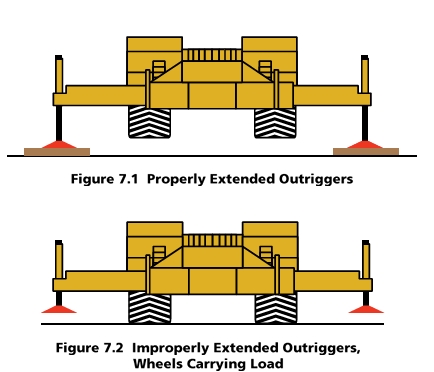
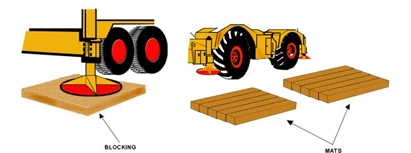
- Ground condition
- Weather conditions
- Swing radius
- Travel path
- Landing location
- Nearby hazards
- Emergency procedures
Critical lifts require additional planning, engineering review, and management approval.
A properly prepared lifting plan minimizes unexpected risks during operations.
Crane Inspection
Routine inspections are essential for maintaining safe crane operation.
Daily pre-use inspections should include checking:
- Wire ropes
- Hooks
- Boom
- Hydraulic system
- Brakes
- Tires or tracks
- Safety devices
- Limit switches
- Outriggers
- Load charts
- Warning alarms
Any defects affecting safe operation must be reported immediately.
Cranes should never be operated if critical safety components are defective.
Common Hazards in Lifting Operations
Safety Officers should identify hazards before lifting begins.
Common hazards include:
- Overloading
- Equipment failure
- Poor communication
- High winds
- Ground instability
- Contact with power lines
- Falling loads
- Improper rigging
- Mechanical failure
- Swinging loads
- Poor visibility
- Unauthorized personnel entering lifting areas
Hazard identification is one of the most important responsibilities of a Safety Officer.
Practice Questions Crane Safety Test
Question 1
What is the primary purpose of a lifting plan?
Answer:
To identify hazards, define safe lifting procedures, assign responsibilities, and ensure the lift can be completed safely.
Question 2
Who is responsible for stopping unsafe lifting operations?
Answer:
Any worker who identifies an immediate danger should report it, while the Safety Officer and supervisor have the authority to stop unsafe work.
Question 3
What should be checked before using a wire rope sling?
Answer:
- Broken wires
- Kinks
- Corrosion
- Crushing
- Damaged fittings
- Identification tag
- Load rating
Question 4
Why should workers never stand beneath a suspended load?
Answer:
Because equipment failure or rigging failure can cause the load to fall unexpectedly, resulting in serious injury or death.
Question 5
Why is communication important during crane operations?
Answer:
Clear communication prevents misunderstandings between the crane operator and signal person, reducing the risk of collisions, dropped loads, and other accidents.
Scenario-Based Questions
Scenario 1
A crane operator is ready to lift a steel beam, but the identification tag on the sling is missing.
Question: What should the Safety Officer do?
Answer:
Stop the lift immediately. The sling must not be used until its load rating can be verified or it is replaced with a properly identified and inspected sling.
Scenario 2
Strong winds begin while lifting a large steel structure.
Question: What is the correct action?
Answer:
Suspend the lifting operation, lower the load to a safe position, and resume work only when weather conditions are within safe operating limits.
Scenario 3
Workers are walking inside the crane’s lifting area.
Question: What should be done?
Answer:
Stop the lift, establish an exclusion zone, remove unauthorized personnel, and continue only after the area is clear.
Scenario 4
The crane operator cannot clearly see the load during lifting.
Question: What should happen?
Answer:
Use a trained signal person or approved radio communication. If communication cannot be maintained, stop the lift.
Scenario 5
During inspection, several broken wires are found on a wire rope sling.
Question: What action should be taken?
Answer:
Remove the sling from service immediately, tag it as defective, and replace it with an approved sling before continuing the lifting operation.
Conclusion
Reviewing this Crane Safety Test guide regularly will improve your knowledge, increase your confidence, and help you perform better in Safety Officer examinations. they improve productivity and make heavy lifting possible, they also introduce serious hazards if lifting operations are not properly planned and controlled. A Safety Officer plays a critical role in ensuring that every lift is conducted safely by verifying equipment inspections, reviewing lifting plans, monitoring work practices, identifying hazards, and ensuring all personnel follow established safety procedures.
Successful lifting operations depend on competent operators, trained riggers, effective communication, proper rigging techniques, regular equipment inspections, and strict compliance with safe work practices. Factors such as load weight, crane capacity, ground stability, weather conditions, and nearby overhead power lines must always be evaluated before work begins.
For Safety Officer Test Preparation, candidates should thoroughly understand lifting terminology, crane types, inspection requirements, rigging principles, load charts, hand signals, hazard controls, emergency procedures, and the responsibilities of everyone involved in lifting activities. Regularly reviewing these concepts and practicing scenario-based questions will improve both examination performance and workplace decision-making. A strong understanding of crane and lifting equipment safety helps prevent accidents, protects workers, and contributes to a safer and more productive work environment.
Related Guides
- Piling Operations and Cofferdams Safety Officer Test Prep
- Incident Investigation Under 29 CFR 1910.119(m)
- Steel Erection Safety Officer Test Preparation – Hoisting, Rigging, and Structural Stability
- Process Hazard Analysis Under 29 CFR 1910.119(e): Methods and Requirements
- 12 Best Rules for Aramco Safety Officer Test Preparation

1 Trackback / Pingback