Safety Officer Test Preparation
Introduction
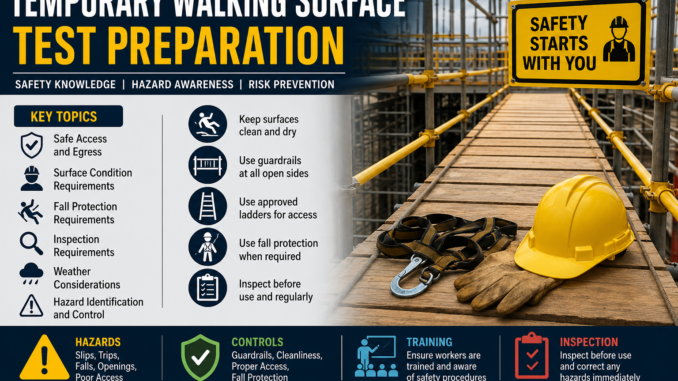
Temporary Walking Surface Test Preparation is an important topic for Safety Officer examinations and workplace safety assessments. Temporary walking and working surfaces are commonly used during construction, maintenance, shutdowns, inspections, and industrial activities. Workers often perform tasks on elevated platforms, temporary floors, walkways, ladders, and scaffolds.
Understanding the safety requirements for temporary walking and working surfaces helps reduce slips, trips, falls, and other workplace incidents. Safety officers must be familiar with inspection requirements, hazard identification, fall protection measures, and safe access procedures.
This Temporary Walking Surface Test Preparation guide provides an overview of the topic along with practical questions and answers to help candidates prepare effectively for safety-related examinations and interviews.
Purpose of Temporary Walking and Working Surfaces
Temporary walking and working surfaces provide safe access for employees performing tasks at ground level or elevated locations. These surfaces are designed to:
- Provide safe movement of workers.
- Reduce fall hazards.
- Support personnel and equipment.
- Ensure safe access and egress.
- Improve workplace productivity.
- Minimize workplace injuries.
Safety officers should verify that all temporary surfaces are properly designed, inspected, and maintained before use.
Temporary Walking Surface Test Preparation Requirements
Safe Access and Egress
Workers must have safe methods to enter and leave work areas. Access routes should remain clear and free from obstructions.
Requirements include:
- Safe walkways.
- Approved ladders.
- Stair towers.
- Ramps.
- Access platforms.
Emergency exits must remain accessible at all times.
Surface Condition Requirements
Temporary walking surfaces should:
- Be structurally sound.
- Support intended loads.
- Remain free of debris.
- Be kept dry when possible.
- Have adequate traction.
- Be inspected regularly.
Damaged surfaces should be repaired immediately or removed from service.
Fall Protection Requirements
Fall protection is required whenever workers are exposed to fall hazards.
Common fall protection systems include:
- Guardrails.
- Safety nets.
- Personal fall arrest systems.
- Travel restraint systems.
- Warning line systems.
Safety officers must ensure workers receive proper training before using fall protection equipment.
Hazard Identification for Temporary Walking Surfaces
Slip Hazards
Slip hazards may result from:
- Oil spills.
- Water accumulation.
- Mud.
- Ice.
- Loose materials.
Good housekeeping significantly reduces slip incidents.
Trip Hazards
Trip hazards include:
- Cables.
- Hoses.
- Uneven flooring.
- Openings.
- Debris.
Regular inspections help identify and eliminate these hazards.
Fall Hazards
Falls remain one of the leading causes of workplace injuries.
Examples include:
- Unprotected edges.
- Roof openings.
- Floor openings.
- Incomplete platforms.
- Damaged ladders.
Safety officers should conduct routine inspections to identify fall risks.
Inspection Requirements
Daily Inspection
Temporary walking surfaces should be inspected before use.
Inspectors should check:
- Structural integrity.
- Guardrails.
- Access points.
- Surface condition.
- Load capacity.
- Fall protection systems.
Any unsafe condition must be corrected immediately.
Weather Considerations
Weather can affect temporary walking surfaces.
Safety officers should monitor:
- Rain.
- Wind.
- Snow.
- Ice.
- Extreme temperatures.
Additional precautions may be required during adverse weather conditions.
Temporary Walking Surface Test Preparation for Safety Officers
Safety officers should focus on:
Hazard Recognition
Identify:
- Slip hazards.
- Trip hazards.
- Fall hazards.
- Structural defects.
- Environmental risks.
Worker Training
Employees should receive training regarding:
- Safe walking practices.
- Ladder safety.
- Fall protection.
- Hazard reporting.
- Emergency procedures.
Incident Prevention
Effective incident prevention includes:
- Regular inspections.
- Proper housekeeping.
- Corrective actions.
- Safety meetings.
- Continuous monitoring.
Temporary Walking Surface Test Preparation Questions and Answers
Q1. What is a temporary walking surface?
Answer:
A temporary walking surface is a platform, walkway, floor, ladder, or elevated area provided for workers during temporary operations.
Q2. Why are temporary walking surfaces important?
Answer:
They provide safe access and reduce the risk of slips, trips, and falls.
Q3. What is the most common hazard on temporary walking surfaces?
Answer:
Slips, trips, and falls.
Q4. What should be checked before using a temporary platform?
Answer:
Structural integrity, load capacity, guardrails, and access points.
Q5. Why is housekeeping important?
Answer:
Good housekeeping reduces slip and trip hazards.
Q6. What should be done if a walking surface is damaged?
Answer:
It should be repaired or removed from service immediately.
Q7. What is safe access and egress?
Answer:
Safe methods for entering and leaving a work area.
Q8. Name three common trip hazards.
Answer:
Cables, hoses, and debris.
Q9. What should workers do when they identify a hazard?
Answer:
Report it immediately and avoid the area if necessary.
Q10. Why are guardrails installed?
Answer:
To prevent workers from falling from elevated surfaces.
Q11. What is a fall protection system?
Answer:
A system designed to prevent or arrest falls.
Q12. How often should temporary walking surfaces be inspected?
Answer:
Before use and regularly throughout the work shift.
Q13. What weather condition increases slip hazards?
Answer:
Rain and ice.
Q14. What should be done with spilled liquids?
Answer:
Clean them immediately.
Q15. Why is worker training important?
Answer:
Training helps workers recognize hazards and work safely.
Q16. What causes most workplace falls?
Answer:
Poor housekeeping and lack of fall protection.
Q17. What is the purpose of a safety inspection?
Answer:
To identify and correct hazards before incidents occur.
Q18. What should a safety officer verify during inspections?
Answer:
Surface condition, access routes, and fall protection measures.
Q19. What is a floor opening hazard?
Answer:
An opening that may cause a worker to fall through a surface.
Q20. What should be placed around floor openings?
Answer:
Guardrails, covers, or barriers.
Q21. What is an elevated working surface?
Answer:
A work area located above ground level.
Q22. Why should workers avoid cluttered walkways?
Answer:
Clutter creates trip hazards.
Q23. What should be done before starting work on an elevated surface?
Answer:
Conduct a hazard assessment and verify fall protection.
Q24. What is the responsibility of a safety officer?
Answer:
To identify hazards, enforce safety requirements, and protect workers.
Q25. How can workers improve walking surface safety?
Answer:
By maintaining housekeeping, reporting hazards, and following safety procedures.
Scenario-Based Practice Questions
Scenario 1
A worker notices oil on a temporary walkway.
Question: What should be done first?
Answer:
Stop access to the area, clean the spill, and verify the surface is safe before allowing work to continue.
Scenario 2
A worker is assigned to an elevated platform without guardrails.
Question: What action should the safety officer take?
Answer:
Stop the task until proper fall protection measures are installed.
Scenario 3
Loose cables are found across a walkway.
Question: What is the safest action?
Answer:
Remove, secure, or reroute the cables to eliminate the trip hazard.
Conclusion
This Temporary Walking Surface Test Preparation guide helps Safety Officer candidates understand the essential requirements of temporary walking and working surfaces. By reviewing these concepts, practicing the questions, and understanding real-world scenarios, candidates can improve their knowledge and confidence for examinations, interviews, and workplace safety responsibilities.
For best results, review these questions regularly and use scenario-based learning to strengthen hazard recognition and decision-making skills.
References and Last Reviewed
- OSHA 29 CFR 1926 Subpart M – Fall Protection: osha.gov/1926SubpartM
Jurisdiction: United States – OSHA construction industry standards (29 CFR 1926). Verify local/site-specific requirements where this differs from your jurisdiction.
Last technically reviewed: September 2026
Reviewed by: EHS Guidelines Editorial Team
This article is educational. Apply current official rules, approved site procedures, manufacturer instructions and competent-person assessment for your actual worksite.

1 Trackback / Pingback