Fire Prevention – Safety Officer Test Preparation
Introduction
Safety Officer Test Preparation is essential for candidates preparing for industrial safety examinations and workplace safety roles. This guide is designed to help candidates understand fire prevention systems, emergency response procedures, confined space hazards, and practical workplace safety measures used by companies and organizations.
This structured Safety Officer Test Preparation material focuses on practical knowledge instead of memorization. Candidates should repeatedly review the questions and answers, practice scenario-based situations, and improve confidence for real workplace safety responsibilities.
Safety Officer Test Preparation for Fire Prevention
What is Fire Prevention?
Fire prevention is the process of identifying fire hazards and taking measures to reduce or eliminate the risk of fire. It includes safe work practices, proper storage of materials, regular inspections, worker training, and emergency planning.
A Safety Officer plays an important role in preventing fires by ensuring workers follow company safety procedures and by conducting regular fire safety inspections.
Fire Triangle
A fire can only occur when the following three elements are present:
| Element | Description |
|---|---|
| Heat | Source of ignition such as sparks, welding, or hot surfaces |
| Fuel | Flammable liquids, gases, paper, wood, or chemicals |
| Oxygen | Air that supports combustion |
Removing any one of these elements will stop the fire.
Classes of Fire
Understanding fire classes is important because different fires require different extinguishing methods.
| Fire Class | Type of Fire | Examples |
|---|---|---|
| Class A | Ordinary combustible materials | Wood, paper, cloth |
| Class B | Flammable liquids | Petrol, diesel, paint |
| Class C | Electrical fires | Electrical panels, wiring |
| Class D | Metal fires | Magnesium, sodium |
| Class K/F | Cooking oils and fats | Kitchen fires |
Types of Fire Extinguishers
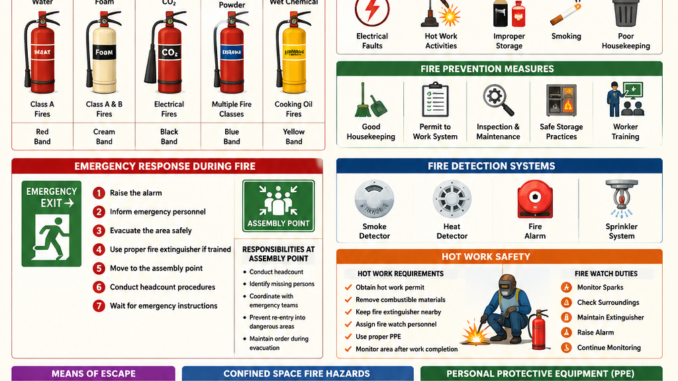
| Extinguisher Type | Used For | Color Band |
|---|---|---|
| Water | Class A fires | Red |
| Foam | Class A and B fires | Cream |
| CO2 | Electrical fires | Black |
| Dry Chemical Powder | Multiple fire classes | Blue |
| Wet Chemical | Cooking oil fires | Yellow |
Common Causes of Fire in Industrial Areas
Electrical Faults
Damaged wires, overloaded circuits, and poor maintenance can cause electrical fires.
Hot Work Activities
Welding, cutting, and grinding produce sparks that may ignite nearby flammable materials.
Improper Storage
Improper handling of chemicals and flammable liquids increases fire risk.
Smoking
Smoking in unauthorized areas is a major cause of workplace fires.
Poor Housekeeping
Accumulation of waste materials, oil spills, and clutter create fire hazards.
Fire Prevention Measures
Good Housekeeping
Maintain clean work areas and remove unnecessary combustible materials regularly.
Permit to Work System
Hot work activities should only begin after approval through a proper work permit system.
Inspection and Maintenance
Inspect fire extinguishers, alarms, emergency exits, and electrical systems regularly.
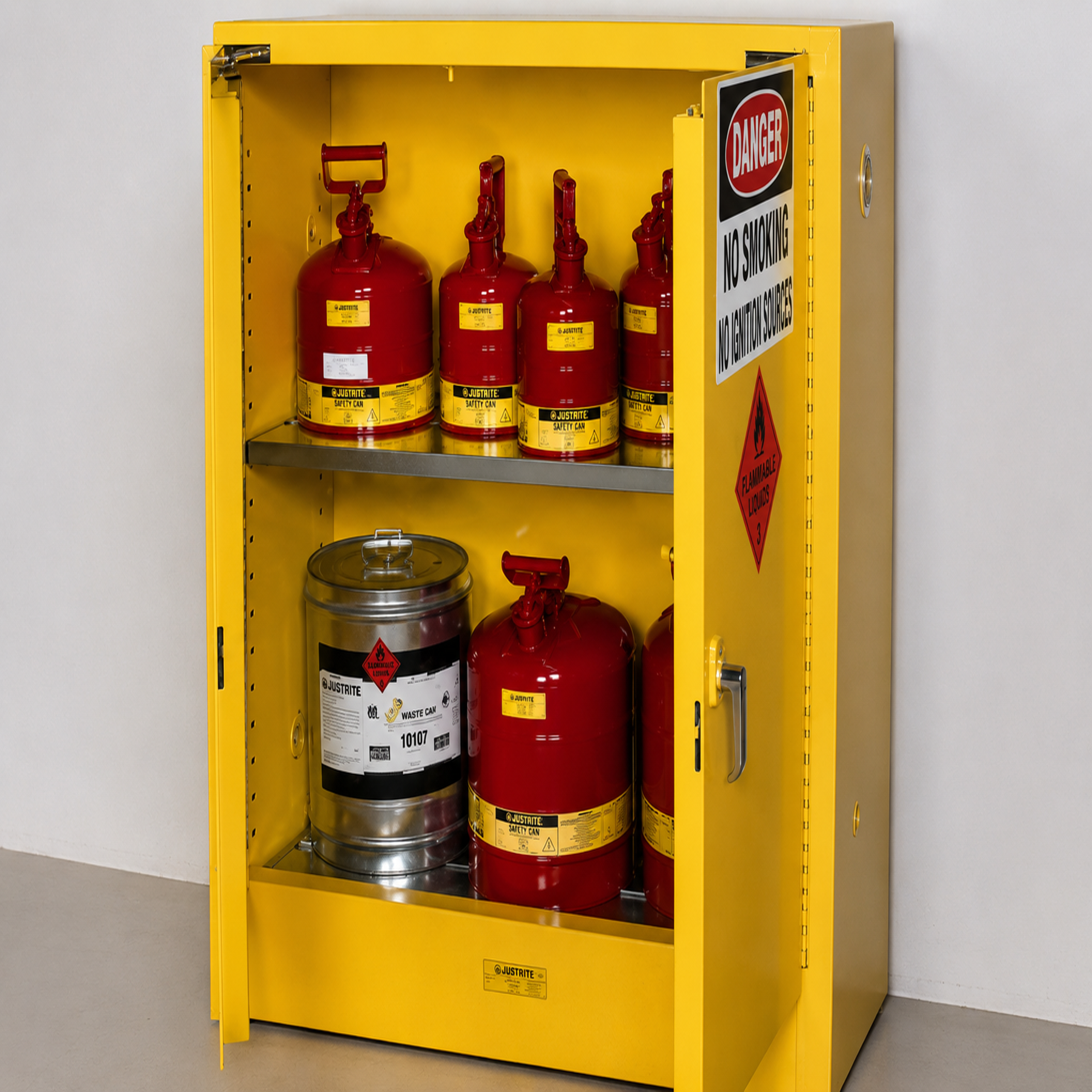
Safe Storage Practices
Store flammable materials in designated areas with proper labeling and ventilation.
Worker Training
All workers should know emergency procedures, alarm systems, and extinguisher usage.
Emergency Response During Fire
When a fire occurs, workers and safety officers should follow emergency procedures immediately.
Basic Emergency Response Steps
- Raise the alarm
- Inform emergency personnel
- Evacuate the area safely
- Use proper fire extinguishers if trained
- Move to the assembly point
- Conduct headcount procedures
- Wait for emergency instructions
Assembly Point
An assembly point is a safe designated area where workers gather after evacuation.
Responsibilities of a Safety Officer at Assembly Point
- Conduct headcount
- Identify missing persons
- Coordinate with emergency teams
- Prevent re-entry into dangerous areas
- Maintain order during evacuation
Fire Detection Systems
Modern organizations use fire detection systems to identify fires early.
| System | Purpose |
|---|---|
| Smoke Detector | Detects smoke particles |
| Heat Detector | Detects rise in temperature |
| Fire Alarm | Warns workers during emergencies |
| Sprinkler System | Controls and suppresses fire |
Hot Work Safety
Hot work includes welding, grinding, cutting, and any activity producing heat or sparks.
Hot Work Safety Requirements
- Obtain hot work permit
- Remove combustible materials
- Keep fire extinguisher nearby
- Assign fire watch personnel
- Use proper PPE
- Monitor area after work completion
Fire Watch Duties
A fire watch is assigned during hot work activities to monitor fire hazards.
Fire Watch Responsibilities
| Responsibility | Details |
|---|---|
| Monitor Sparks | Ensure sparks do not spread |
| Check Surroundings | Identify combustible materials |
| Maintain Extinguisher | Keep extinguisher ready |
| Raise Alarm | Report fire immediately |
| Continue Monitoring | Stay after hot work completion |
Means of Escape
Every workplace must have safe evacuation routes.
Important Requirements
- Emergency exits must remain unlocked
- Exit routes should be clearly marked
- Emergency lighting should function properly
- Stairways must remain clear
- Workers should know evacuation routes
Confined Space Fire Hazards
Confined spaces create additional fire risks due to limited ventilation.
Hazards Inside Confined Spaces
- Flammable gases
- Oxygen deficiency
- Toxic fumes
- Limited escape routes
- Heat accumulation
Safety Measures
- Gas testing before entry
- Ventilation systems
- Standby rescue personnel
- Emergency communication
- Entry permit system
Personal Protective Equipment (PPE)
Proper PPE helps reduce injury during fire emergencies.
| PPE | Purpose |
|---|---|
| Fire Resistant Clothing | Protection from heat |
| Safety Helmet | Head protection |
| Gloves | Hand protection |
| Safety Shoes | Foot protection |
| Face Shield | Eye and face protection |
| Respirator | Protection from smoke |
Role of Safety Officer in Fire Prevention
A Safety Officer is responsible for implementing workplace fire safety procedures.
Main Responsibilities
- Conduct workplace inspections
- Identify fire hazards
- Ensure extinguisher availability
- Train workers on emergency response
- Monitor permit systems
- Investigate fire incidents
- Maintain safety records
Safety Officer Test Preparation Questions and Answers
Q1: What are the three elements of the fire triangle?
Answer: Heat, fuel, and oxygen.
Q2: Which extinguisher is commonly used for electrical fires?
Answer: CO2 fire extinguisher.
Q3: Why is housekeeping important in fire prevention?
Answer: Good housekeeping removes combustible materials and reduces fire hazards.
Q4: What should be checked before hot work begins?
Answer: Work permit, nearby combustible materials, fire extinguisher availability, and area safety conditions.
Q5: What is the purpose of an assembly point?
Answer: It is a safe area where workers gather during evacuation for headcount and emergency coordination.
Q6: What is the responsibility of a fire watch?
Answer: To monitor fire hazards during and after hot work activities.
Q7: What are common causes of industrial fires?
Answer: Electrical faults, hot work sparks, smoking, poor housekeeping, and improper storage of flammable materials.
Q8: Why is ventilation important in confined spaces?
Answer: Proper ventilation removes hazardous gases and reduces fire and explosion risks.
Q9: What should a worker do first after discovering a fire?
Answer: Raise the alarm immediately.
Q10: Why are fire drills conducted?
Answer: To prepare workers for emergency evacuation procedures.
Scenario-Based Questions
Scenario 1
A worker starts welding near flammable materials without a permit.
What should the Safety Officer do?
Answer:
- Stop the work immediately
- Remove combustible materials
- Ensure proper permit approval
- Verify fire extinguisher availability
- Conduct safety briefing
Scenario 2
Smoke is detected inside an electrical room.
What action should be taken?
Answer:
- Raise alarm
- Isolate electrical power if safe
- Use CO2 extinguisher
- Evacuate unnecessary personnel
- Inform emergency response team
Scenario 3
A fire occurs inside a confined space.
What are the main concerns?
Answer:
- Limited escape routes
- Smoke accumulation
- Oxygen deficiency
- Rescue difficulty
- Worker communication
Tips for Safety Officer Test Preparation
Study Regularly
Review safety procedures daily instead of memorizing everything at once.
Practice Scenario Questions
Most company safety tests include practical situations and emergency response scenarios.
Understand Workplace Hazards
Focus on identifying hazards, risk control methods, and emergency procedures.
Learn Emergency Systems
Understand alarms, evacuation plans, assembly points, and firefighting systems.
Improve Communication Skills
Safety Officers must communicate clearly during emergencies and toolbox talks.
Conclusion
Fire prevention is one of the most important responsibilities in any industrial workplace. A Safety Officer must understand fire hazards, emergency procedures, firefighting equipment, and worker safety practices.
This preparation guide is designed to help candidates build practical understanding and confidence before appearing in a Safety Officer Test. Continuous practice of questions and emergency scenarios will improve both technical knowledge and workplace readiness.
References and Last Reviewed
- OSHA 29 CFR 1926 Subpart F – Fire Protection and Prevention: osha.gov/1926SubpartF
Jurisdiction: United States – OSHA construction industry standards (29 CFR 1926). Verify local/site-specific requirements where this differs from your jurisdiction.
Last technically reviewed: September 2026
Reviewed by: EHS Guidelines Editorial Team
This article is educational. Apply current official rules, approved site procedures, manufacturer instructions and competent-person assessment for your actual worksite.

2 Trackbacks / Pingbacks