Safety Officer Test Preparation
Concrete Construction Safety Officer Test Preparation
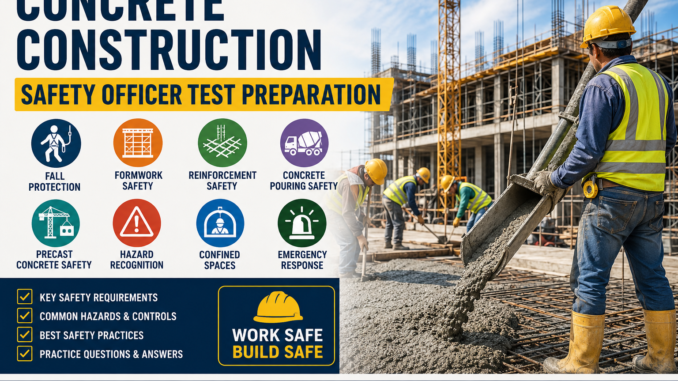
Concrete Construction is one of the most important topics in Safety Officer examinations. Safety professionals working on construction projects must understand the hazards associated with concrete work, formwork installation, reinforcement activities, masonry operations, precast concrete handling, and working at heights.
This Concrete Construction Safety Officer Test Preparation guide is designed to help candidates prepare effectively for company and organization safety officer assessments. The guide includes essential safety concepts, practical knowledge, and multiple-choice questions that are commonly asked during examinations and interviews.
By reviewing these topics regularly and practicing the questions provided, candidates can improve their understanding of construction safety requirements and increase their confidence before taking a Safety Officer test.
What is Concrete Construction?
Concrete Construction refers to activities involving the placement, forming, reinforcement, curing, and finishing of concrete structures. These activities are commonly performed during the construction of buildings, bridges, foundations, retaining walls, and industrial facilities.
Concrete work involves various hazards, including:
- Falls from height
- Formwork collapse
- Struck-by incidents
- Manual handling injuries
- Concrete burns
- Electrical hazards
- Equipment-related accidents
- Structural instability
Safety officers must ensure that workers follow approved procedures and use proper protective equipment throughout the construction process.
Concrete Construction Safety Requirements
Working at Heights in Concrete Construction
Workers involved in formwork erection, reinforcement fixing, and concrete pouring often perform tasks at elevated locations.
Important requirements include:
- Proper working platforms must be provided.
- Guardrail systems should be installed where possible.
- Full-body harnesses must be used when fall hazards exist.
- Shock-absorbing lanyards should be attached to approved anchor points.
- Access ladders must be secured.
- Workers must receive fall protection training.
Failure to follow fall protection requirements can result in serious injuries or fatalities.
Formwork Safety Requirements
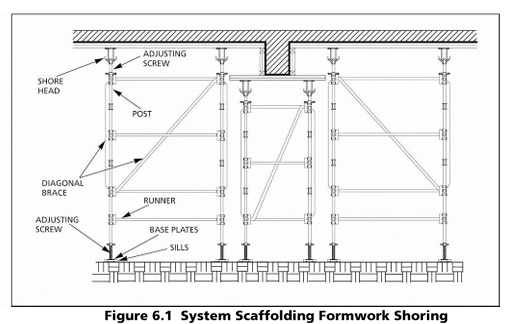
Formwork supports fresh concrete until it gains sufficient strength.
Safety officers should verify:
- Formwork is designed by qualified personnel.
- Materials are free from defects.
- Supports are properly installed.
- Bracing is adequate.
- Inspections are completed before concrete placement.
- Unauthorized modifications are prohibited.
Formwork failure can cause structural collapse and severe injuries.
Reinforcement Work Safety
Reinforcing steel installation presents several hazards.
Safety precautions include:
- Wearing gloves to prevent cuts.
- Using safety glasses during cutting operations.
- Installing rebar caps on exposed reinforcement.
- Maintaining proper housekeeping.
- Using correct lifting techniques.
Exposed reinforcing bars can cause impalement injuries if workers fall onto them.
Concrete Pouring Safety
Concrete placement operations require careful planning.
Safety officers should ensure:
- Equipment inspections are completed.
- Pump hoses are secured.
- Workers stay clear of moving equipment.
- Communication systems are established.
- Emergency procedures are understood.
- Safe access routes are maintained.
Continuous monitoring helps prevent incidents during concrete pours.
Precast Concrete Safety
Precast concrete components are extremely heavy and require special handling.
Important controls include:
- Approved lifting plans.
- Certified lifting equipment.
- Qualified riggers and operators.
- Inspection of lifting inserts.
- Exclusion zones around suspended loads.
- Proper storage methods.
Workers should never stand beneath suspended precast elements.
Common Hazards in Concrete Construction
Fall Hazards
Falls remain one of the leading causes of injuries in construction projects.
Examples include:
- Falling from scaffolds
- Falling from formwork
- Falling through floor openings
- Falling from ladders
Control measures include guardrails, safety nets, and personal fall arrest systems.
Concrete Burns
Wet concrete contains chemicals that can cause skin irritation and burns.
Workers should:
- Wear waterproof gloves.
- Use long sleeves.
- Avoid prolonged skin contact.
- Wash exposed areas immediately.
- Remove contaminated clothing promptly.
Struck-By Hazards
Workers may be struck by:
- Moving vehicles
- Concrete pump lines
- Falling materials
- Swinging loads
Proper planning and exclusion zones help reduce risks.
Caught-Between Hazards
Workers can become trapped between:
- Formwork panels
- Heavy equipment
- Structural components
- Precast sections
Safe work practices and supervision are essential.
Safety Officer Responsibilities During Concrete Construction
A Safety Officer should:
- Conduct daily inspections.
- Monitor work permits.
- Verify worker competency.
- Inspect fall protection systems.
- Ensure PPE compliance.
- Investigate incidents.
- Conduct toolbox talks.
- Review lifting plans.
- Monitor housekeeping standards.
- Stop unsafe work when necessary.
Strong safety leadership helps prevent accidents and promotes a positive safety culture.
Emergency Response During Concrete Construction
Every organization should establish emergency response procedures before work begins.
Emergency planning should include:
- Emergency contact information
- First aid arrangements
- Rescue procedures
- Evacuation routes
- Communication systems
- Incident reporting procedures
Workers should understand their responsibilities during emergencies and participate in drills when required.
Confined Space Considerations in Concrete Construction
Concrete construction activities sometimes involve confined spaces such as:
- Tanks
- Vaults
- Manholes
- Pits
- Underground chambers
Before entry:
- Hazards must be identified.
- Atmospheric testing must be completed.
- Entry permits must be approved.
- Rescue plans must be established.
- Continuous monitoring may be required.
Workers should never enter confined spaces without authorization and proper controls.
Concrete Construction Safety Officer Test Questions and Answers
Q1. What is the minimum protection required when workers are exposed to fall hazards?
Answer: Approved fall protection systems such as guardrails or full-body harnesses.
Q2. Why are rebar caps installed?
Answer: To prevent impalement injuries.
Q3. What is the primary purpose of formwork?
Answer: To support fresh concrete until it gains sufficient strength.
Q4. What PPE should be worn when handling wet concrete?
Answer: Gloves, safety boots, eye protection, and protective clothing.
Q5. What should be inspected before concrete pouring begins?
Answer: Formwork, supports, access routes, and equipment.
Q6. Who should design complex formwork systems?
Answer: Qualified and competent personnel.
Q7. What is a common hazard associated with precast concrete operations?
Answer: Falling or suspended loads.
Q8. What should workers do if wet concrete contacts their skin?
Answer: Wash immediately and remove contaminated clothing.
Q9. Why are exclusion zones used during lifting activities?
Answer: To protect workers from suspended loads.
Q10. What is the first step before entering a confined space?
Answer: Hazard assessment and atmospheric testing.
Q11. What is the purpose of a toolbox talk?
Answer: To communicate safety information before work starts.
Q12. Why is housekeeping important on construction sites?
Answer: It reduces slip, trip, and fall hazards.
Q13. What should be attached to an approved anchor point?
Answer: A fall arrest lanyard.
Q14. What hazard can result from defective formwork?
Answer: Structural collapse.
Q15. What is the Safety Officer’s role during concrete work?
Answer: Monitor compliance, inspect work areas, and prevent unsafe conditions.
Study Tips for Concrete Construction Safety Officer Tests
Review Standards and Procedures
Study organization safety procedures and industry best practices related to concrete construction.
Practice Questions Daily
Repeated practice improves retention and exam performance.
Focus on High-Risk Activities
Pay special attention to:
- Fall protection
- Formwork safety
- Lifting operations
- Confined spaces
- Emergency response
Learn Hazard Recognition
Many examination questions are based on identifying unsafe conditions and selecting appropriate controls.
Conclusion
Concrete Construction Safety Officer Test Preparation is essential for candidates seeking success in company and organization safety assessments. Understanding fall protection, formwork safety, reinforcement work, concrete placement, precast operations, confined spaces, and emergency response requirements will help improve exam performance and workplace safety.
Use this Concrete Construction Safety Officer Test Preparation guide regularly, review the questions and answers, and practice real-world scenarios to build confidence and strengthen your safety knowledge.
References and Last Reviewed
- OSHA 29 CFR 1926 Subpart Q – Concrete and Masonry Construction: osha.gov/1926SubpartQ
Jurisdiction: United States – OSHA construction industry standards (29 CFR 1926). Verify local/site-specific requirements where this differs from your jurisdiction.
Last technically reviewed: September 2026
Reviewed by: EHS Guidelines Editorial Team
This article is educational. Apply current official rules, approved site procedures, manufacturer instructions and competent-person assessment for your actual worksite.


1 Trackback / Pingback