Safety Officer Test Preparation
Introduction
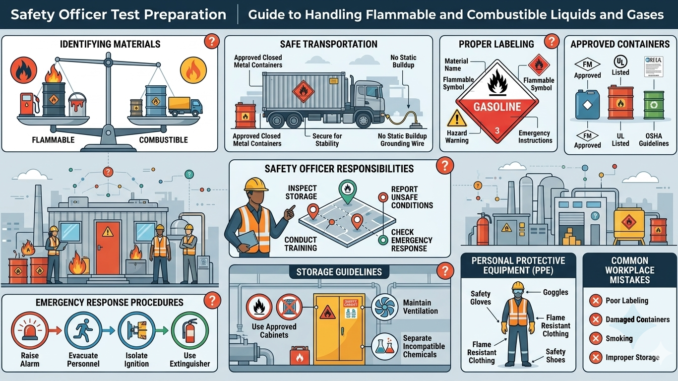
Safety Officer Test Preparation is essential for candidates preparing for industrial safety examinations and workplace safety responsibilities. This guide explains the safe handling of flammable and combustible liquids and gases, including transportation procedures, approved containers, labeling requirements, fire prevention methods, and emergency response practices.
This Safety Officer Test Preparation material focuses on practical workplace knowledge to help candidates understand industrial safety procedures and improve confidence for written exams and real workplace situations.
Flammable Liquids Safety Test Preparation
Flammable Liquids Safety Test and combustible liquids are substances that can easily catch fire when exposed to heat, sparks, or open flames.
| Flammable Materials | Combustible Materials |
|---|---|
| Gasoline | Diesel |
| Paint thinner | Lubricating oil |
| Acetone | Kerosene |
| LPG | Heating oil |
Importance of Proper Handling
Improper handling of flammable materials may cause:
- Fire accidents
- Explosions
- Worker injuries
- Toxic gas release
- Property damage
- Environmental hazards
Safety Officers must ensure all workers follow company safety procedures while handling hazardous materials.
Safe Transportation of Flammable Liquids
Flammable and combustible Flammable Liquids Safety Test liquids should always be transported in approved closed metal containers.
Important Rules
| Requirement | Description |
|---|---|
| Use Metal Containers | Approved metal containers reduce leakage and fire risks |
| Closed Containers | Prevent vapor release and ignition |
| Avoid Plastic Containers | Plastic containers may create static electricity and leakage hazards |
| Secure During Transport | Containers should remain stable and upright |
Plastic containers are generally prohibited for storing highly flammable liquids in industrial environments unless specially approved.
Proper Labeling Requirements
All containers holding flammable or combustible materials must be properly labeled.
Label Information Should Include
- Material name
- Hazard warning
- Flammable symbol
- Safety precautions
- Emergency instructions
Proper labeling helps workers quickly identify hazards and respond correctly during emergencies.
Approved Containers
Containers used for flammable liquids should meet approved industrial safety standards.
Common Approved Standards
| Standard | Purpose |
|---|---|
| FM Approved | Factory Mutual safety approval |
| UL Listed | Underwriters Laboratories certification |
| OSHA Guidelines | Workplace safety compliance |
Only approved containers should be used for storing hazardous liquids and gases.
Gasoline Container Safety
Flammable Liquids Safety Test Portable gasoline containers require special safety precautions.
Important Safety Rules
- Place gasoline containers on the ground during filling
- Never fill containers inside vehicle compartments
- Keep away from ignition sources
- Use approved safety cans
- Avoid overfilling
These precautions help prevent static electricity buildup and fire hazards.
Recapping Containers After Use
Containers holding flammable liquids should always be recapped immediately after use.
Why Recapping is Important
| Hazard Prevented | Explanation |
|---|---|
| Vapor Release | Reduces flammable vapor escape |
| Fire Risk | Prevents ignition from sparks |
| Contamination | Keeps materials clean |
| Leakage | Reduces spills and accidents |
Storage Requirements for Flammable Materials
Flammable Liquids Safety Test Industrial Fire Prevention Safety Guide.
Storage Guidelines
- Store materials in approved safety cabinets
- Keep away from heat and sparks
- Maintain ventilation
- Use warning signs
- Separate incompatible chemicals
- Conduct regular inspections
Fire Hazards of Flammable Gases
Flammable gases can spread rapidly and create explosion hazards.
| Gas | Hazard |
|---|---|
| LPG | Explosion risk |
| Acetylene | Highly flammable |
| Hydrogen | Rapid ignition |
| Propane | Gas leakage fire hazard |
Safety Officer Responsibilities
Flammable Liquids Safety Test
must ensure safe handling procedures are followed at all times.
Main Responsibilities
- Inspect storage areas
- Verify proper labeling
- Ensure approved containers are used
- Conduct safety training
- Monitor transportation procedures
- Check emergency response readiness
- Report unsafe conditions
Emergency Response Procedures
In case of fire or chemical leakage:
Immediate Actions
- Raise the alarm
- Evacuate unnecessary personnel
- Isolate ignition sources
- Use proper fire extinguishers
- Inform emergency response teams
- Follow company emergency procedures
Personal Protective Equipment (PPE)
Workers handling flammable materials should wear proper PPE.
| PPE | Purpose |
|---|---|
| Safety Gloves | Hand protection |
| Goggles | Eye protection |
| Flame Resistant Clothing | Heat protection |
| Safety Shoes | Foot protection |
| Respirator | Protection from fumes |
Common Workplace Mistakes
Unsafe Practices
- Using damaged containers
- Poor labeling
- Smoking near flammable materials
- Improper storage
- Leaving containers open
- Filling gasoline containers inside vehicles
These unsafe actions increase the risk of workplace fires and explosions.
Flammable Liquids Safety Test Questions and Answers
Q1: Why should flammable liquids be stored in metal containers?
Answer: Metal containers reduce leakage, static electricity buildup, and fire hazards.
Q2: Why is proper labeling important?
Answer: Proper labeling helps workers identify hazardous materials and follow safety precautions.
Q3: What does UL Listed mean?
Answer: It means the container meets Underwriters Laboratories safety standards.
Q4: Why should gasoline containers be placed on the ground during filling?
Answer: To reduce static electricity and prevent fire hazards.
Q5: Why should containers be recapped immediately after use?
Answer: To prevent vapor release, spills, and fire risks.
Q6: What are common ignition sources?
Answer: Sparks, open flames, hot surfaces, and electrical equipment.
Q7: What should a Safety Officer inspect regularly?
Answer: Storage areas, labels, container condition, and fire safety equipment.
Scenario-Based Questions
Scenario 1
A worker stores gasoline in an unapproved plastic container.
What should the Safety Officer do?
Answer:
- Stop the unsafe practice immediately
- Replace with approved metal container
- Educate worker on safety procedures
- Inspect nearby storage areas
Scenario 2
A flammable liquid container has no label.
What action should be taken?
Answer:
- Stop usage immediately
- Identify the material safely
- Apply proper hazard labeling
- Report safety violation if required
Scenario 3
A worker fills a gasoline container inside a truck bed.
Why is this dangerous?
Answer:
- Static electricity may ignite vapors
- Increased fire and explosion risk
- Unsafe fueling procedure
Safety Officer Test Preparation Tips
Study Practical Safety Rules
Understand how safety procedures apply in real workplaces.
Practice Hazard Identification
Learn to recognize unsafe conditions quickly.
Review Emergency Procedures
Emergency response questions are common in Safety Officer tests.
Learn Safety Standards
Understand approved container requirements and workplace safety regulations.
Conclusion
Handling flammable and combustible liquids and gases requires strict safety procedures and continuous monitoring. Safety Officers play an essential role in preventing fires, protecting workers, and maintaining safe industrial operations.
This Safety Officer Test Preparation guide helps candidates understand transportation rules, labeling requirements, approved containers, emergency procedures, and workplace fire prevention measures. Regular practice of these questions and safety scenarios will improve technical knowledge and examination confidence.
References and Last Reviewed
- OSHA 29 CFR 1926 Subpart F – Fire Protection and Prevention: osha.gov/1926SubpartF
- NFPA 30 – Flammable and Combustible Liquids Code: nfpa.org (verify current edition)
Jurisdiction: United States – OSHA construction industry standards (29 CFR 1926). Verify local/site-specific requirements where this differs from your jurisdiction.
Last technically reviewed: September 2026
Reviewed by: EHS Guidelines Editorial Team
This article is educational. Apply current official rules, approved site procedures, manufacturer instructions and competent-person assessment for your actual worksite.


Be the first to comment