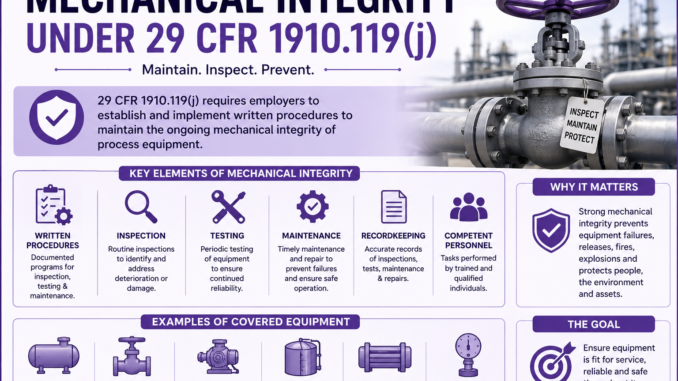
PSM mechanical integrity is the system used to keep specified process equipment suitable, correctly installed, inspected, tested, maintained, and safe for its intended service. Under 29 CFR 1910.119(j), employers must establish written procedures, train maintenance employees, inspect and test equipment using recognized good engineering practices, correct deficiencies, and apply quality assurance.
Mechanical integrity is not limited to preventive-maintenance work orders. It connects the equipment design basis in process safety information with competent maintenance, inspection results, operating experience, replacement parts, and safe return to service.
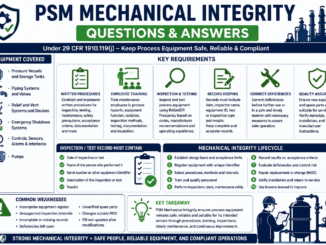
Equipment covered by paragraph 1910.119(j)
The mechanical-integrity requirements apply to:
- Pressure vessels and storage tanks;
- Piping systems, including components such as valves;
- Relief and vent systems and devices;
- Emergency shutdown systems;
- Controls, including monitoring devices, sensors, alarms, and interlocks; and
- Pumps.
This is the regulatory minimum list. If other equipment is critical to a particular process, it should be evaluated within the facility’s broader equipment-integrity and risk-management PSM Mechanical Integrity system.
Written mechanical-integrity procedures
The employer must establish and implement written procedures to maintain ongoing equipment integrity. Useful procedures define:
- Equipment scope and unique identifier;
- Responsible roles and required qualifications;
- Inspection, test, maintenance, and calibration method;
- Safety precautions, isolation, permits, and return-to-service controls;
- Acceptance criteria and applicable engineering basis;
- Required documentation;
- Response to out-of-limit results;
- Quality controls for materials and spare parts; and
- Triggers for management of change.
A generic instruction such as “inspect regularly” is not enough for personnel to select PSM Mechanical Integrity a method, determine acceptance, or respond to a deficiency.
Training for process maintenance activities
Employees involved in maintaining ongoing process-equipment integrity must be trained in an overview of the process and its hazards and in procedures applicable to their job tasks. This requirement is distinct from operator training under paragraph (g).
Depending on the task, maintenance competency may include equipment function, chemical and energy hazards, isolation, line opening, confined-space controls, hot work, inspection technique, calibration, material verification, torque or assembly requirements, testing, documentation, and recognition of conditions requiring PSM Mechanical Integrity escalation.
Inspection and testing requirements
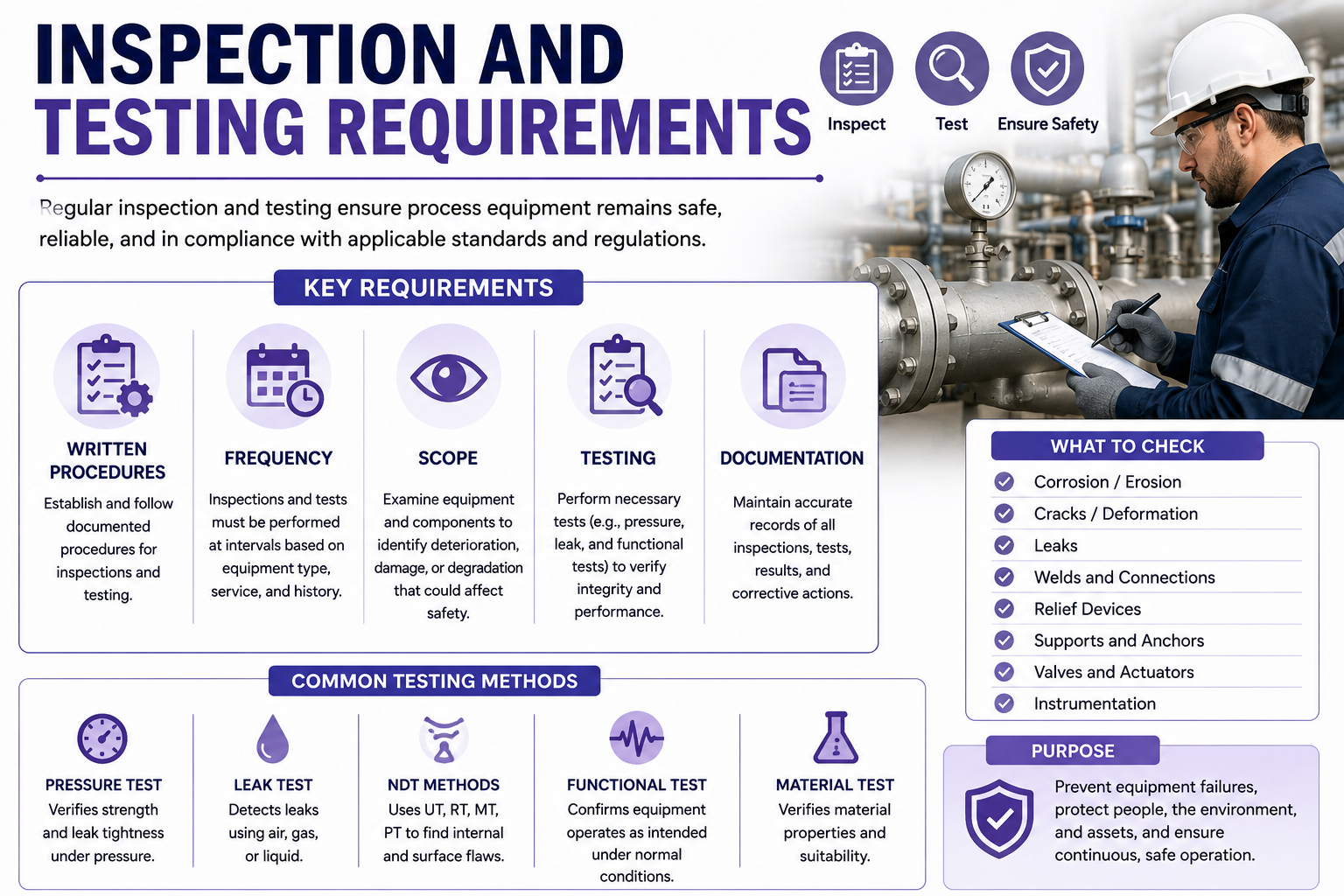
Inspection and testing must be performed on process equipment. Procedures must follow recognized and generally accepted good engineering practices, or RAGAGEP. Frequency must be consistent with applicable manufacturer recommendations and good engineering practices, and it must be more frequent when prior operating experience indicates that need.
A defensible program uses the equipment’s service, degradation mechanisms, consequence, inspection history, code requirements, and operating experience. Extending an interval for convenience without technical support can allow a known damage mechanism to progress PSM Mechanical Integrity undetected.
What every inspection or test record must contain
Paragraph 1910.119(j)(4)(iv) requires:
- Date of inspection or test;
- Name of the person who performed it;
- Serial number or other equipment identifier;
- Description of the inspection or test; and
- Results.
A stronger record also references the procedure, instrument used, acceptance criteria, actual readings, as-found/as-left condition, required corrective action, and approval for return to PSM Mechanical Integrity service.
Correcting equipment deficiencies
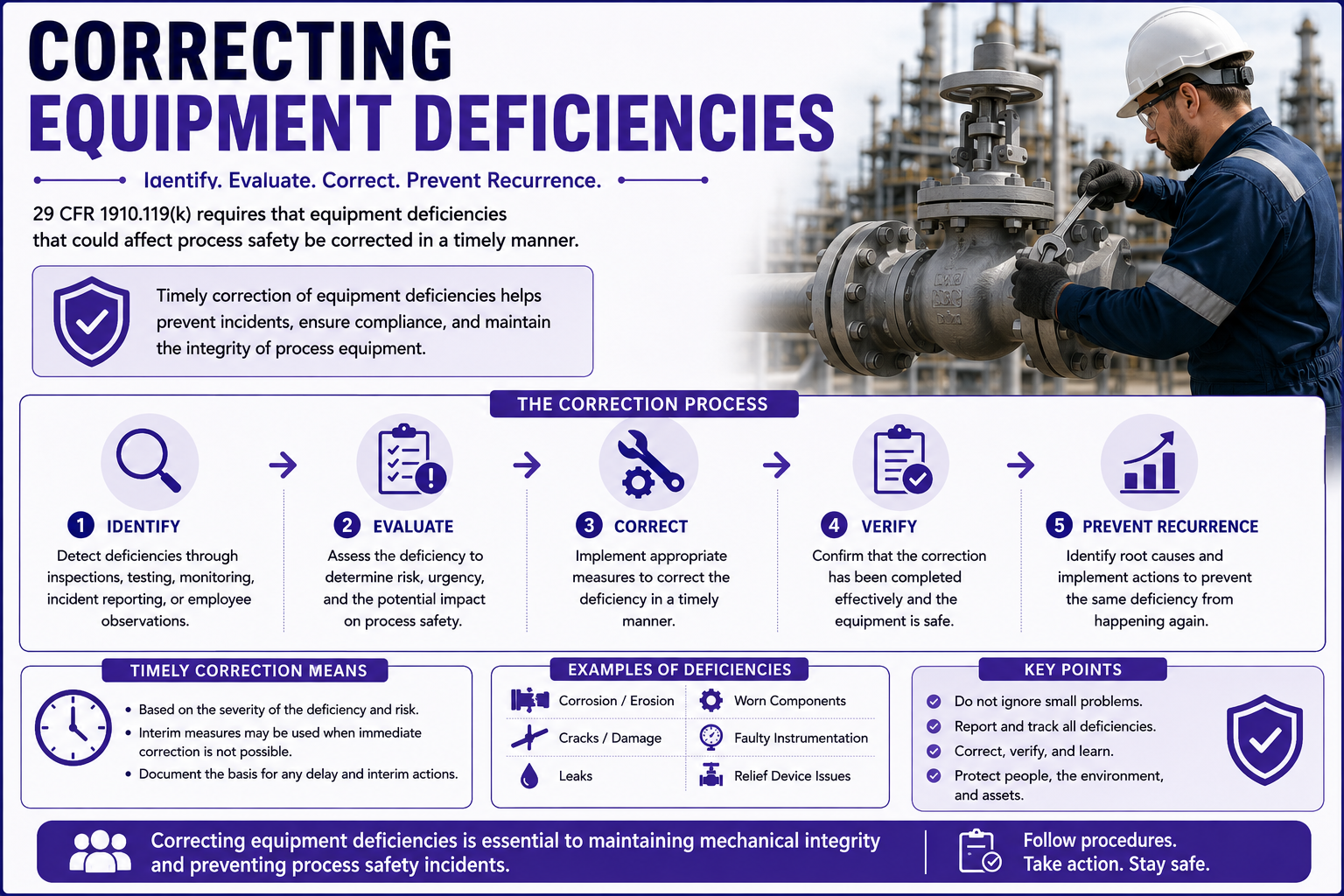
Deficiencies outside acceptable limits defined by PSI must be corrected before further use or in a safe and timely manner when necessary measures are taken to assure safe operation. This language does not mean every deficiency can remain in service until convenient. The organization needs a documented technical decision that defines risk controls, monitoring, authorization, time limit, and final repair.
If a repair, substitute material, altered set point, temporary clamp, bypass, or operating restriction changes the process or equipment basis, evaluate it under management of PSM Mechanical Integrity change.
Quality assurance for new equipment and spare parts
For new plants and equipment, the employer must assure that fabricated equipment is suitable for its process application and that checks and inspections confirm proper installation consistent with design specifications and manufacturer instructions. Maintenance materials, spare parts, and equipment must also be suitable for the application.
Quality assurance may include positive material identification where justified, certification review, dimensional checks, weld examination, pressure testing, cleanliness control, instrument calibration, rotation checks, relief-device verification, and preservation records. The required measures depend on the equipment and service.
Mechanical-integrity lifecycle
- Establish the design basis, equipment boundary, and acceptance limits.
- Register each covered item with a unique identifier and service information.
- Select procedures, methods, and intervals using applicable RAGAGEP and experience.
- Train and qualify personnel for assigned work.
- Plan and perform inspections, tests, maintenance, and calibrations safely.
- Record results against defined acceptance criteria.
- Evaluate deficiencies and control continued operation when permitted.
- Complete repair, replacement, or change through applicable authorization.
- Verify correct installation and return to service.
- Use findings and incidents to improve the PSM Mechanical Integrity strategy.
Common mechanical-integrity weaknesses
- An incomplete covered-equipment register;
- Intervals not supported by codes, manufacturers, or operating history;
- Inspection records without actual results or acceptance criteria;
- Overdue safety-critical tests;
- Deficiencies left open without documented safe-operation measures;
- Unverified spare-part materials;
- Maintenance changes performed outside MOC; and
- Failure to update PSI after equipment modification.
Prioritizing deficiencies and overdue work
Paragraph (j)(5) requires deficiencies outside acceptable limits to be corrected before further use or in a safe and timely manner when necessary means are taken to assure safe operation. The decision should be based on documented engineering and operating information, not schedule pressure. Consider the failure mode, degradation rate, remaining margin, process consequence, protective layers, operating PSM Mechanical Integrity conditions, and the reliability of any temporary control.
An overdue inspection should not be treated automatically as proof that equipment has failed, but it is also not resolved by changing the date after the fact. Evaluate the reason, current condition, risk, and steps required to restore the approved interval. If continued operation is proposed, identify who authorized it, the technical basis, compensating measures, monitoring, and a firm completion date. Changes to equipment, materials, limits, or inspection strategy may require MOC.
Using inspection data as a process-safety signal
Trend results instead of storing isolated reports. Repeated corrosion, valve leakage, instrument drift, relief-device findings, or seal failures may point to incorrect materials, operating outside limits, ineffective procedures, or incomplete PSI. Review significant patterns with operations and engineering, then feed them into PHAs, incident investigations, operating procedures, training, and capital planning where relevant.
Computerized maintenance systems help schedule and retrieve work, but configuration matters. Equipment records should match field tags and PSI, distinguish safety-critical duties, preserve the inspection method and result, and prevent closure without required evidence. The system supports compliance; it does not replace technically sound inspection criteria or qualified PSM Mechanical Integrity judgment.

Be the first to comment