Safety Officer Test Preparation
Steel Erection Safety Officer Test Preparation
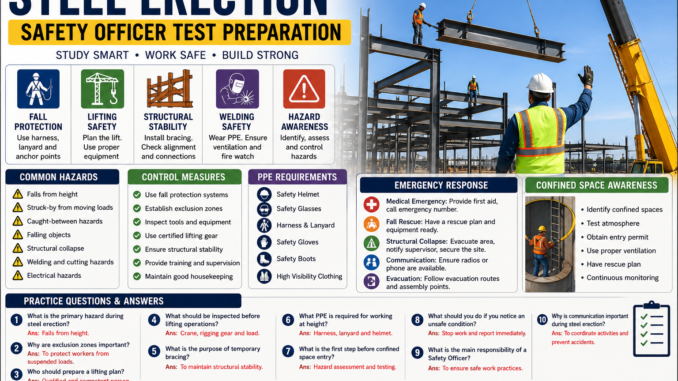
Steel Erection is one of the most important topics in Safety Officer examinations conducted by companies, organizations, contractors, and industrial employers. Safety professionals must understand steel erection hazards, structural stability requirements, lifting operations, fall protection systems, emergency response procedures, and confined space considerations.
This Steel Erection Safety Officer Test Preparation guide is designed to help candidates prepare effectively for Safety Officer assessments. It provides essential knowledge, practical safety guidance, scenario-based learning, and examination-style questions with answers. By reviewing this guide regularly and practicing the questions repeatedly, candidates can improve confidence and increase their chances of success.
What is Steel Erection?
Steel Erection refers to the process of assembling structural steel members to create buildings, industrial facilities, bridges, towers, and other structures.
Activities typically include:
- Unloading steel members
- Lifting operations
- Structural assembly
- Bolting connections
- Welding operations
- Deck installation
- Structural alignment
Because work is often performed at height and involves heavy loads, Steel Erection is considered a high-risk construction activity.
Steel Erection Safety Requirements
Steel Erection Fall Protection Requirements
Fall hazards are among the leading causes of serious injuries during Steel Erection operations.
Important controls include:
- Full-body harnesses
- Shock-absorbing lanyards
- Approved anchor points
- Guardrail systems
- Safety nets where required
- Fall protection training
Safety officers must verify that fall protection systems are properly inspected and used.
Steel Erection Lifting Safety Requirements
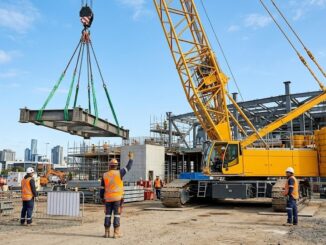
Structural steel members are often moved using cranes and lifting equipment.
Safety requirements include:
- Approved lifting plans
- Qualified riggers
- Trained crane operators
- Inspected lifting gear
- Clear communication methods
- Exclusion zones around lifting operations
Workers should never stand beneath suspended loads.
Steel Erection Structural Stability Requirements
Structural stability is critical throughout the erection process.
Safety officers should ensure:
- Temporary bracing is installed.
- Connections are secured.
- Structural members are aligned properly.
- Loads remain within design limits.
- Engineering requirements are followed.
Loss of structural stability can result in collapse.
Common Hazards During Steel Erection
Fall Hazards in Steel Erection
Workers may be exposed to:
- Unprotected edges
- Open floors
- Elevated beams
- Temporary platforms
- Roof structures
Proper fall protection remains essential at all times.
Struck-By Hazards in Steel Erection
Workers may be struck by:
- Swinging steel members
- Moving equipment
- Falling tools
- Crane loads
- Structural components
Good communication and exclusion zones help reduce risks.
Caught-Between Hazards in Steel Erection
Workers can become trapped between:
- Structural members
- Crane loads
- Equipment
- Temporary supports
Safe positioning and communication are critical.
Welding and Cutting Hazards
Steel Erection frequently involves welding activities.
Hazards include:
- Burns
- Fire
- Eye injuries
- Fume exposure
- Electrical shock
Appropriate personal protective equipment should always be used.
Steel Erection Inspection Requirements
Pre-Work Inspection
Before work begins, inspections should verify:
- Crane condition
- Rigging equipment
- Structural components
- Access systems
- Fall protection equipment
Defective equipment should be removed from service immediately.
Daily Steel Erection Inspection
Safety officers should inspect:
- Work areas
- Temporary supports
- Connections
- Lifting equipment
- Housekeeping conditions
Daily inspections help identify hazards before incidents occur.
Connection Inspection Requirements
Steel connections should be checked for:
- Proper alignment
- Correct bolt installation
- Structural integrity
- Welding quality
- Stability
Connection failures can result in structural collapse.
Steel Erection Emergency Response Preparation
Every organization should establish emergency procedures before work starts.
Medical Emergency Response
Emergency planning should include:
- First aid resources
- Emergency contact numbers
- Medical transportation arrangements
- Trained responders
Workers should understand reporting procedures.
Fall Rescue Planning
When workers use fall arrest systems, rescue procedures must be available.
Planning should address:
- Rescue equipment
- Communication methods
- Response teams
- Rescue timelines
Quick rescue helps reduce suspension trauma risks.
Structural Collapse Response
If structural instability occurs:
- Stop work immediately.
- Evacuate affected areas.
- Notify supervisors.
- Secure the scene.
- Follow emergency procedures.
Only authorized personnel should enter affected areas.
Confined Space Awareness During Steel Erection
Steel Erection activities may occur near or inside confined spaces.
Examples include:
- Tanks
- Vessels
- Utility vaults
- Pits
- Process units
Before entry:
- Hazard assessments should be completed.
- Atmospheric testing should be conducted.
- Entry permits should be approved.
- Rescue plans should be available.
- Continuous monitoring may be required.
Confined space safety is frequently included in Safety Officer examinations.
Steel Erection Personal Protective Equipment
Workers involved in Steel Erection should use:
- Safety helmets
- Safety glasses
- High-visibility clothing
- Safety boots
- Gloves
- Hearing protection
- Fall protection equipment
Proper PPE reduces injury severity and improves workplace safety.
Steel Erection Safety Officer Responsibilities
Safety officers should:
Steel Erection Worksite Monitoring
- Conduct inspections
- Monitor compliance
- Verify permits
- Observe work practices
- Identify hazards
Steel Erection Training Verification
- Confirm worker competency
- Review certifications
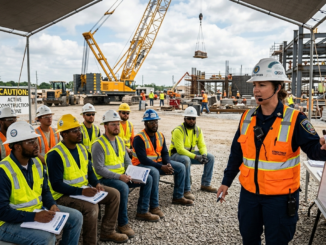
- Conduct toolbox talks
- Provide safety awareness training
Steel Erection Incident Prevention
- Investigate hazards
- Correct unsafe conditions
- Review risk assessments
- Promote safe behaviors
Strong supervision helps prevent incidents.
Steel Erection Safety Officer Test Questions and Answers
Q1. What is the primary hazard during Steel Erection?
Answer: Falls from height.
Q2. What PPE is required when working at elevation?
Answer: Full-body harness and approved fall protection equipment.
Q3. Why are exclusion zones established?
Answer: To protect workers from suspended loads and moving equipment.
Q4. What should be inspected before lifting operations?
Answer: Cranes, rigging equipment, and lifting accessories.
Q5. What is the purpose of temporary bracing?
Answer: To maintain structural stability.
Q6. What should workers never stand under?
Answer: Suspended loads.
Q7. Why is communication important during lifting operations?
Answer: To prevent accidents and coordinate movements.
Q8. What hazard is associated with welding?
Answer: Burns and fume exposure.
Q9. What should be checked during connection inspections?
Answer: Alignment, bolts, welds, and stability.
Q10. What should happen after identifying unsafe conditions?
Answer: Corrective action should be taken immediately.
Q11. Why are toolbox talks important?
Answer: They communicate safety information before work begins.
Q12. What is a common struck-by hazard?
Answer: Swinging steel members.
Q13. What should be included in a fall rescue plan?
Answer: Rescue equipment, communication methods, and trained responders.
Q14. What is the first step before confined space entry?
Answer: Hazard assessment and atmospheric testing.
Q15. Why are daily inspections necessary?
Answer: To identify hazards and maintain safe operations.
Q16. What should workers do during a structural collapse emergency?
Answer: Evacuate and follow emergency procedures.
Q17. What is the purpose of a safety harness?
Answer: To protect workers from fall injuries.
Q18. Why should defective equipment be removed from service?
Answer: To prevent accidents and failures.
Q19. What should safety officers verify regarding workers?
Answer: Competency and training.
Q20. What is one of the main responsibilities of a Safety Officer?
Answer: Hazard identification and incident prevention.
Study Tips for Steel Erection Safety Officer Tests
Steel Erection Hazard Recognition
Focus on:
- Fall hazards
- Struck-by hazards
- Caught-between hazards
- Structural collapse hazards
Steel Erection Emergency Response
Study:
- Rescue procedures
- Evacuation methods
- Incident reporting
- Medical emergency response
Steel Erection Confined Space Awareness
Review:
- Entry permits
- Atmospheric testing
- Rescue planning
- Hazard assessment
Steel Erection Scenario Practice
Practice real-world construction scenarios regularly. Many Safety Officer examinations evaluate practical decision-making rather than memorization alone.
Conclusion
Steel Erection Safety Officer Test Preparation is an essential topic for construction and industrial safety professionals. Understanding fall protection, lifting operations, structural stability, emergency response, confined space awareness, inspections, and hazard controls will help candidates perform successfully during Safety Officer assessments.
Review this Steel Erection Safety Officer Test Preparation guide frequently, practice the questions repeatedly, and strengthen your ability to recognize hazards and apply safe work practices.
Be the first to comment