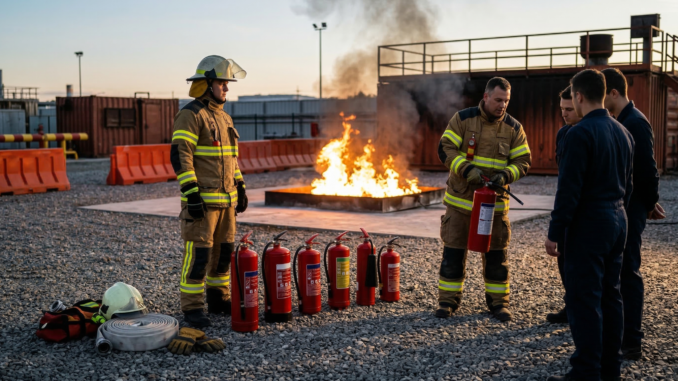
Introduction to Fire Fighting Training
Fire safety is an essential component of workplace safety, industrial operations, and public protection. Fires can cause serious injuries, property damage, and environmental harm if they are not prevented or controlled effectively. Basic fire fighting training provides the knowledge required to understand fire behavior, recognize fire hazards, and respond safely during fire emergencies.
This guide explains the fundamentals of fire science, fire hazards, fire extinguishers, stages of fire, fire spread mechanisms, and firefighter selection criteria. Understanding these principles helps individuals and organizations improve fire prevention and emergency preparedness.
Objectives of Fire Fighting Training
1. Know Hazards of Fire
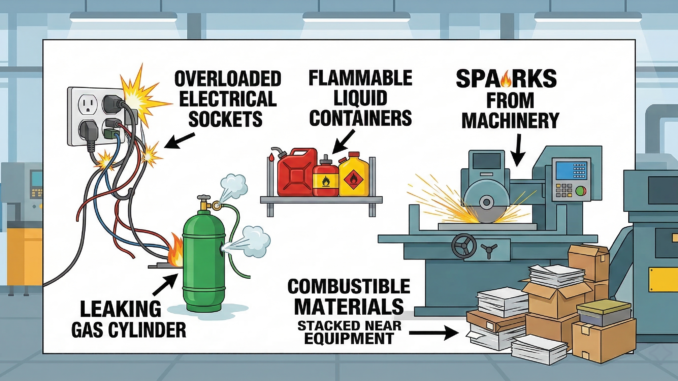
One of the main objectives of fire fighting training is to understand the hazards associated with fire. Fire hazards include materials, conditions, or activities that increase the risk of fire ignition or fire spread. By identifying these hazards early, individuals can prevent dangerous situations before they occur.
Common fire hazards include:
-
Flammable liquids and gases
-
Faulty electrical wiring
-
Overloaded electrical circuits
-
Poor housekeeping
-
Improper storage of combustible materials
Recognizing these hazards helps reduce fire risk and protect lives and property. It aligns closely with guidelines set by the Occupational Safety and Health Administration (OSHA).
2. Create Awareness to Handle Fire Emergencies
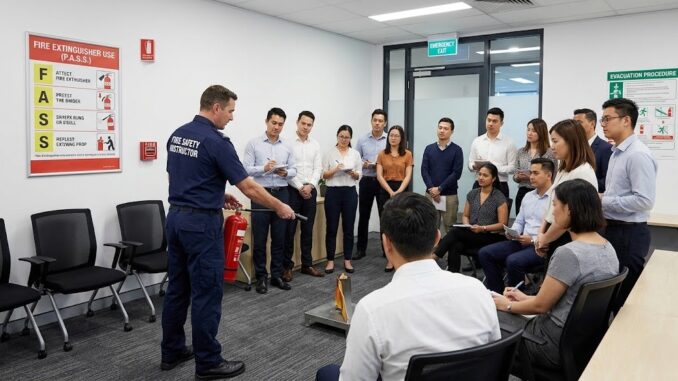
=Fire awareness training ensures that individuals know how to react in emergency situations. Awareness includes:
-
Knowing evacuation routes
-
Locating fire extinguishers
-
Understanding fire alarms
-
Knowing when to fight a fire and when to evacuate
Proper awareness ensures that people respond quickly and safely when a fire occurs. If your workplace needs an evaluation, consider booking our On-Site Fire Risk Assessment.
Basic Knowledge of Fire Science
Understanding the science behind fire is essential for controlling it effectively.
Fire Triangle Explained
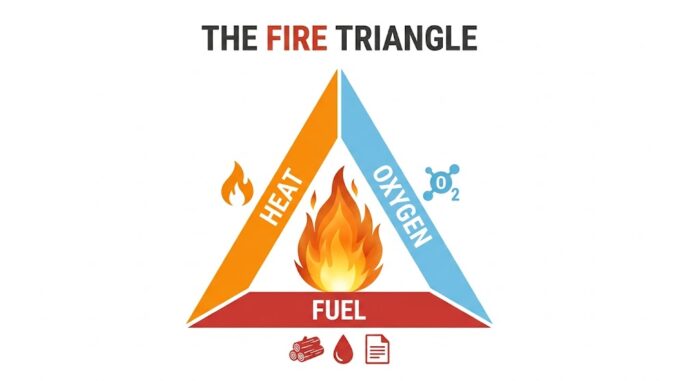
The Fire Triangle explains the three elements necessary for a fire to exist:
Heat + Fuel + Oxygen → Fire
Heat
Heat provides the energy required to start and sustain combustion.
Fuel
Fuel refers to any combustible material such as wood, paper, cloth, gasoline, oil, or chemicals.
Oxygen: The Element That Supports Combustion
Oxygen supports the chemical reaction of combustion.
If any of these elements is removed, the fire will stop.
Understanding Fire: Definition, Combustion Process, Heat, Light, and Gases
Fire is defined as a rapid oxidation reaction of combustible materials in an exothermic chemical process called combustion.
During this process:
- Heat is produced
- Light is emitted
- Gases and smoke are released
These reactions continue as long as fuel, heat, and oxygen remain available.
Understanding Fire Hazards
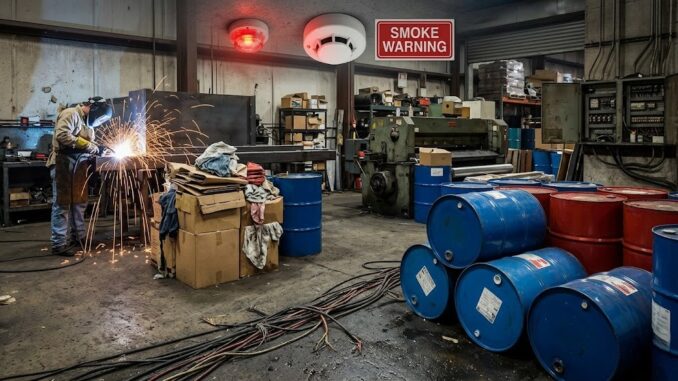
Fire hazards are conditions or materials that increase the likelihood of fire or intensify its effects.
Examples of fire hazards include:
- Accumulation of combustible waste
- Flammable chemicals stored improperly
- Gas leaks
- Electrical sparks
- High-temperature industrial equipment
Managing fire hazards is one of the most effective ways to prevent fire incidents.
Fire Safety
Fire safety refers to the set of precautions and practices used to prevent fires and minimize their impact.
Fire safety practices include:
- Installing smoke detectors
- Maintaining fire extinguishers
- Conducting fire drills
- Training employees
- Safe storage of flammable materials
Strong fire safety programs significantly reduce fire-related risks.
Oxidation in Fire Science
Oxidation is a chemical reaction in which a substance combines with oxygen.
In fire science, combustion occurs when oxidation happens rapidly and releases energy in the form of heat and light.
Reactivity and Its Role in Fire Behavior
Reactivity refers to the tendency of substances to undergo chemical reactions with other materials.
Highly reactive materials may ignite easily or react violently with oxygen or other chemicals, increasing fire risk.
Types of Fire Extinguishers
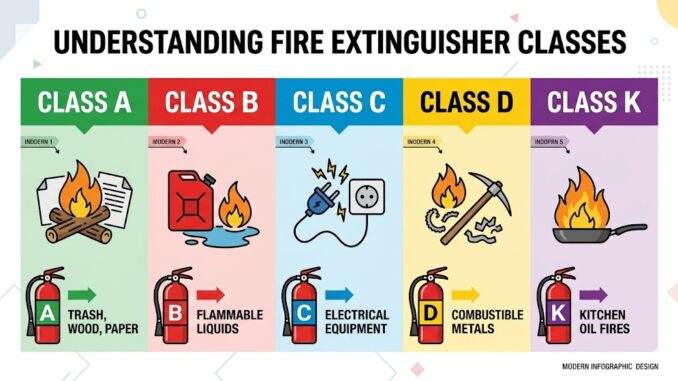
Different fires require different extinguishing agents. Fire extinguishers are classified according to the type of fire they can control.
Class A Fires – Ordinary Combustible Materials
Class A fires involve ordinary combustible materials such as:
- Wood
- Paper
- Cloth
- Plastics
Water and foam extinguishers are commonly used to extinguish these fires.
Class B Fires – Flammable Liquids and Gases
Class B fires involve flammable liquids and gases, including:
- Petrol
- Alcohol
- Gasoline
- Oil
Foam, carbon dioxide (CO₂), or dry chemical extinguishers are used for these fires.
Class C Fires – Electrical Fires
Class C fires involve energized electrical equipment, such as:
- Computers
- Electric motors
- Electrical panels
CO₂ and dry chemical extinguishers are used because they do not conduct electricity.
Class D Fires – Combustible Metal Fires
Class D fires involve combustible metals, including:
- Magnesium
- Lithium
- Potassium
Special dry powder extinguishers are required to control these fires.
Class K Fires – Cooking Oils and Fats
Class K fires involve animal and vegetable fats, usually in commercial kitchens.
Wet chemical extinguishers are used to control these fires effectively.
Stages of Fire Development
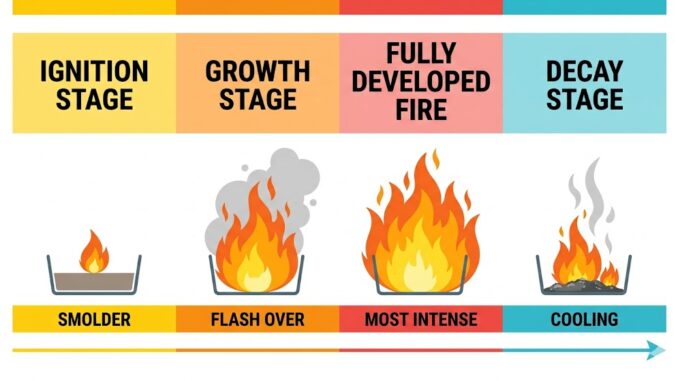
Fires develop through several stages as they grow and spread.
1. Incipient Stage (Ignition Stage)
This is the initial stage of fire where ignition occurs.
Characteristics include:
- Small flames
- Limited heat
- Minimal smoke
At this stage, fires can usually be controlled easily with portable extinguishers.
2. Fire Growth Stage
During the growth stage:
- Fire spreads to nearby materials
- Heat increases rapidly
- Smoke production increases
If not controlled quickly, the fire may become uncontrollable.
3. Steady State (Fully Developed Fire)
In this stage:
- Fire reaches its maximum intensity
- Heat release rate becomes constant
- Flames spread rapidly throughout the area
This stage presents the greatest danger to life and property.
4. Fire Decay Stage
In the decay stage:
- Fuel or oxygen supply decreases
- Fire intensity gradually reduces
- Heat release rate declines
However, the fire may still pose risks due to hot surfaces and smoke.
Upper Flammable Limit
The Upper Flammable Limit (UFL) refers to the maximum concentration of flammable vapors in air above which combustion cannot occur because the mixture is too rich in fuel.
Auto Ignition
Auto ignition is the ignition of a material without the presence of an external ignition source, such as a spark or flame.
This occurs when the material reaches its auto ignition temperature.
Flammable Range
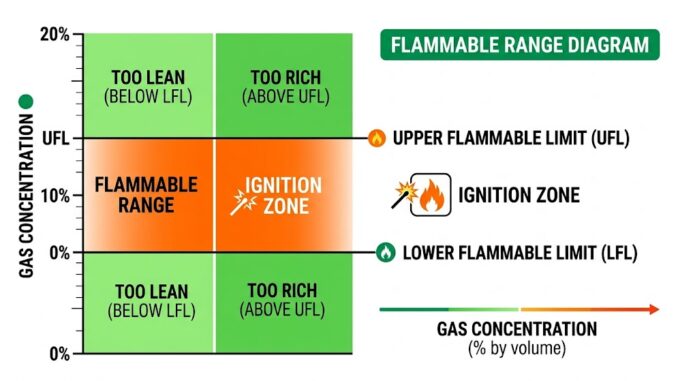
The flammable range is the concentration range of flammable vapors in air where combustion can occur.
If vapor concentration falls within this range, ignition is possible when exposed to a spark or flame.
Static Electricity and Fire Hazards
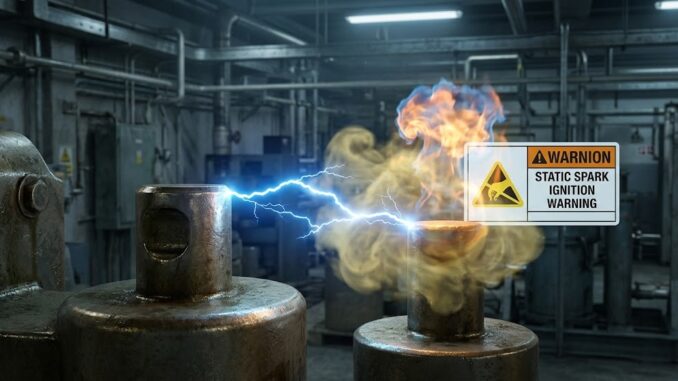
Static electricity is electric charge produced when two different materials come into contact and then separate.
Static sparks can ignite flammable vapors and cause fires or explosions.
Fire Tetrahedron and Chain Reaction
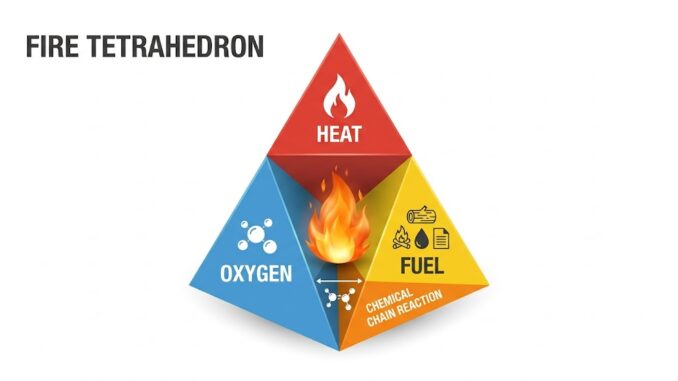
The Fire Tetrahedron expands the fire triangle by adding a fourth component:
- Heat
- Fuel
- Oxygen
- Chemical Chain Reaction
The chain reaction sustains the combustion process.
Important Fire Science Terms
1. Fire Point
The fire point is the temperature at which a substance produces enough vapor to sustain continuous combustion after ignition.
2. Ignition Point
The ignition point is the lowest temperature at which a substance must be heated to ignite and start burning.
3. Combustion
Combustion is a chemical reaction in which fuel reacts rapidly with oxygen and releases heat, light, and gases.
4. Flammability
Flammability refers to the ability of a substance to burn when exposed to heat or flame.
5. Spontaneous Ignition Temperature
This is the lowest temperature at which a substance ignites automatically without an external flame.
6. Flash Point
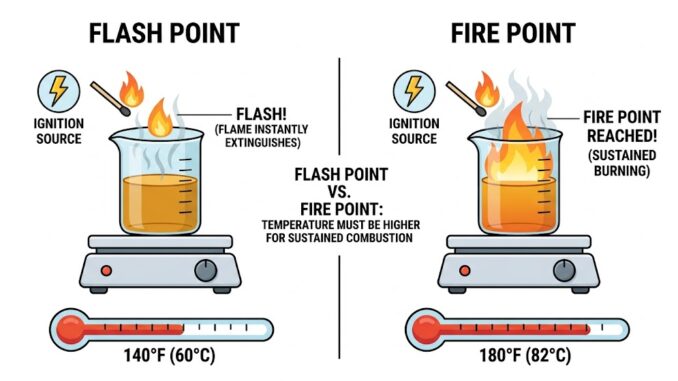
Flash point is the lowest temperature at which vapors from a substance ignite momentarily when exposed to a flame.
Fire Fighting Decision Criteria
Before attempting to extinguish a fire, several factors must be considered.
1. Situations When You Should Not Fight a Fire
- The fire is spreading rapidly
- There is no safe escape route
- You do not have the correct fire extinguisher
- The area is filled with smoke
If these conditions exist, evacuate immediately.
2. Importance of Knowing Fire Extinguisher Locations
Fire safety training requires everyone to know:
- Where fire extinguishers are located
- How to activate fire alarms
- How to avoid smoke-filled areas
Quick access to fire equipment can help control small fires before they spread.
Flammable and Combustible Liquids
Flammable Liquids and Their Properties
Flammable liquids ignite easily at normal working temperatures.
Flash point: below 100°F (37°C)
Examples:
- Pentane
- Ether
- Gasoline
Combustible Liquids and Their Characteristics
Combustible liquids ignite at higher temperatures.
Flash point: above 100°F (37°C)
Examples:
- Diesel (39–60°C)
- Paints (61–93°C)
Method of Fire Spread
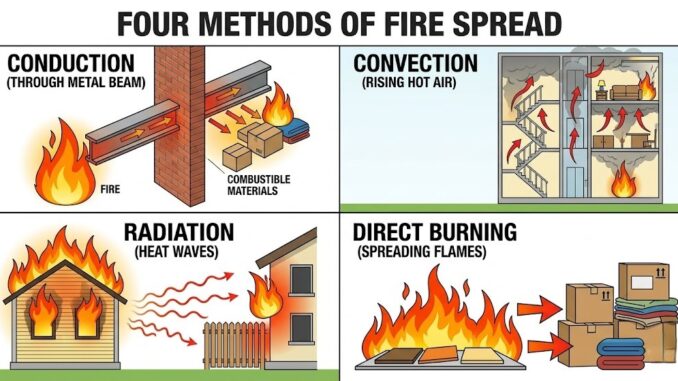
Fires spread through several heat transfer mechanisms.
Conduction: Heat Transfer Through Solids
Conduction is the transfer of heat through direct contact between materials.
Example: Heat traveling through metal beams during a building fire.
Direct Burning: Flame Contact Spread
Direct burning occurs when flames directly ignite nearby combustible materials.
Example: A burning curtain igniting nearby furniture.
Convection: Heat Transfer Through Air and Fluids
Convection is the transfer of heat through liquids or gases.
Hot air rises and carries heat upward, spreading fire through ventilation systems or staircases.
Radiation: Heat Transfer Through Energy Waves
Radiation is the transfer of heat through electromagnetic waves without direct contact.
Example: Heat from a fire igniting nearby objects.
How to Select a Fire Fighter
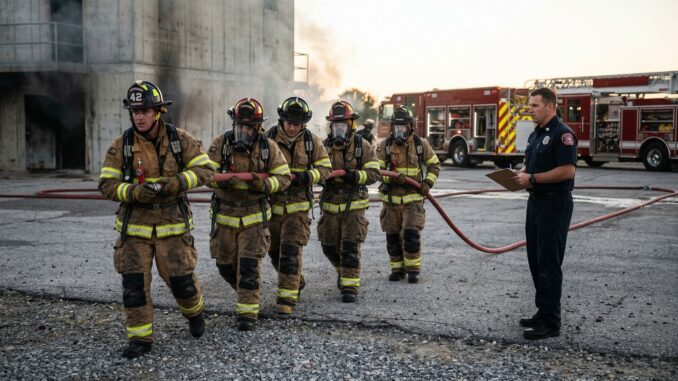
Selecting the right firefighter requires evaluating several important qualities.
Integrity: Ethical Responsibility in Firefighting
Integrity refers to honesty, ethical behavior, and strong moral principles.
A firefighter must act responsibly, follow safety procedures, and make decisions that protect lives and property.
Integrity builds trust within fire teams and ensures professional conduct.
Physical Fitness: Strength and Endurance Requirements
Firefighting is physically demanding and requires:
- Strength
- Endurance
- Stamina
Firefighters must carry heavy equipment, climb ladders, and work in extreme heat conditions. Physical fitness ensures they can perform these tasks safely.
Communication: Effective Emergency Coordination
Effective communication is essential during emergencies.
Firefighters must communicate clearly with:
- Team members
- Emergency responders
- Victims
Good communication improves coordination and reduces confusion during fire incidents.
Team Work: Cooperation in Fire Response Operations
Firefighting is a team-based operation.
Firefighters must cooperate with each other to:
- Control fires
- Rescue victims
- Operate equipment safely
Strong teamwork increases efficiency and improves safety during emergency operations.
Diligence: Discipline and Attention to Safety Procedures
Diligence means being attentive, careful, and committed to responsibilities.
A diligent firefighter:
-
- Follows procedures carefully
- Maintains equipment properly
- Remains alert during operations
Diligence helps prevent mistakes and improves overall fire safety.
Be the first to comment