Safety Officer Test Preparation
Fall Protection Test Preparation
Fall Protection Test preparation is essential for safety officers, supervisors, and workers who perform tasks at elevated locations. Falls remain one of the leading causes of workplace injuries and fatalities. Understanding fall protection requirements, equipment selection, inspection procedures, and safe work practices helps reduce incidents and improve workplace safety.
This guide is designed as a structured Safety Officer Test Preparation resource. It explains key concepts related to fall protection, provides practical guidance, and includes multiple-choice and scenario-based questions with answers. Regular review of these questions can improve knowledge retention and build confidence before examinations and workplace assessments.
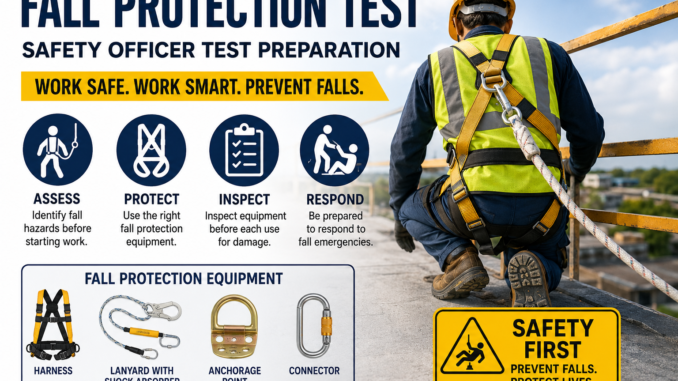
Image Alt Text: Fall Protection Test
What is Fall Protection?
Fall Protection Test topics generally begin with understanding the purpose of fall protection systems. Fall protection refers to policies, procedures, and equipment designed to prevent workers from falling from elevated work areas or to minimize injury if a fall occurs.
Fall protection measures may include:
- Guardrails
- Safety nets
- Personal fall arrest systems
- Travel restraint systems
- Positioning systems
- Warning lines
- Controlled access zones
The primary objective is to eliminate or reduce exposure to fall hazards.
Fall Protection Test: Purpose of Fall Protection
The purpose of fall protection is to:
- Prevent falls from heights.
- Protect workers from serious injuries.
- Ensure compliance with workplace safety requirements.
- Promote a safe working environment.
- Reduce incident-related costs.
Whenever possible, work should be performed from the ground to minimize exposure to fall hazards.
Common Fall Hazards
Fall Protection Test – Typical Hazard Locations
Workers may encounter fall hazards in:
- Roofs
- Scaffolds
- Ladders
- Elevated platforms
- Open floor openings
- Excavations
- Structural steel work
- Loading docks
- Mobile elevated work platforms
Before beginning work, a hazard assessment should be conducted to identify potential risks.
Types of Fall Protection Systems
1. Guardrail Systems
Guardrails provide a physical barrier between workers and fall hazards.
Benefits include:
- Continuous protection
- Minimal worker action required
- Effective for roof edges and platforms
2. Personal Fall Arrest Systems
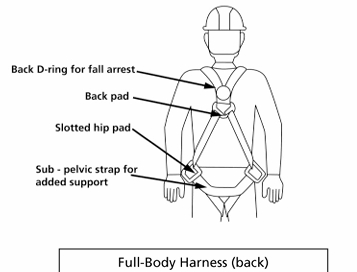
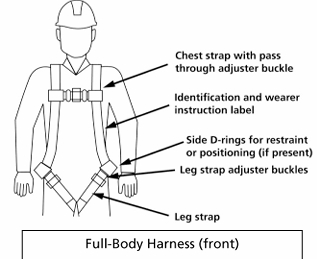
A personal fall arrest system consists of:
- Full-body harness
- Shock-absorbing lanyard
- Anchorage point
- Connector
These systems stop a worker safely during a fall.
3. Safety Nets
Safety nets are installed beneath work areas where other forms of protection may not be practical.
4. Travel Restraint Systems
Travel restraint systems prevent workers from reaching an unprotected edge.
Fall Protection Equipment Inspection
Fall Protection Test Equipment Checks
Workers should inspect equipment before each use.
Check for:
- Cuts
- Frayed stitching
- Corrosion
- Cracks
- Missing labels
- Damaged connectors
Any defective equipment must be removed from service immediately.
Anchor Points and Their Importance
Anchor points are critical components of fall arrest systems.
A suitable anchor point should:
- Be approved by a competent person.
- Support the required load.
- Be inspected regularly.
- Be located above the worker whenever possible.
Improper anchorage can result in system failure during a fall.
Fall Clearance Requirements
Fall Protection Test and Fall Distance
Fall clearance refers to the total distance required to safely stop a worker before contacting a lower level.
Factors include:
- Free fall distance
- Deceleration distance
- Harness stretch
- Worker height
- Safety margin
Failure to calculate clearance properly can result in serious injury.
Worker Responsibilities
Workers should:
- Follow safety procedures.
- Use fall protection equipment correctly.
- Report hazards immediately.
- Attend required training.
- Inspect equipment before use.
Safety is everyone’s responsibility.
Supervisor Responsibilities
Supervisors should:
- Conduct risk assessments.
- Verify worker competency.
- Ensure equipment availability.
- Monitor compliance.
- Investigate incidents.
Strong supervision significantly reduces workplace accidents.
Fall Protection Training Requirements
Training should cover:
- Hazard recognition
- Equipment use
- Rescue procedures
- Inspection techniques
- Emergency response
Refresher training should be conducted whenever workplace conditions change or deficiencies are identified.
Emergency Response After a Fall
An emergency response plan should include:
- Immediate notification procedures
- Rescue equipment availability
- First aid arrangements
- Communication methods
- Medical assistance procedures
Quick rescue helps prevent suspension trauma and other complications.
Fall Protection Test Questions and Answers
Question 1
What is the primary purpose of fall protection?
A. Increase productivity
B. Prevent falls and injuries
C. Reduce labor costs
D. Improve construction speed
Answer: B. Prevent falls and injuries
Question 2
Which item is part of a personal fall arrest system?
A. Hammer
B. Harness
C. Shovel
D. Toolbox
Answer: B. Harness
Question 3
When should fall protection equipment be inspected?
A. Monthly only
B. Annually only
C. Before each use
D. After lunch
Answer: C. Before each use
Question 4
Which hazard commonly requires fall protection?
A. Office desk work
B. Roof work
C. Parking lot driving
D. Filing documents
Answer: B. Roof work
Question 5
What should be done with damaged fall protection equipment?
A. Continue using it
B. Repair it personally
C. Remove it from service
D. Ignore the damage
Answer: C. Remove it from service
Question 6
What is the safest way to eliminate fall hazards?
A. Work faster
B. Work from the ground whenever possible
C. Ignore hazards
D. Use longer ladders
Answer: B. Work from the ground whenever possible
Question 7
What is a guardrail system?
A. A warning sign
B. A physical barrier preventing falls
C. A rescue device
D. A ladder accessory
Answer: B. A physical barrier preventing falls
Question 8
Who is responsible for workplace safety?
A. Supervisor only
B. Safety officer only
C. Workers only
D. Everyone
Answer: D. Everyone
Question 9
What should workers do when identifying a fall hazard?
A. Ignore it
B. Report it immediately
C. Work around it
D. Cover it with tools
Answer: B. Report it immediately
Question 10
Why is emergency rescue planning important?
A. To satisfy paperwork requirements
B. To prevent suspension trauma and save lives
C. To reduce training time
D. To increase production
Answer: B. To prevent suspension trauma and save lives
Scenario-Based Fall Protection Test Questions
Scenario 1
A worker is assigned to install equipment on a roof edge without guardrails.
Question: What should be done before work starts?
Answer: Conduct a risk assessment and implement suitable fall protection measures such as guardrails, travel restraint systems, or personal fall arrest systems.
Scenario 2
A worker notices frayed stitching on a harness.
Question: What action should be taken?
Answer: Remove the harness from service immediately and replace it with approved equipment.
Scenario 3
A worker plans to connect a lanyard to a handrail.
Question: Is this acceptable?
Answer: No. The anchorage point must be approved and capable of supporting the required load.
Scenario 4
A worker falls and remains suspended in a harness.
Question: What should happen next?
Answer: Activate the emergency response plan and rescue the worker as quickly as possible.
Scenario 5
A supervisor discovers workers operating at height without training.
Question: What should be done?
Answer: Stop work immediately and ensure workers receive proper training before continuing.
Fall Protection Test Preparation Tips
- Study fall hazard identification.
- Understand equipment components.
- Learn inspection requirements.
- Practice scenario-based questions.
- Review emergency response procedures.
- Understand anchor point requirements.
- Focus on worker and supervisor responsibilities.
- Repeatedly review questions and answers.
Conclusion
This Fall Protection Test guide provides a strong foundation for Safety Officer Test Preparation. Understanding fall hazards, protective systems, equipment inspections, emergency response procedures, and workplace responsibilities will help candidates perform better during examinations and practical assessments. Review these questions regularly, practice workplace scenarios, and strengthen your knowledge to improve confidence and success in safety-related tests.
Be the first to comment