
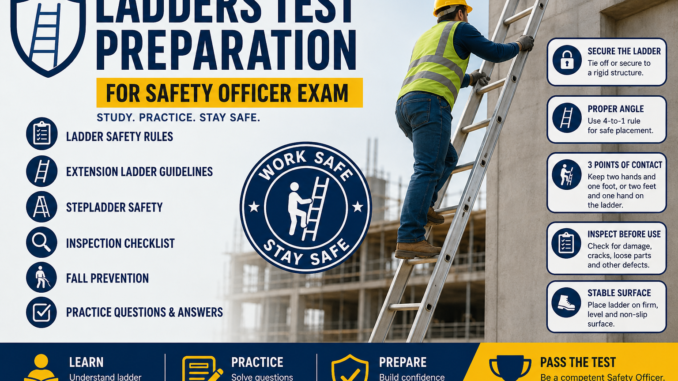
Safety Officer Test Preparation
Ladders Test Preparation Guide
The Ladders Test is an important topic in Safety Officer Test Preparation. Understanding ladder and stepladder safety helps workers prevent falls, injuries, and workplace incidents. Many organizations include ladder safety questions in their safety examinations because ladder-related accidents remain one of the most common causes of workplace injuries.
This Ladders Test preparation guide is designed to help candidates understand the key principles of ladder safety, extension ladder requirements, stepladder rules, inspection procedures, and safe work practices. Review these questions regularly and practice workplace scenarios to improve your confidence before taking the examination.
Why the Ladders Test Is Important
The Ladders Test evaluates a candidate’s knowledge of:
- Ladder selection
- Ladder inspection
- Extension ladder safety
- Stepladder safety
- Proper ladder setup
- Safe climbing techniques
- Fall prevention measures
- Workplace safety compliance
A Safety Officer must ensure that ladders are used correctly and inspected regularly to reduce workplace hazards.
Ladders Test Fundamentals
Before using any ladder, workers should verify that:
- The ladder is suitable for the task.
- The ladder is free from defects.
- The ladder is positioned on a stable surface.
- The user has received proper training.
- The working area is clear of hazards.
Proper ladder use significantly reduces the risk of falls and injuries.
Types of Ladders Commonly Used
- Stepladders
- Extension Ladders
- Fixed Ladders
- Platform Ladders
- Job-Made Ladders
Each ladder type has specific safety requirements that workers must follow.
Extension Ladder Safety
Extension ladders are frequently used to access elevated work areas.
Important safety requirements include:
- Place the ladder on a firm and level surface.
- Secure the ladder before use.
- Maintain three points of contact while climbing.
- Extend the ladder above the landing area when necessary.
- Do not exceed the ladder’s load capacity.
Extension Ladder Overlap Requirements
When an extension ladder is fully extended, ladder sections should overlap adequately for stability.
General guidelines include:
- Shorter extension ladders require a minimum overlap.
- Longer extension ladders require greater overlap.
- Always follow manufacturer recommendations.
Extension Ladder Securing
Extension ladders should:
- Be tied off to a rigid structure whenever possible.
- Be secured to prevent movement.
- Be stabilized before workers climb.
Stepladder Safety in the Ladders Test
Stepladders are among the most commonly used ladders in workplaces.
Key rules include:
- Fully open the stepladder before use.
- Lock spreaders into position.
- Never stand on the top step unless designed for that purpose.
- Keep the ladder on level ground.
- Face the ladder while climbing.
Common Stepladder Hazards
- Damaged steps
- Broken spreaders
- Slippery surfaces
- Overreaching
- Improper setup
A Safety Officer should identify these hazards during inspections.
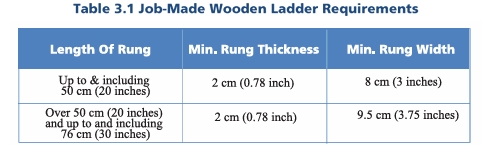
Job-Made Ladders
Job-made ladders are constructed for specific workplace tasks.
Safety considerations include:
- Use structurally sound materials.
- Ensure proper rung spacing.
- Inspect before use.
- Maintain adequate strength for intended loads.
Job-made ladders should only be used when approved and properly constructed.
Ladder Inspection Requirements
A major topic in the Ladders Test is ladder inspection.
Workers should inspect ladders before each use.
Inspection Checklist
Check for:
- Cracks
- Bent rails
- Missing rungs
- Loose bolts
- Corrosion
- Damaged feet
- Oil or grease contamination
Defective ladders should be removed from service immediately.
Ladder Tagging
Unsafe ladders should:
- Be tagged clearly.
- Be removed from work areas.
- Not be used until repaired or replaced.
Safe Climbing Practices
Safe climbing is essential for preventing falls.
Workers should:
- Face the ladder.
- Use both hands while climbing.
- Maintain three points of contact.
- Carry tools using tool belts or hoisting methods.
- Climb slowly and carefully.
Three Points of Contact
This means maintaining:
- Two hands and one foot, or
- Two feet and one hand
in contact with the ladder at all times.
Ladder Placement Rules
Proper placement is a common Ladders Test question.
The 4-to-1 Rule
For every 4 feet of ladder height:
- Place the base 1 foot away from the supporting structure.
Example:
If a ladder reaches 16 feet high:
- Base distance = 4 feet
This angle improves ladder stability.
Surface Requirements
Ladders should never be placed on:
- Unstable ground
- Loose materials
- Slippery surfaces
- Boxes
- Drums
- Temporary supports
Fall Prevention and Ladder Safety
Falls remain one of the leading causes of workplace injuries.
Safety Officers should ensure:
- Workers receive training.
- Ladders are inspected regularly.
- Correct ladder types are used.
- Hazard assessments are completed.
- Safe work procedures are followed.
Risk Factors
Common fall hazards include:
- Wet surfaces
- High winds
- Improper ladder selection
- Damaged equipment
- Lack of supervision
Ladders Test Questions and Answers
Basic Questions
Q1. Why should ladders be inspected before use?
Answer: To identify defects and prevent accidents.
Q2. What is the safest way to climb a ladder?
Answer: Face the ladder and maintain three points of contact.
Q3. Can a damaged ladder be used?
Answer: No, it should be removed from service immediately.
Q4. What should be checked during ladder inspection?
Answer: Rails, rungs, feet, bolts, cracks, and overall condition.
Q5. Why is ladder positioning important?
Answer: Proper positioning prevents slips and falls.
Extension Ladder Questions
Q6. What should an extension ladder be secured to?
Answer: A stable and rigid structure.
Q7. Why is ladder overlap important?
Answer: It provides stability and structural strength.
Q8. Should workers stand on the top rung of an extension ladder?
Answer: No.
Q9. What is the purpose of ladder feet?
Answer: To prevent slipping.
Q10. Can extension ladders be used on uneven surfaces?
Answer: No, unless properly stabilized.
Stepladder Questions
Q11. Must a stepladder be fully opened before use?
Answer: Yes.
Q12. Why should spreaders be locked?
Answer: To prevent ladder collapse.
Q13. Is standing on the top cap allowed?
Answer: No.
Q14. What is a common stepladder hazard?
Answer: Overreaching.
Q15. Should a stepladder be used as a straight ladder?
Answer: No.
Safety Officer Scenario Questions
Q16. A worker notices a cracked ladder rail. What should be done?
Answer: Remove the ladder from service immediately.
Q17. A ladder is placed on loose gravel. Is this acceptable?
Answer: No.
Q18. A worker climbs while carrying tools in both hands. Is this safe?
Answer: No, tools should be carried using a tool belt or lifting method.
Q19. A ladder shifts during climbing. What is the likely cause?
Answer: Improper setup or inadequate securing.
Q20. Why should workers avoid overreaching?
Answer: Overreaching can cause loss of balance and falls.
Tips to Pass the Ladders Test
To succeed in the Ladders Test:
- Learn ladder types.
- Understand inspection requirements.
- Study extension ladder rules.
- Practice scenario-based questions.
- Memorize the 4-to-1 rule.
- Review fall prevention measures.
- Understand three-point contact principles.
- Learn proper ladder placement.
- Study workplace hazard identification.
- Review questions repeatedly.
Conclusion
The Ladders Test is a critical component of Safety Officer Test Preparation. By understanding ladder inspection procedures, extension ladder requirements, stepladder safety practices, and fall prevention methods, candidates can improve workplace safety and perform well in examinations. Consistent review of these Ladders Test questions and answers will strengthen your knowledge and help you approach the test with confidence.



Be the first to comment