Safety Officer Test Preparation
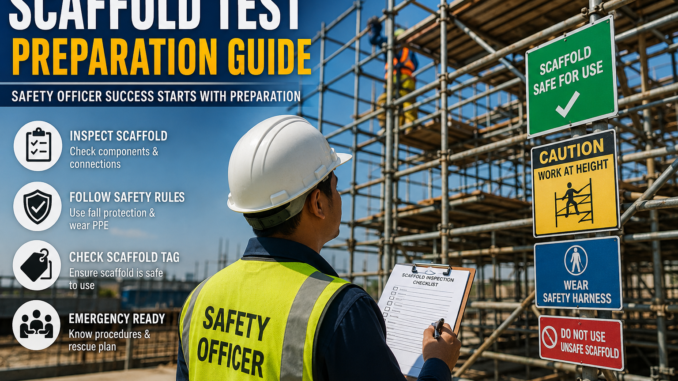
Scaffold Test preparation is one of the most important steps for candidates planning to work as Safety Officers, Safety Supervisors, Scaffold Inspectors, or Construction Safety Professionals. A strong understanding of scaffolding requirements, inspection procedures, load capacities, fall protection, and emergency response practices can significantly improve your performance during any Scaffold Test.
This guide provides structured preparation material, important concepts, and practice questions to help you build confidence before your assessment.
What is a Scaffold Test?
A Scaffold Test evaluates a candidate’s knowledge of scaffolding safety standards, hazard recognition, erection procedures, dismantling requirements, inspection techniques, and emergency response measures. Organizations use these assessments to verify that workers understand safe scaffolding practices and can identify unsafe conditions before incidents occur.
Why Scaffold Safety Matters
Scaffolding is widely used in construction, maintenance, shutdown projects, and industrial facilities. Unsafe scaffolds can result in falls, structural failures, dropped objects, and serious injuries.
Key objectives include:
- Preventing falls from height
- Ensuring structural stability
- Protecting workers below
- Maintaining safe access and egress
- Reducing workplace incidents
Scaffold Test Preparation Requirements
Before taking a Scaffold Test, candidates should understand:
Scaffold Components
- Standards
- Ledgers
- Transoms
- Braces
- Base plates
- Sole boards
- Guardrails
- Toe boards
- Access ladders
- Platforms
Foundation Requirements
Scaffold foundations must be stable and capable of supporting intended loads.
Important points:
- Base plates should be used under scaffold standards.
- Uneven ground should be corrected using screw jacks.
- Foundations should remain level throughout use.
- Soft ground requires additional support.
Screw Jack Requirements
Screw jacks are used to compensate for ground variations.
Key requirements:
- Use according to manufacturer specifications.
- Avoid excessive extension.
- Inspect for damage before use.
- Ensure proper load distribution.
Scaffold Inspection Checklist
A competent person should inspect scaffolds:
- Before first use
- After modification
- After severe weather
- Following impact damage
- At regular intervals
Inspection areas include:
H2: Scaffold Test Inspection Points
- Foundation condition
- Base plates installed
- Guardrails present
- Toe boards installed
- Access ladder secured
- Planking complete
- Bracing installed
- Tags visible
- Fall protection available
- No overloading
Fall Protection Requirements
Fall protection is critical when working on scaffolds.
Workers should:
- Use approved full-body harnesses when required.
- Connect to suitable anchor points.
- Inspect equipment before use.
- Report damaged equipment immediately.
Emergency Response During Scaffold Work
Every worker should understand emergency procedures.
H2: Scaffold Test Emergency Response
Emergency planning should include:
- Rescue procedures
- Emergency contact information
- First aid arrangements
- Incident reporting process
- Evacuation routes
Emergency Response Pattern
If an incident occurs:
- Stop work immediately.
- Secure the area.
- Notify supervisors.
- Contact emergency responders.
- Provide first aid if trained.
- Document the incident.
- Conduct investigation.
Confined Space Awareness for Safety Officers
Many Safety Officer assessments include questions about confined spaces.
Hazards include:
- Oxygen deficiency
- Toxic gases
- Flammable atmospheres
- Engulfment risks
- Limited access
Control measures include:
- Gas testing
- Ventilation
- Entry permits
- Rescue plans
- Continuous monitoring
Scaffold Tagging System
Most organizations use scaffold tags to indicate status.
H3: Scaffold Test Tag System
Green Tag
- Safe for use
- Fully inspected
Yellow Tag
- Restricted use
- Special precautions required
Red Tag
- Do not use
- Unsafe condition exists
Common Scaffold Hazards
Workers should identify:
- Missing guardrails
- Damaged planks
- Overloading
- Poor foundations
- Missing braces
- Falling objects
- Electrical hazards
- Unsafe access
Scaffold Test Practice Questions and Answers
Q1. What is the purpose of a base plate?
Answer: To distribute scaffold loads safely onto the supporting surface.
Q2. Who can inspect a scaffold?
Answer: A competent and authorized person.
Q3. What color tag indicates a scaffold is safe for use?
Answer: Green.
Q4. Why are toe boards installed?
Answer: To prevent tools and materials from falling.
Q5. What is the function of a ledger?
Answer: It provides horizontal support to scaffold standards.
Q6. What should be checked before using a scaffold?
Answer: Foundation, guardrails, planks, access, tags, and structural integrity.
Q7. Why are braces important?
Answer: They provide stability and prevent scaffold movement.
Q8. What is the main hazard associated with scaffolding?
Answer: Falls from height.
Q9. What should workers do if a scaffold appears unsafe?
Answer: Stop work and report it immediately.
Q10. Why are access ladders required?
Answer: To provide safe entry and exit.
Q11. What should be done after severe weather?
Answer: Reinspect the scaffold before use.
Q12. What is the purpose of a guardrail?
Answer: To prevent falls.
Q13. Can damaged scaffold components be used?
Answer: No.
Q14. Why is training important?
Answer: To ensure safe scaffold erection and use.
Q15. What is a sole board?
Answer: A support placed beneath a base plate to distribute load.
Q16. What is the first action during an emergency?
Answer: Stop work and secure the area.
Q17. Why are scaffold tags important?
Answer: They indicate inspection status.
Q18. What should be included in a rescue plan?
Answer: Rescue procedures, personnel, equipment, and communication methods.
Q19. What causes scaffold collapse?
Answer: Overloading, poor foundations, and missing components.
Q20. What should be done if guardrails are missing?
Answer: Do not use the scaffold until corrected.
H2: Scaffold Test Final Preparation Tips
Before your Scaffold Test:
- Review scaffold terminology.
- Practice inspection scenarios.
- Study fall protection requirements.
- Learn emergency response procedures.
- Understand confined space hazards.
- Take mock tests regularly.
- Review scaffold tags and load limits.
Conclusion
A successful Scaffold Test requires knowledge of scaffold components, inspection procedures, fall protection, emergency response, and hazard identification. Use this preparation guide to review key concepts and practice questions repeatedly. Consistent study and scenario-based learning will improve your confidence and help you perform well during your Safety Officer assessment.

Be the first to comment