Safety Officer Test Preparation
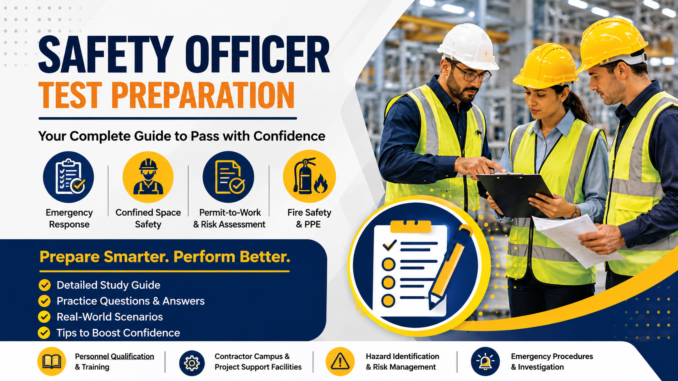
Safety Officer Test Preparation is important for candidates who want to build a successful career in industrial and workplace safety. This guide explains emergency response systems, contractor support facilities, confined space hazards, permit systems, and workplace safety procedures commonly covered in safety examinations.
The purpose of this Safety Officer Test Preparation guide is to help candidates understand emergency response systems, contractor support activities, facility operations, and confined space safety. It also explains how organizations expect safety personnel to react during emergencies and manage workplace hazards effectively.
For every topic, you will find explanations followed by questions and answers to improve understanding. Repeated review and scenario-based practice will help build confidence before the examination.
Contractor Campus and Project Support Facilities
Contractor campuses and project support facilities are important areas within industrial operations. These locations may include offices, workshops, warehouses, accommodations, training areas, and maintenance facilities that support operational activities.
Safety Officers working in these areas must ensure that workplace safety rules are followed properly and that employees understand emergency procedures.
Key Responsibilities in Support Facilities
- Conducting regular safety inspections
- Monitoring housekeeping standards
- Ensuring proper use of PPE
- Maintaining emergency exits and fire equipment
- Verifying contractor compliance with safety rules
- Reporting unsafe conditions immediately
Safety personnel must coordinate with supervisors and workers to reduce risks and maintain safe working conditions.
Questions and Answers
Q1: What is the purpose of project support facilities?
A: They provide operational, administrative, and maintenance support for company projects.
Q2: Why is housekeeping important in contractor facilities?
A: Good housekeeping reduces slip, trip, and fire hazards.
Personnel Qualification, Training, and Certification
A qualified Safety Officer must have the knowledge, practical experience, and training required to manage workplace hazards effectively.
Organizations usually require safety personnel to complete certified training programs related to industrial safety practices.
Important Areas of Training
- Fire prevention and firefighting
- Emergency response procedures
- Confined space entry safety
- Hazard identification and risk assessment
- First aid and rescue operations
Proper certification demonstrates that personnel meet professional competency standards.
Questions and Answers
Q1: Why is safety training important?
A: Safety training helps workers recognize hazards and prevent accidents.
Q2: What qualifications are expected from a Safety Officer?
A: Knowledge of workplace safety standards, certifications, and practical experience.
Emergency Response System
An emergency response system is designed to protect workers, property, and the environment during unexpected incidents.
Safety Officers must understand how organizations respond to emergencies such as fires, gas leaks, confined space incidents, and medical emergencies.
Main Components of an Emergency Response System
- Emergency alarms
- Communication procedures
- Evacuation plans
- Emergency response teams
- Rescue equipment
- Assembly points
Safety personnel should also know the organization’s emergency reporting structure and communication chain.
Questions and Answers
Q1: What is the first action during an emergency?
A: Raise the alarm and notify the emergency response team.
Q2: Why are assembly points important?
A: They help account for personnel during evacuation.
Confined Space Safety
Confined spaces are among the most dangerous work environments in industrial operations. These areas are not designed for continuous occupancy and usually have limited entry and exit points.
Examples of Confined Spaces
- Storage tanks
- Pipelines
- Vessels
- Silos
- Underground pits
- Manholes
Common Hazards
- Oxygen deficiency
- Toxic gases
- Flammable atmospheres
- Heat stress
- Limited ventilation
Safety Requirements
- Entry permit approval
- Gas testing before entry
- Continuous atmospheric monitoring
- Standby personnel outside the space
- Rescue equipment availability
Workers must never enter a confined space without proper authorization and safety controls.
Questions and Answers
Q1: What is a confined space?
A: An enclosed area with limited access that may contain hazardous conditions.
Q2: Why is gas testing required before entry?
A: To confirm that the atmosphere is safe for workers.
Hazard Identification and Risk Assessment
Hazard identification and risk assessment are essential parts of workplace safety management.
A Safety Officer must identify hazards before work begins and apply control measures to minimize risks.
Types of Workplace Hazards
- Physical hazards
- Chemical hazards
- Mechanical hazards
- Electrical hazards
- Biological hazards
Steps in Risk Assessment
- Identify hazards
- Evaluate the risk level
- Apply control measures
- Monitor effectiveness
- Review regularly
Questions and Answers
Q1: What is hazard identification?
A: The process of recognizing conditions that may cause harm.
Q2: Why is risk assessment important?
A: It helps prevent accidents and injuries before work starts.
Permit-to-Work System
The Permit-to-Work system is a formal safety procedure used to control hazardous work activities.
This system ensures that work is properly planned, evaluated, and authorized before starting.
Common Types of Work Permits
- Hot work permit
- Cold work permit
- Electrical work permit
- Confined space entry permit
- Excavation permit
Purpose of the Permit System
- Control workplace hazards
- Improve communication
- Define responsibilities
- Prevent unauthorized work
Questions and Answers
Q1: What is a hot work permit?
A: A permit used for activities involving sparks, flames, or heat.
Q2: Why is a permit system necessary?
A: It helps manage risks associated with hazardous activities.
Fire Safety and Prevention
Fire prevention is one of the primary responsibilities of safety personnel in industrial environments.
Safety Officers must ensure that workers understand fire hazards and emergency procedures.
The Fire Triangle
Fire requires three elements:
- Heat
- Fuel
- Oxygen
Removing one element can stop a fire.
Fire Prevention Measures
- Proper storage of flammable materials
- Inspection of electrical systems
- Maintaining firefighting equipment
- Keeping exits clear
- Conducting fire drills regularly
Questions and Answers
Q1: What are the components of the fire triangle?
A: Heat, fuel, and oxygen.
Q2: What should workers do during a fire emergency?
A: Activate the alarm and evacuate safely.
Personal Protective Equipment (PPE)
Personal Protective Equipment protects workers from workplace hazards that cannot be completely eliminated.
Common PPE Items
- Safety helmet
- Safety shoes
- Gloves
- Goggles
- Face shield
- Respirators
Safety Officers must inspect PPE regularly and ensure workers use it correctly.
Questions and Answers
Q1: Why is PPE important?
A: PPE reduces the risk of injury and exposure to hazards.
Q2: What PPE is used for eye protection?
A: Safety goggles or face shields.
Accident Investigation
Accident investigation helps organizations identify root causes and prevent future incidents.
Every incident, including near misses, should be properly investigated.
Steps in Accident Investigation
- Secure the incident area
- Collect evidence
- Interview witnesses
- Identify root causes
- Recommend corrective actions
The purpose is prevention, not blame.
Questions and Answers
Q1: Why should near misses be reported?
A: They help identify hazards before serious accidents occur.
Q2: What is the purpose of accident investigation?
A: To prevent recurrence of similar incidents.
Safety Officer Test Preparation Tips
Preparing effectively for the exam improves confidence and performance.
Preparation Tips
- Review safety fundamentals daily
- Practice multiple-choice questions
- Study emergency response procedures
- Focus on confined space safety
- Understand permit systems thoroughly
- Practice scenario-based questions
Candidates should focus on practical understanding instead of memorizing answers only.
Conclusion
This guide serves as a structured resource for Safety Officer Test Preparation in a company or organizational environment. It covers contractor support facilities, emergency response systems, confined space safety, permit systems, fire prevention, PPE, and accident investigation.
Regular review, practical understanding, and repeated question practice are the keys to success. By studying these topics carefully and practicing workplace scenarios, candidates can improve their confidence and perform effectively during the Safety Officer Test.
Be the first to comment