Introduction
Specifically, mastering the safety procedures for lean concrete preparation is critical on any modern construction site. First, project managers must enforce stringent safety protocols to prevent common injuries. Consequently, adhering to these structured checklists ensures seamless operations and mitigates on-site hazards. Furthermore, review our complete guide on safety protocols here.
Moreover, workers face numerous risks such as uneven ground, suspended loads, and sharp objects during site setup. Therefore, implementing proactive hazard controls significantly reduces incident rates and protects heavy equipment. Additionally, consult the recognized global standards for construction safety here.
Finally, use the detailed procedural checklists below to guide your safety briefings. Consequently, safety engineers can directly implement these actionable steps to maintain a secure and compliant working environment.
1. Obtain Permit to Work
| Hazards | Risks Issue | Existing Controls Checklist | Risk Reduction Action Plan |
|
• Untrained personnel . • Wrong information or details written in the PTW . • Unidentified or incomplete hazards. |
• Accident resulting in serious injury or death . • Significant property damage . • Loss of production. |
• First, train and qualify the work permit receiver and issuer . • Furthermore, identify the permit receiver and issuer with a written appointment letter . • Consequently, implement the work permit system properly . • Additionally, verify that all activities and safety precautions cover the work permit comprehensively . • Next, pre-check the workplace to keep it free from obstruction prior to visits . • Finally, display the Permit to Work at the worksite clearly. |
• Routine monitoring and compliance |
2. Site Preparation and Mobilization
| Hazards | Risks Issue | Existing Controls Checklist | Risk Reduction Action Plan |
|
• Use of defective tools & equipment . • Uncontrolled reversing vehicles . • Unsecured or unbalanced load . • Uneven or loose ground condition.
|
• Equipment breakdown . • Severe physical injury or fatality . • Property/Equipment damage . • Equipment turns over.
|
• First, quarantine damaged or defective tools in a designated box or repair them immediately . • Next, conduct regular maintenance and daily tool inspections . • Furthermore, examine all power tools for damage before use . • Additionally, keep site personnel completely out of the reversing area . • Moreover, direct moving vehicles using a competent flagman . • Consequently, secure and balance loads properly before lifting . • Finally, set up equipment on firm, level ground capable of supporting the intended load. |
• Routine monitoring and compliance |
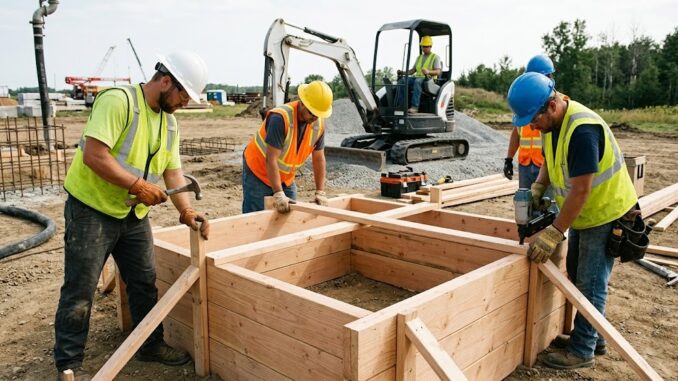
3. Installation of Formworks for Lean Concrete
| Hazards | Risks Issue | Existing Controls Checklist | Risk Reduction Action Plan |
|
• Loose objects obstructing walkways . • Uneven or loose soil condition . • Improper manual handling and awkward posture . • Contact with sharp edges. |
• Injury due to slip, trip, and fall . • Muscular injuries, back pain, and strain . • Cuts/pinch points resulting in hand injuries. |
• First, keep aisles, stairs, and passageways completely clear from any obstruction . • Furthermore, store materials in designated areas exclusively . • Consequently, avoid excessive manual handling of heavy materials . • Next, lift with legs and keep loads close to the body to prevent injury . • Additionally, provide mandatory PPE to all workers, including heavy-duty leather gloves . • Moreover, guard all protruding sharp objects, such as rebars, to prevent impalement . • Finally, wear appropriate eye protection to block flying debris. |
• Routine monitoring and compliance |
4. Housekeeping
| Hazards | Risks Issue | Existing Controls Checklist | Risk Reduction Action Plan |
|
• Materials lying on the ground . • Protruding objects/materials . • Uncollected/scattered rubbish. |
• Musculoskeletal disorder . • Fire hazards . • Physical injury from slip and trip . • Hand injuries. |
• First, facilitate targeted training for manual handling . • Furthermore, observe proper posture during manual lifting, pushing, and pulling . • Consequently, provide clearly marked storage boxes for damaged materials . • Next, remove all unwanted or protruding objects from the site . • Additionally, provide color-coded waste bins strategically across the area . • Finally, segregate and dispose of waste and used materials properly. |
• Routine monitoring and compliance |
5. Closing of Permit to Work
| Hazards | Risks Issue | Existing Controls Checklist | Risk Reduction Action Plan |
|
• Poor housekeeping . • Undisposed waste materials • Unsecured electrical equipment . • Unaccounted workers. |
• Environmental complaint . • Accident resulting in serious injury or death . • Significant property damage. |
• First, enforce strict housekeeping before, during, and after the work . • Furthermore, dispose of all generated waste materials properly . • Consequently, secure all electrical equipment and padlock distribution boards safely . • Next, store chemicals and flammable materials safely at the designated storage at the end of each day . • Additionally, account for all workers and verify no unreported incidents occurred . • Finally, maintain clear communication between the permit issuer and receiver. |
• Routine monitoring and compliance |
Be the first to comment