JSA: Critical Lifting Safety Procedure
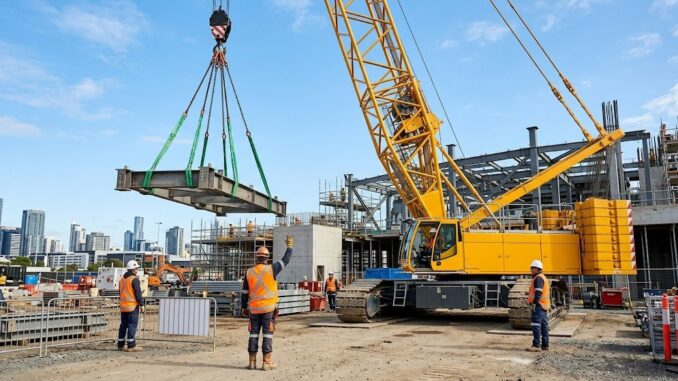
First, establishing a robust critical lifting safety procedure is paramount for mitigating extreme hazards on active construction sites. Furthermore, heavy equipment operations, particularly involving cranes and boom trucks, introduce dynamic variables that demand rigorous oversight. Consequently, executing a well-documented Job Safety Analysis (JSA) ensures that engineering teams and riggers synchronize their hazard controls before a load ever leaves the ground.
Moreover, proactive risk management translates directly into preventing catastrophic equipment failure and safeguarding human life. Additionally, adherence to standardized lifting checklists streamlines site mobility while embedding an active culture of regulatory compliance. To explore this further, read more about our internal critical lifting safety procedure guidelines.
Therefore, site supervisors must rely on precise, actionable checklists rather than passive guidelines. Finally, utilizing these sequential steps guarantees that your team evaluates every blind spot, unstable ground condition, and rigging limit. Discover industry-wide standards for heavy machinery safety protocols.
1. Pre work planning or area preparation
| Hazards | Risks Issue | Existing Controls Checklist | Risk Reduction Action Plan |
|
Unaware about the work place hazard
Lack of training and awareness |
Accident/Incident |
• First, obtain a valid PTW prior to the start of work according to the PTW procedure.
• Furthermore, secure extra permits if required, such as those for confined spaces, commissioning, or lifting. • Consequently, inspect the area thoroughly for any hazardous situations or conditions. • Moreover, clear the access routes to keep them unobstructed. • Additionally, provide all workers with proper safety induction. • Therefore, ensure all involved workers recognize and remain aware of possible hazards in the area. • Next, open the PTW prior to commencing working activities. • Finally, conduct a toolbox meeting prior to starting the activity and clearly delineate associated hazards and risks to the workers. |
• Routine monitoring and compliance |
2. Mobilization of crane/boom truck
| Hazards | Risks Issue | Existing Controls Checklist | Risk Reduction Action Plan |
|
Unavailability of required safety document Poor visibility during operation of the crane/boom truck Congested area and uneven surface |
Accident/Incident Hitting to structure or moving person or vehicle Damage to structure, Collapse of equipment |
• First, submit the crane’s third-party certification, manual, load chart, and all required documents along with the initial inspection request form to the HSE Department for review and approval. • Furthermore, verify that the crane operator and riggers are trained, experienced, and hold third-party certificates. • Consequently, deploy a flagman so that the driver/operator clearly sees blind spots to prevent collisions with other vehicles. • Moreover, clean the side mirrors and ensure windows remain uncovered by paper or cloths. • Additionally, install proper barricades and signage around the area. • Therefore, reroute the entry and exit of specific vehicles. • Next, deploy appropriate signages and barricades to fully isolate the area. • Specifically, station a flagman at the area or equipment. • Finally, clean the area, compact it as much as possible, and establish an even surface. |
• Routine monitoring and compliance |
3. Installation/Placement of crane/ boom truck
| Hazards | Risks Issue | Existing Controls Checklist | Risk Reduction Action Plan |
|
Loose soil/ unstable or unlevelled ground Overhead power lines Near excavation |
Overturning/ toppling Electrocution Overturning/toppling due to erosion of trench on excavation |
• First, maintain uneven surfaces to ensure ground integrity. • Furthermore, separate pedestrian routes entirely from vehicle traffic. • Consequently, construct designated walkways for safe passage. • Moreover, extend outriggers fully and plant the legs firmly on outrigger pads. • Additionally, execute compaction and leveling of the surface to guarantee the stability of the area prior to placing the crane. • Therefore, spot the crane at the precise designated location. • Next, maintain a safe distance of at least 15 feet from overhead power lines. • Specifically, install grounding on the crane during lifting operations near overhead power lines. • Consequently, position the crane outrigger pads exactly 2 meters away from the edge of an excavation, or maintain a distance equal to the depth of the excavation. • Additionally, strictly prohibit placing the crane on loose or bearing soil. • Finally, install appropriate barricades and protective signages. |
• Routine monitoring and compliance |
4. Normal and Critical Lifting Safety Procedure
| Hazards | Risks Issue | Existing Controls Checklist | Risk Reduction Action Plan |
|
Tandem lift, tail lift, super lift, man basket lift and blind lift Placement of crane as per load chart Failure of lifting tackles Fall of material during lifting Mechanical failure of the crane Poor visibility / blind spot High wind |
Collapse of crane Accident Drop of material/equipment causing Major Injury or property damage Major Injury/ property damage Personnel injury Hit to structure / passing vehicle |
• First, enforce all previously given measures designed for normal lifting. • Furthermore, draft an engineering critical lifting plan developed by a certified rigging engineer/rigger level 1 along with diagrams, and submit it to the client and relevant authorities for review and approval. • Consequently, authorize only third-party certified rigger level 2 or level 1 personnel to perform critical lifting works. • Moreover, mandate close supervision and monitoring by the dedicated lifting team and HSE team. • Additionally, reject any attempts to lift over the safe working load limit. • Therefore, prevent positioning the crane on loose/low bearing soil. • Next, deploy only standard and third-party certified rigging tools and tackles. • Specifically, enforce rigorous rigging tackle specifications. • Furthermore, instruct a competent person to inspect and color-code each rigging tool/tackle immediately prior to use. • Consequently, verify that the safe working load of all tackles strictly exceeds the load scheduled for lifting. • Moreover, engage a competent person to accurately place and fix the tackles. • Additionally, apply adequate softening in between to protect the load and sling if required. • Therefore, restrict the sling angle to no more than 90 degrees under any circumstances. • Next, secure the load properly, ensuring absolutely no loose material remains. • Specifically, utilize a third-party certified lifting bucket for hoisting sand or loose materials, and for lowering debris. • Furthermore, implement a double tag line of sufficient length to completely prevent unwanted swinging of the load. • Consequently, execute proper signaling to prevent accidental contact with structures, other cranes, or overhead electric lines during the operation. • Moreover, confirm the presence of sound safety latches with the hook. • Additionally, position an adequate number of banksmen equipped with proper communication devices. • Therefore, explicitly forbid anyone from standing below the suspended load. • Next, post clear barricades and signages directly on the designated area of lifting. • Specifically, mandate the use of a third-party certified crane. • Furthermore, assign a trained, experienced, and third-party certified crane operator to control the lift. • Consequently, require a competent person to perform a comprehensive daily crane inspection prior to starting any lifting activity. • Moreover, adhere strictly to load instructions corresponding to the documented crane capacity. • Additionally, verify that the LMI system remains functional and strictly followed. • Therefore, visibly mark the SWL and never permit exceeding this capacity. • Next, eliminate any possibility of overloading and maintain the limit switch in active operating condition at all times. • Specifically, assess ground conditions and underground services thoroughly before placing the mobile crane. • Furthermore, extend all outriggers to their absolute full capacity. • Consequently, execute continuous maintenance of the crane at all times. • Moreover, deliver adequate lighting to the operational area. • Additionally, immediately stop the activity in the event of poor visibility. • Therefore, deploy a flagman to allow the operator to identify blind spots and actively prevent collisions with other vehicles. • Next, polish side mirrors clean and ensure windows remain uncovered by papers or cloths. • Specifically, establish proper barricades and warning signage around the zone. • Finally, immediately halt all lifting operations if the wind velocity exceeds 20mph. |
• Routine monitoring and compliance |
5. Removal rigging tackles to the equipment and material
| Hazards | Risks Issue | Existing Controls Checklist | Risk Reduction Action Plan |
|
Unstable equipment/materials Working on elevated area |
Caught in between the equipment/material causing Entanglement & Injury to person Fall from heights |
• First, preserve clear and easy access to the materials. • Furthermore, securely brace the materials and equipment before removing any rigging tackles. • Consequently, deploy exclusively trained and experienced rigging teams to extract all rigging tackles. • Moreover, ensure a trained, experienced, and third-party certified Rigger conducts the rigging tasks. • Additionally, supply and aggressively enforce the use of appropriate PPEs. • Therefore, implement authorized proper rigging techniques consistently. • Next, compel all workers to undergo rigorous training regarding working at heights. • Specifically, install a secure and proper working platform. • Furthermore, enforce the use of a full-body harness whenever personnel are working at heights. • Consequently, demand 100% tie-off protocols. • Finally, establish and execute proper operational supervision. |
• Routine monitoring and compliance |
6. Working in energy sources area (commissioning area)
| Hazards | Risks Issue | Existing Controls Checklist | Risk Reduction Action Plan |
|
Chemical bum Electrical shock Flying object high temp. exposure (hot water, steam, gas, oil) Pinch point, puncture |
Personal injury / Illnesses & pollution Personal injury |
• First, require workers to possess specialized LOTO training and a commissioning permit before operating in areas marked by blue and white barricading tapes. • Furthermore, lock out, tag out, and verify isolation of equipment from all hazardous energy sources, including hydraulic, water, electrical, steam, stored energy, and pneumatic, adhering perfectly to LOTO instructions. • Consequently, forbid anyone from attempting to change the status of any equipment tagged with “Danger” or “do not operate” identifiers. • Moreover, enforce the continuous wearing of hand gloves to actively avoid pinch points and moving machinery interactions. • Additionally, reject unauthorized access to energized areas unless securing prior authorization from the HSE and commissioning departments. • Therefore, orchestrate proper coordination between the LOTO coordinator, the job supervisor, and dedicated safety personnel. • Next, clearly explain the designated first aider and provide emergency contact numbers to all workers for rapid emergency response. • Finally, prohibit personnel from tapping power supply sources from energized panel boards. |
• Routine monitoring and compliance |
7. Housekeeping
| Hazards | Risks Issue | Existing Controls Checklist | Risk Reduction Action Plan |
| Excess/unwanted materials |
Environmental issue Losses/ damage of material |
• First, remove any excess or unwanted material immediately after concluding work. • Furthermore, return extra usable material back to the proper storage area for secure keeping. • Finally, execute a double-check of the area before personnel leave the site. |
• Routine monitoring and compliance |

Be the first to comment