
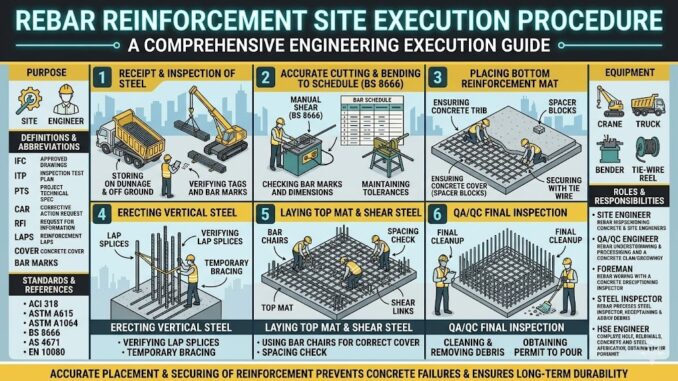
A well-documented Rebar Reinforcement Method Statement is a critical component of any successful concrete construction project. It provides the necessary guidelines for the safe erection, inspection, and placement of steel reinforcement on site. By establishing clear protocols before the concrete is poured, project managers can ensure that the structural integrity of the build meets all engineering specifications and safety standards.
For more insights into the phases preceding this work, read our comprehensive guide on formwork and excavation preparation.
1.Purpose and Scope of the Rebar Reinforcement Method Statement

The primary purpose of this method statement is to establish a clear, universally understood process for handling steel rebar. It covers every phase of the reinforcement lifecycle, from material storage in the steel yard to the final fixing and tying inside the formwork prior to the concrete pour.
2. Core Definitions & Abbreviations
Clear communication among site personnel is critical. Familiarize your team with these standard abbreviations:
- IFC: Issued for Construction drawings
- ITP: Inspection Test Plan
- CAR: Corrective Action Request
- PTS: Project Technical Specification
SEO Metadata
-
SEO Title: Rebar Reinforcement Method Statement: A Complete Guide
-
Slug:
/rebar-reinforcement-method-statement -
Meta Description: Looking for a comprehensive Rebar Reinforcement Method Statement? This guide covers the scope, responsibilities, tools, and procedures for site execution.
Rebar Reinforcement Method Statement: Essential Site Guidelines
A well-documented Rebar Reinforcement Method Statement is a critical component of any successful concrete construction project. It provides the necessary guidelines for the safe erection, inspection, and placement of steel reinforcement on site. By establishing clear protocols before the concrete is poured, project managers can ensure that the structural integrity of the build meets all engineering specifications and safety standards.
For more insights into the phases preceding this work, read our comprehensive guide on formwork and excavation preparation.
1. Purpose and Scope of the Rebar Reinforcement Method Statement
The primary purpose of this method statement is to establish a clear, universally understood process for handling steel rebar. It covers every phase of the reinforcement lifecycle, from material storage in the steel yard to the final fixing and tying inside the formwork prior to the concrete pour.
2. Core Definitions & Abbreviations
Clear communication among site personnel is critical. Familiarize your team with these standard abbreviations:
-
IFC: Issued for Construction drawings
-
ITP: Inspection Test Plan
-
CAR: Corrective Action Request
-
PTS: Project Technical Specification
3. International Reference Standards
A professional steel fixing method relies on strict adherence to established global and regional benchmarks. All materials and workmanship must comply with the following standards:
| Standard Body / Code | Specification Details |
| ACI Codes | ACI 315, ACI 318 |
| Regional Standards | SASO/SSA 2, SASO/SSA 224 |
| ASTM A615 | Standard specification for deformed and plain carbon-steel bars for concrete reinforcement. |
| ASTM A184, A185, A496, A497, A82 | Specifications for welded, deformed, and plain wire reinforcement. |
| ASTM A767 & A884 | Specifications for galvanized and epoxy-coated steel bars. |
| ASTM A370 | Standard test methods for the mechanical testing of steel products. |
4. Site Roles and Responsibilities
Executing the rebar installation process safely and accurately requires a highly coordinated site team.
-
Project/Construction Manager: Takes overall responsibility for the implementation and monitoring of all steel rebar activities across the site.
-
Site Engineer: Directly plans and executes the daily activities. The site engineer prepares the Bar Bending Schedule (BBS), drafts safety action plans, and applies for necessary work permits.
-
QA/QC Engineer: Oversees all QA/QC for rebar. They monitor required tests as per the approved ITP, coordinate with independent laboratories, and cross-check the physical rebar work against IFC drawings.
-
Foremen: Directly control the working personnel (steel fixers). They ensure the team executes the plan correctly, maintain good housekeeping, and verify workers use proper PPE and tools.
-
HSE Engineer/Supervisor: Enforces reinforcement safety measures. They review the Safe Work Plan prior to starting and ensure the site observes all environmental and safety submittals during execution.
5. Essential Tools and Equipment
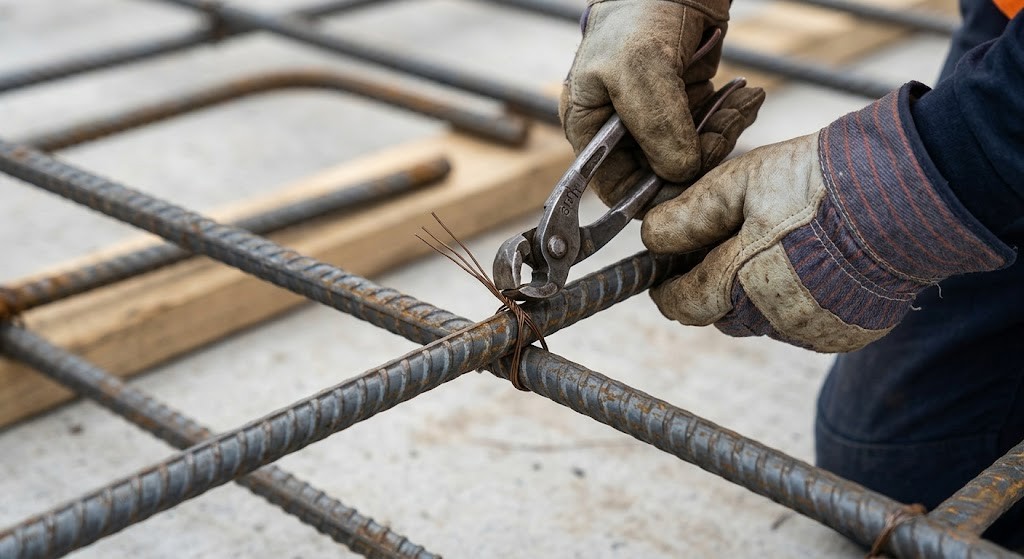
Precision requires the right equipment. To avoid damaging the structural integrity of the steel, personnel must use:
-
Bar bending machine
-
Cutting machine
-
Pliers (for tying wire)
-
Hooks
6. Step-by-Step Rebar Installation Process
Phase 1: Material Preparation and Storage
-
Quality Verification: Site teams must only use tested and approved grades of steel bars that meet project specifications. Before placing the steel, workers must clean the rebar of all loose mill scale, heavy rust, mud, or oil.
-
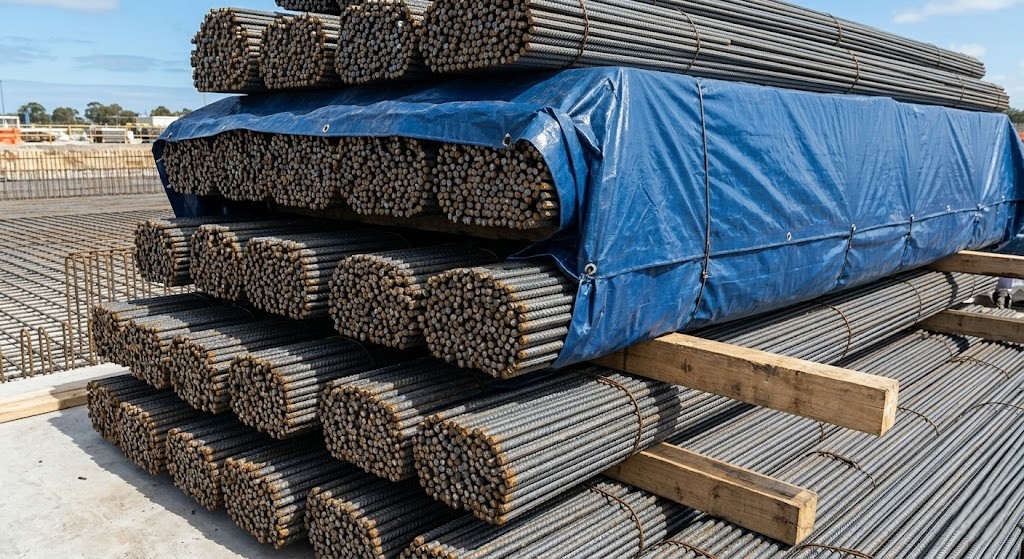
Proper Storage: Teams must never let rebar sit directly on the ground. Workers must stack the bars on wooden runners and secure them under plastic sheets or fiber cloth to protect the metal from the elements.
Phase 2: Cutting and Fabrication
-
Following the BBS: Engineers draft a detailed Bar Bending Schedule (BBS) based on the IFC drawings. The fabrication team must cut and bend all rebar exactly according to this approved schedule to maintain accurate lengths and angles.
-
Tagging and Grouping: After cutting the steel, workers must group the lengths by their specific mark numbers. They must attach identification tags to each bundle before shifting the steel from the yard to the active work zone.
Phase 3: Site Fixing and Placement
-
Marking: Foremen or site engineers must mark the required rebar spacing with chalk directly on the lean concrete or formwork, strictly following the IFC drawings or the approved BBS.
-
Binding: Steel fixers must tie the rebar network securely using approved, rust-free binding wire.
-
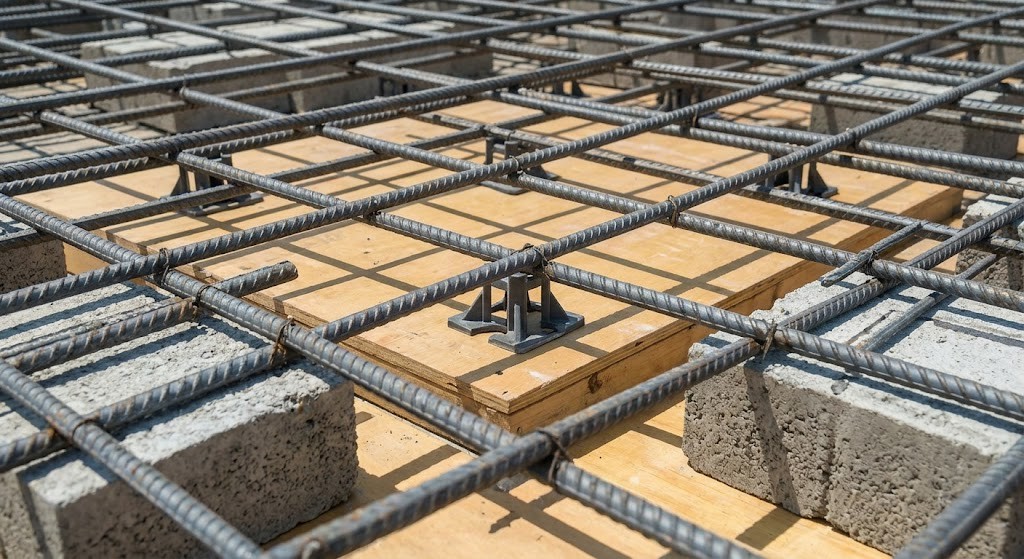
Concrete Cover: Workers must place approved pre-cast concrete blocks or PVC chairs at proper intervals to support the network and secure the reinforcement against displacement.
-
Lapping: The team must provide lap lengths exactly as detailed in the IFC drawings.
-
Workmanship: Only qualified craftsmen and certified steel fixers may carry out reinforcement fabrication and fixing.
7. QA/QC for Rebar and Corrective Actions

A Quality Inspection Plan (QIP) specific to the project governs the final checks before any concrete is poured.
During the walkthrough using a standard rebar inspection checklist, the QA/QC Engineer verifies spacing, tying, concrete cover, and lap lengths. If the engineer discovers any non-conformity (such as segregation or incorrect displacement) at any stage, they must raise a Corrective Action Request (CAR). The site team must rectify the defect and pass a re-inspection according to the client’s laid-down procedures before work can proceed.
Frequently Asked Questions (FAQs)
1. What is the standard specification for deformed steel bars? In global civil construction, engineers primarily use ASTM A615, the standard specification covering deformed and plain carbon-steel bars for concrete reinforcement.
2. How should steel rebar be stored on a construction site? To prevent contamination and severe rust, site teams must never place rebar directly on the soil. Workers should stack the bars securely on wooden runners and cover them with heavy-duty plastic sheets or fiber cloth.
3. Why is a Bar Bending Schedule (BBS) critical? A Bar Bending Schedule translates complex structural engineering drawings into a simple, actionable list of exact cutting lengths and bending angles. This tool ensures structural accuracy, speeds up the fabrication process, and dramatically reduces material waste.
4. How do spacers maintain concrete cover during steel fixing? Site crews maintain concrete cover by placing approved PVC chairs or pre-cast concrete blocks beneath and beside the rebar network. These spacers prevent the heavy steel framework from shifting or sinking against the formwork while the team pours the concrete.
5. What happens if a rebar inspection checklist reveals errors? If a QA/QC engineer identifies an error (such as improper lapping or missing ties), they issue a Corrective Action Request (CAR). The site team must halt the scheduled concrete pour, fix the specific defect, and pass a secondary inspection before they move forward.
fore they move forward.
Be the first to comment