Safety Officer Test Preparation
Introduction
Materials Handling Test Preparation is one of the most important topics for candidates preparing for Safety Officer examinations and industrial workplace interviews. Manual handling tasks are common in construction sites, warehouses, factories, workshops, and industrial organizations. Improper handling of materials can lead to serious injuries, muscle strain, equipment damage, and workplace accidents.
This guide explains manual handling procedures, lifting techniques, personal protective equipment requirements, hazard prevention methods, and workplace safety rules commonly asked during Safety Officer tests. Candidates should review these questions and answers repeatedly to improve their understanding and confidence.
What is Manual Handling?
Manual handling refers to lifting, carrying, pushing, pulling, lowering, or moving materials by hand or bodily force. Safety Officers must ensure workers use proper techniques and safe handling practices to reduce injuries.
Common Manual Handling Activities
- Lifting boxes
- Carrying tools
- Moving equipment
- Pulling carts
- Pushing materials
- Loading and unloading supplies
Improper manual handling is one of the leading causes of workplace injuries.
Importance of Safe Manual Handling
Safe handling procedures help prevent:
- Back injuries
- Muscle strain
- Slips and falls
- Shoulder injuries
- Hand injuries
- Fatigue-related accidents
Proper Materials Handling Test Preparation teaches candidates how to identify hazards and apply safe lifting methods.
Manual Handling Safety Requirements
Manual handling tasks should be avoided whenever possible. Mechanical equipment should be used to reduce physical strain.
Important Safety Requirements
- Assess the weight and shape of materials before lifting.
- Use the safest handling method.
- Follow proper lifting techniques.
- Wear required PPE.
- Use lifting aids when necessary.
- Store heavy materials below waist level.
- Request assistance for oversized loads.
Supervisors and Safety Officers must ensure workers are trained before performing manual handling tasks.
Proper Manual Lifting Techniques
Correct lifting posture reduces the risk of injury.
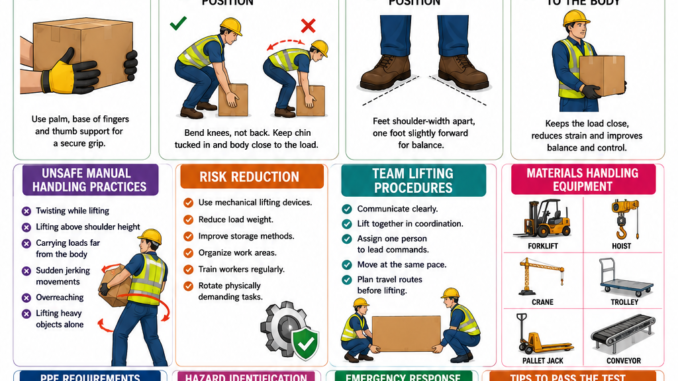
Good Grip
Workers should maintain a strong grip using:
- Palm of the hand
- Base of the fingers
- Thumb support
A secure grip improves load control and reduces dropping hazards.
Straight Back Position
The back should remain straight during lifting.
Proper Body Position
- Bend knees instead of the back.
- Keep the chin tucked in.
- Position the body close to the load.
- Avoid sudden movements.
Incorrect posture increases pressure on the spine and muscles.
Steady Feet Position
Workers should maintain balance during lifting.
Correct Foot Placement
- Feet shoulder-width apart.
- One foot slightly forward.
- Stable standing position.
Balanced footing reduces slipping and falling risks.
Keep Arms Close to the Body
Arms should remain close to the body while lifting.
Benefits
- Reduces strain.
- Improves balance.
- Provides better load control.
Holding loads away from the body increases stress on the back and shoulders.
Unsafe Manual Handling Practices
Workers should avoid dangerous lifting habits.
Unsafe Practices Include
- Twisting while lifting
- Lifting above shoulder height
- Carrying loads far from the body
- Sudden jerking movements
- Overreaching
- Lifting heavy objects alone
These unsafe behaviors can cause serious injuries.
Manual Handling Risk Reduction
Safety Officers should implement control measures to reduce handling risks.
Effective Control Measures
- Use mechanical lifting devices.
- Reduce load weight.
- Improve storage methods.
- Organize work areas properly.
- Train workers regularly.
- Rotate physically demanding tasks.
Proper planning improves workplace safety and productivity.
Team Lifting Procedures
Some objects cannot be lifted safely by one person alone.
Team Lifting Rules
- Communicate clearly.
- Lift together in coordination.
- Assign one person to lead commands.
- Move at the same pace.
- Plan travel routes before lifting.
Poor coordination during team lifting can cause accidents and dropped loads.
Materials Handling Equipment
Mechanical equipment reduces physical stress and improves safety.
Common Handling Equipment
- Forklifts
- Hoists
- Cranes
- Trolleys
- Pallet jacks
- Conveyors
Safety Officers must ensure equipment inspections and operator training are completed properly.
PPE Requirements for Manual Handling
Personal Protective Equipment helps protect workers from injuries.
Required PPE
- Safety gloves
- Safety shoes
- Hard hats
- Reflective vests
- Eye protection
Workers should inspect PPE before use and replace damaged equipment immediately.
Hazard Identification During Manual Handling
Safety Officers must identify and control workplace hazards.
Common Workplace Hazards
- Wet floors
- Poor lighting
- Sharp edges
- Obstructed pathways
- Heavy loads
- Poor housekeeping
Hazard identification is an important part of Materials Handling Test Preparation.
Emergency Response During Handling Accidents
Basic Emergency Procedures
If a manual handling injury occurs:
- Stop work immediately.
- Report the incident.
- Provide first aid.
- Secure the area.
- Investigate the cause.
- Implement corrective actions.
Fast response reduces injury severity and prevents additional accidents.
Materials Handling Test Questions and Answers
Q1: What is manual handling?
Answer: Manual handling is lifting, carrying, pushing, pulling, or moving materials by hand or bodily force.
Q2: Why should workers avoid twisting during lifting?
Answer: Twisting while lifting places excessive stress on the spine and may cause serious back injuries.
Q3: Why should heavy materials be stored below waist level?
Answer: Storing heavy materials below waist level reduces lifting strain and improves handling safety.
Q4: What are the four key requirements for proper lifting?
Answer: Good grip, straight back, steady feet, and arms close to the body.
Q5: What PPE is commonly used during manual handling?
Answer: Safety gloves, safety shoes, helmets, and reflective vests are commonly required.
Q6: When should team lifting be used?
Answer: Team lifting should be used when loads are too heavy or awkward for one person.
Q7: What is the purpose of mechanical lifting equipment?
Answer: Mechanical equipment reduces physical strain and improves workplace safety.
Q8: What are common manual handling injuries?
Answer: Back strain, muscle injuries, slips, falls, and shoulder injuries.
Q9: Why is proper footing important during lifting?
Answer: Proper footing improves balance and prevents slips or falls.
Q10: What should workers do before lifting a load?
Answer: Workers should assess the weight, size, and safest lifting method before moving the load.
Scenario-Based Safety Questions
Scenario 1
A worker twists while lifting a heavy box and experiences back pain.
Answer: The worker used improper lifting technique and twisted the body during lifting.
Scenario 2
A worker attempts to lift a large object alone and loses balance.
Answer: The worker should have requested assistance or used mechanical lifting equipment.
Scenario 3
Heavy materials are stored above shoulder height.
Answer: Workers may suffer strain injuries or falling-object accidents during lifting.
Tips for Passing the Materials Handling Test
Preparation Tips
- Study proper lifting techniques.
- Understand PPE requirements.
- Practice workplace safety questions.
- Learn hazard identification methods.
- Review emergency response procedures.
- Practice scenario-based questions regularly.
- Understand equipment safety basics.
Consistent practice improves confidence and exam performance.
Conclusion
Materials Handling Test Preparation is essential for anyone preparing for a Safety Officer examination or workplace safety interview. Understanding proper lifting methods, manual handling procedures, PPE requirements, hazard control, and emergency response systems helps candidates perform effectively in industrial workplaces.
Review this guide regularly, practice the questions repeatedly, and apply scenario-based learning techniques to improve your workplace safety knowledge and examination confidence.
Be the first to comment