Safety Officer Test Preparation
Introduction
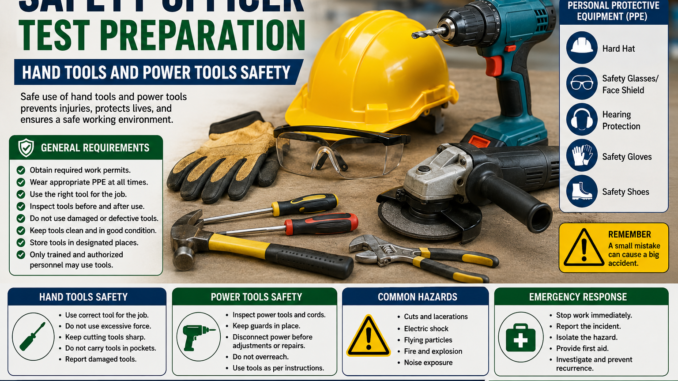
Safety Officer Test Preparation is important for candidates preparing for industrial safety examinations and workplace safety responsibilities. This guide focuses on hand tools and power tools safety requirements commonly used by companies and organizations in industrial environments.
This Safety Officer Test Preparation article helps candidates understand safe tool usage, inspection procedures, PPE requirements, emergency response patterns, confined space awareness, and workplace hazard control measures. Candidates should carefully study every section and repeatedly practice the questions and answers provided in this guide.
Organizations expect safety officers to ensure workers use tools safely, follow company procedures, and prevent workplace injuries. Understanding hand tools and power tools safety requirements is essential for passing safety officer examinations and performing effectively in industrial workplaces.
Hand Tools and Power Tools Safety
Hand tools and power tools are commonly used in construction, maintenance, mechanical work, and industrial operations. Improper use of tools can result in serious injuries, equipment damage, and workplace accidents.
Safety officers must ensure tools are properly selected, inspected, maintained, and used according to workplace safety procedures.
Purpose of Hand Tools and Power Tools Safety
The purpose of hand tools and power tools safety is to reduce workplace injuries and improve operational safety. Workers should receive proper training before using any tool or equipment.
Safety officers should verify:
- Proper tool selection
- Safe operating procedures
- PPE compliance
- Tool inspection requirements
- Emergency response readiness
- Hazard identification procedures
General Safety Requirements
PPE Requirements
Appropriate personal protective equipment must always be worn while using hand tools and power tools.
Required PPE may include:
- Hard hat
- Safety glasses
- Face shield
- Gloves
- Hearing protection
- Safety shoes
Safety officers must ensure PPE is inspected regularly and replaced if damaged.
Tool Inspection Requirements
Tools must be inspected before and after use. Damaged or defective tools should never be used in the workplace.
Safety officers should check:
- Broken handles
- Damaged cords
- Loose parts
- Missing guards
- Electrical defects
- Corrosion or cracks
Routine inspections help prevent injuries and equipment failures.
Training Requirements
Personnel should only operate tools after receiving proper training. Workers must understand:
- Safe handling procedures
- Tool limitations
- Hazard recognition
- Emergency shutdown methods
- Storage requirements
Training records should be maintained by the organization.
Hand Tools Safety
Hand tools are manually operated tools such as hammers, screwdrivers, pliers, and wrenches.
Common Hazards of Hand Tools
Improper Use
Using the wrong tool for a task may cause injuries.
Damaged Tools
Cracked handles and worn-out tools increase accident risks.
Flying Particles
Hammering and cutting operations may create flying debris.
Slips and Falls
Poor housekeeping can cause workers to trip while carrying tools.
Safe Hand Tool Practices
- Use the correct tool for the job
- Keep tools clean and dry
- Store tools properly after use
- Inspect tools regularly
- Wear proper PPE
- Avoid using damaged tools
Power Tools Safety
Power tools operate using electricity, compressed air, or fuel. Examples include grinders, drills, saws, and sanders.
Power tools can cause serious injuries if safety procedures are ignored.
Common Power Tool Hazards
Electrical Shock
Damaged cables or improper grounding can cause electric shock.
Rotating Parts
Moving components may catch clothing or hands.
Noise Hazards
Power tools may create high noise levels requiring hearing protection.
Fire Hazards
Sparks generated during grinding or cutting may start fires.
Safe Power Tool Practices
- Inspect power cords before use
- Ensure guards are installed properly
- Disconnect tools before maintenance
- Use Ground Fault Circuit Interrupters (GFCI)
- Keep work areas dry and clean
- Follow manufacturer instructions
Grinding Tool Safety
Grinding machines are commonly used in industrial workplaces. Improper grinding practices can lead to severe injuries.
Grinding Safety Rules
- Inspect grinding wheels before use
- Never use cracked grinding wheels
- Wear face shields and safety goggles
- Maintain proper wheel guards
- Keep sparks away from flammable materials
Safety officers should monitor hot work activities and fire prevention controls during grinding operations.
Electrical Safety for Power Tools
Electrical safety is essential during power tool operations.
Electrical Safety Precautions
- Inspect extension cords regularly
- Avoid wet working conditions
- Use proper grounding systems
- Do not overload electrical outlets
- Report damaged electrical equipment immediately
Safety officers should ensure electrical systems are maintained properly to reduce hazards.
Emergency Response Pattern
Emergency response planning is important during hand tools and power tools operations.
Emergency Response Steps
Stop Work Immediately
Shut down equipment safely during emergencies.
Report the Incident
Notify supervisors and emergency personnel.
Isolate the Hazard
Prevent additional workers from entering dangerous areas.
Provide First Aid
Trained responders should provide immediate assistance.
Conduct Investigation
Safety officers should identify root causes and corrective actions.
Confined Space Awareness
Some tool-related activities occur inside confined spaces such as tanks, pits, and vessels.
Confined Space Hazards
- Oxygen deficiency
- Toxic gases
- Poor ventilation
- Fire hazards
- Limited escape routes
Before Entering a Confined Space
- Conduct gas testing
- Obtain entry permits
- Ensure ventilation
- Maintain communication systems
- Prepare rescue plans
Hand Tools and Power Tools Questions and Answers
Q1: Why should tools be inspected before use?
Answer: To identify defects and prevent workplace accidents.
Q2: What PPE is commonly required when using power tools?
Answer: Safety glasses, gloves, hearing protection, hard hat, and safety shoes.
Q3: Why should damaged tools never be used?
Answer: They can fail during operation and cause injuries.
Q4: What is the purpose of tool guards?
Answer: Tool guards protect workers from moving parts and flying debris.
Q5: What should workers do before repairing power tools?
Answer: Disconnect the power source.
Q6: Why is housekeeping important during tool operations?
Answer: Good housekeeping prevents slips, trips, and falls.
Q7: What should be checked on electrical tools before use?
Answer: Cords, plugs, grounding, and insulation condition.
Q8: Why are face shields required during grinding?
Answer: To protect workers from sparks and flying particles.
Q9: What is the purpose of a GFCI?
Answer: It protects workers from electrical shock.
Q10: Why should workers receive tool safety training?
Answer: To understand safe operating procedures and hazard control methods.
Workplace Safety Responsibilities
Safety officers are responsible for maintaining workplace safety standards related to hand tools and power tools operations.
Main Responsibilities
- Conducting workplace inspections
- Monitoring PPE compliance
- Investigating incidents
- Organizing safety training
- Reporting hazards
- Ensuring emergency preparedness
- Promoting safe work practices
Strong hazard recognition skills are essential for every safety officer.
Conclusion
Safety Officer Test Preparation helps candidates understand hand tools and power tools safety requirements used by organizations and industrial workplaces. Understanding PPE requirements, tool inspections, confined space awareness, emergency response patterns, and safe operating procedures is important for workplace safety success.
This Safety Officer Test Preparation guide provides structured learning material and practice questions to improve technical knowledge and confidence. Candidates should regularly review the questions and apply scenario-based learning techniques to prepare effectively for safety officer examinations.



Be the first to comment