Safety Officer Test Preparation
Introduction
Gas Cylinder Safety Test preparation is important for candidates preparing for industrial safety exams and workplace safety interviews. This guide helps candidates understand compressed gas cylinder hazards, emergency response procedures, safe handling practices, and workplace safety requirements.
Many industrial safety examinations are based on real workplace situations. Therefore, this preparation material focuses on practical understanding, emergency response awareness, hazard recognition, and safe work procedures related to compressed gas cylinders.
This guide will help candidates understand:
- Safe handling of compressed gas cylinders
- Storage and transportation requirements
- Leak prevention and emergency response
- Inspection procedures
- Confined space precautions
- Workplace hazard identification
- Typical Safety Officer test questions and answers
Use this guide as a preparation resource, review the questions repeatedly, and improve confidence through scenario-based practice.
What Are Compressed Gas Cylinder?
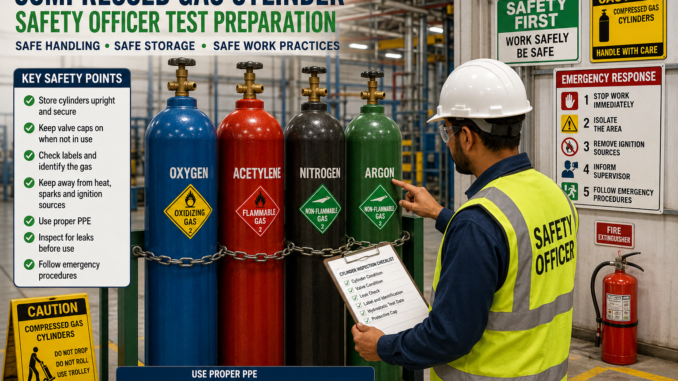
Compressed gas cylinders are high-pressure containers used to store gases such as oxygen, nitrogen, acetylene, argon, propane, chlorine, and carbon dioxide. These cylinders are commonly used in industrial operations, welding work, laboratories, construction sites, and manufacturing facilities.
Improper handling of cylinders can lead to:
- Fire incidents
- Explosions
- Toxic gas exposure
- Oxygen deficiency
- Serious injuries
- Property damage
That is why Compressed Gas Cylinder Safety Officer Test Preparation is a critical topic for safety professionals.
Types of Compressed Gases
1. Flammable Gases
Examples include acetylene, propane, and hydrogen.
Hazards
- Fire risk
- Explosion risk
2. Toxic Gases
Examples include chlorine and ammonia.
Hazards
- Breathing problems
- Poisoning
3. Inert Gases
Examples include nitrogen and argon.
Hazards
- Oxygen displacement
- Suffocation in confined spaces
4. Oxidizing Gases
Example: Oxygen.
Hazards
- Increases fire intensity
- Supports combustion
Cylinder Identification and Labeling
Every gas cylinder must have:
- Proper labeling
- Color coding
- Safety markings
- Manufacturer information
- Gas identification tags
Safety officers must ensure that no unlabeled cylinder is used in the workplace.
Important Safety Rule
Never identify a gas cylinder by color only. Always check the label.
Safe Storage Requirements
Proper storage is one of the most important parts of Compressed Gas Cylinder Safety Officer Test Preparation.
Storage Guidelines
- Store cylinders in upright position
- Secure cylinders using chains or supports
- Keep protective valve caps installed
- Separate oxygen cylinders from fuel gas cylinders
- Store away from heat sources
- Ensure proper ventilation
- Keep storage areas dry and clean
Separation Distance
Oxygen cylinders and fuel gas cylinders should be separated according to company safety procedures and local regulations.
Transportation Safety
When transporting cylinders:
- Use approved cylinder trolleys
- Never drag or roll cylinders
- Keep valve caps installed
- Secure cylinders properly
- Avoid dropping cylinders
- Transport cylinders in upright position whenever possible
Unsafe Practices
Never:
- Lift cylinders using magnets
- Use cylinders as rollers
- Drop cylinders intentionally
- Carry cylinders without protection
Leak Detection and Emergency Response
Gas leaks can create serious workplace hazards.
Leak Detection Methods
- Soap solution testing
- Gas detection monitors
- Smell recognition for certain gases
- Pressure monitoring
Emergency Response Steps
Understanding emergency response is important for passing the Gas Cylinder Safety Test.
- Stop work immediately
- Inform the supervisor
- Isolate the area
- Remove ignition sources
- Use emergency PPE if trained
- Contact emergency response personnel
- Follow company emergency procedures
Compressed Gas Cylinders in Confined Spaces
Confined spaces create additional risks when compressed gases are used.
Common Hazards
- Oxygen deficiency
- Toxic atmosphere
- Flammable atmosphere
- Limited ventilation
Safety Requirements
- Gas testing before entry
- Continuous atmospheric monitoring
- Permit system
- Standby attendant
- Emergency rescue plan
- Proper ventilation system
Safety officers are often tested on confined space emergency response procedures during interviews and examinations.
Cylinder Inspection Checklist
Safety officers should inspect cylinders regularly.
Inspection Points
- Cylinder body condition
- Rust or corrosion
- Valve damage
- Leaks
- Label visibility
- Hydrostatic test date
- Protective cap condition
Any damaged cylinder should be removed from service immediately.
Personal Protective Equipment (PPE)
Workers handling compressed gas cylinders should use:
- Safety helmet
- Gloves
- Safety shoes
- Eye protection
- Face shield when required
- Flame-resistant clothing where necessary
Fire Prevention Measures
Compressed gas cylinders can contribute to major fire incidents.
Fire Prevention Tips
- Keep cylinders away from sparks
- Avoid smoking near cylinders
- Use flashback arrestors
- Inspect hoses regularly
- Maintain good housekeeping
- Ensure fire extinguishers are available
Responsibilities of a Safety Officer
A safety officer should:
- Conduct inspections
- Monitor safe work practices
- Provide safety training
- Investigate incidents
- Ensure compliance with procedures
- Support emergency response activities
- Conduct toolbox talks
This is a major area in Compressed Gas Cylinder Safety Officer Test Preparation exams.
Gas Cylinder Safety Test Questions and Answers
Q1: Why should gas cylinders be stored upright?
Answer:
Gas cylinders should be stored upright to prevent damage to the valve and reduce the risk of leakage or cylinder instability.
Q2: What should you do if a gas leak is detected?
Answer:
Stop work immediately, isolate the area, inform supervisors, eliminate ignition sources, and follow emergency procedures.
Q3: Why is oxygen considered dangerous near flammable materials?
Answer:
Oxygen supports combustion and can greatly increase fire intensity.
Q4: What is the purpose of a cylinder valve cap?
Answer:
The valve cap protects the cylinder valve from physical damage during storage and transportation.
Q5: What hazards can inert gases create in confined spaces?
Answer:
Inert gases can displace oxygen and create suffocation hazards.
Q6: Why is cylinder labeling important?
Answer:
Proper labeling helps workers identify gas contents and avoid dangerous misuse.
Q7: What PPE is commonly required when handling cylinders?
Answer:
Helmet, gloves, safety shoes, and eye protection are commonly required.
Q8: What should be checked during cylinder inspection?
Answer:
Check for leaks, corrosion, valve condition, labels, and test dates.
Q9: Why are flashback arrestors used?
Answer:
Flashback arrestors prevent flames from traveling back into gas cylinders or hoses.
Q10: What is the first action during a cylinder emergency?
Answer:
The first action is to stop work and activate emergency response procedures.
Scenario-Based Practice Questions
Scenario 1
Many companies include Gas Cylinder Safety Test questions during safety officer interviews. What should the safety officer do first?
Answer:
The safety officer should stop work, evacuate unnecessary personnel, isolate the area, and initiate leak investigation procedures safely.
Scenario 2
A cylinder is found without a label. What action should be taken?
Answer:
Do not use the cylinder. Isolate it and report it according to company procedures.
Scenario 3
A worker attempts to move a cylinder by rolling it on the ground. What should the safety officer do?
Answer:
Stop the unsafe act immediately and instruct the worker to use an approved cylinder trolley.
Preparation Tips for Safety Officer Candidates
Study Daily
Review compressed gas safety topics regularly.
Practice Scenario Questions
Industrial tests often include practical situations.
Learn Emergency Procedures
Understand emergency response systems and reporting methods.
Understand Hazard Identification
Focus on recognizing unsafe conditions quickly.
Improve PPE Knowledge
Know the correct PPE for different work activities.
Conclusion
This Gas Cylinder Safety Test guide provides practical knowledge about compressed gas cylinder handling, emergency response, inspection procedures, and workplace hazards. Review these Gas Cylinder Safety Test questions regularly to improve confidence and exam performance.
Review these questions regularly, practice workplace scenarios, and improve your understanding of hazard control methods. Consistent preparation can improve confidence and performance during safety officer examinations and interviews.

Be the first to comment