Introduction
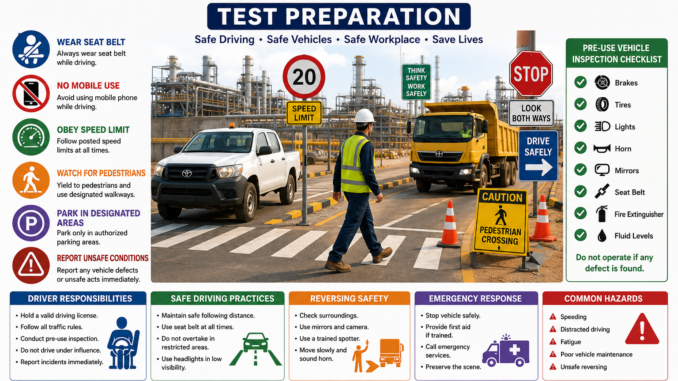
Traffic and Vehicle Safety Test Preparation helps candidates understand workplace driving rules, vehicle inspection procedures, and industrial traffic hazards. This guide explains workplace traffic rules, driver responsibilities, vehicle inspection procedures, emergency response systems, and accident prevention methods used by companies and organizations.
This Traffic and Vehicle Safety Test Preparation guide explains how Safety Officers manage workplace vehicle safety and accident prevention procedures.
Traffic and Vehicle Safety Test Preparation includes practical learning about reversing safety, seat belt rules, and emergency response systems.
Regular Traffic and Vehicle Safety Test Preparation improves understanding of industrial driving hazards and workplace traffic control systems.
Traffic and Vehicle Safety Test Preparation Guide
The purpose of traffic and vehicle safety is to reduce vehicle accidents, protect workers, and ensure safe transportation inside operational areas, construction sites, and industrial facilities.
Traffic safety procedures help organizations:
- Prevent workplace vehicle accidents
- Protect drivers and pedestrians
- Control traffic movement
- Improve emergency response
- Maintain safe operational activities
General Traffic Safety Requirements
Only authorized and properly trained drivers should operate company vehicles.
Driver Requirements
| Requirement | Details |
|---|---|
| Valid License | Driver must hold valid driving license |
| Training | Driver should complete safety training |
| Authorization | Company approval required |
| Medical Fitness | Driver must be physically fit |
| Knowledge of Rules | Understand workplace traffic procedures |
Vehicle Inspection Requirements
Vehicles should be inspected before operation.
Pre-Use Inspection Checklist
| Inspection Item | Purpose |
|---|---|
| Brakes | Ensure stopping ability |
| Tires | Check pressure and damage |
| Lights | Verify visibility |
| Horn | Emergency warning |
| Mirrors | Improve driver visibility |
| Seat Belts | Worker protection |
| Fire Extinguisher | Emergency preparedness |
Drivers should report unsafe vehicle conditions immediately.
Speed Limits in Industrial Areas
Industrial workplaces normally have strict speed control requirements.
Common Speed Safety Rules
- Follow posted speed limits
- Slow down near workers
- Use caution at intersections
- Avoid sudden acceleration
- Maintain safe following distance
Excessive speed is one of the leading causes of workplace vehicle accidents.
Seat Belt Safety
Seat belts must be worn by drivers and passengers at all times.
Importance of Seat Belts
| Benefit | Description |
|---|---|
| Reduces Injury | Protects during collision |
| Prevents Ejection | Keeps occupant inside vehicle |
| Improves Survival | Reduces fatal accident risk |
Failure to use seat belts is considered a serious safety violation in most organizations.
Mobile Phone Restrictions
Using mobile phones while driving increases accident risk.
Safe Driving Rules
- Avoid phone use while driving
- Use hands-free devices only if permitted
- Stop vehicle safely before answering calls
- Focus completely on driving
Distracted driving is a major cause of workplace traffic accidents.
Parking Safety
Vehicles should only be parked in designated areas.
Parking Requirements
- Use parking brakes
- Park away from emergency exits
- Do not block fire hydrants
- Follow parking signs
- Use wheel chocks when required
Reversing and Backing Safety
Backing accidents are common in industrial workplaces.
Safe Reversing Procedures
| Requirement | Description |
|---|---|
| Use Spotter | Guide driver during reversing |
| Check Mirrors | Ensure clear visibility |
| Use Reverse Alarm | Warn nearby workers |
| Move Slowly | Maintain full control |
Pedestrian Safety
Workers walking inside operational areas should follow pedestrian safety rules.
Pedestrian Safety Measures
- Use designated walkways
- Wear reflective vests
- Stay alert around moving vehicles
- Avoid blind spots
- Follow traffic signs
Traffic Signs and Signals
Traffic signs help control vehicle movement and improve workplace safety.
Common Traffic Signs
| Sign | Meaning |
|---|---|
| Stop | Vehicle must stop |
| Speed Limit | Maximum speed allowed |
| No Entry | Restricted area |
| Pedestrian Crossing | Watch for pedestrians |
| Warning Sign | Hazard ahead |
Heavy Equipment Safety
Heavy equipment operators require additional training and precautions.
Safety Rules for Heavy Equipment
- Conduct equipment inspection
- Maintain communication with spotters
- Keep safe distance from workers
- Use warning lights and alarms
- Operate only if authorized
Driver Fatigue
Fatigue reduces driver concentration and reaction time.
Signs of Driver Fatigue
- Frequent yawning
- Difficulty focusing
- Slow reaction time
- Drifting between lanes
- Drowsiness
Drivers should stop work and report fatigue if necessary.
Emergency Response During Vehicle Accidents
Safety Officers should know emergency response procedures during vehicle incidents.
Emergency Response Steps
- Stop vehicle safely
- Inform emergency personnel
- Secure accident area
- Provide first aid if trained
- Report incident
- Prevent secondary accidents
Vehicle Fire Safety
Vehicle fires can occur due to fuel leaks, overheating, or electrical faults.
Vehicle Fire Prevention Measures
| Safety Measure | Purpose |
|---|---|
| Regular Maintenance | Prevent mechanical failure |
| Leak Inspection | Reduce fire hazards |
| Proper Refueling | Avoid ignition risks |
| Fire Extinguisher | Emergency response |
Journey Management
Journey management helps reduce travel-related risks.
Journey Planning Requirements
- Plan travel route
- Check weather conditions
- Maintain communication
- Carry emergency contacts
- Verify vehicle condition
Role of Safety Officer in Traffic Safety
A Safety Officer plays an important role in workplace traffic safety management.
Main Responsibilities
- Conduct vehicle inspections
- Monitor driver behavior
- Enforce traffic rules
- Investigate vehicle incidents
- Conduct safety training
- Ensure emergency readiness
Common Causes of Vehicle Accidents
Unsafe Conditions and Behaviors
| Cause | Risk |
|---|---|
| Speeding | Loss of control |
| Distracted Driving | Reduced attention |
| Fatigue | Slow reaction |
| Poor Maintenance | Mechanical failure |
| Unsafe Reversing | Collision risk |
Questions and Answers Section
Traffic and Vehicle Safety Test Preparation questions help candidates prepare for real industrial safety examinations and workplace scenarios.
Q1: Why are vehicle inspections important?
Answer: Vehicle inspections help identify unsafe conditions before operation.
Q2: Why should seat belts be worn?
Answer: Seat belts reduce injuries and protect occupants during accidents.
Q3: What is the purpose of a reverse alarm?
Answer: It warns nearby workers when a vehicle is reversing.
Q4: Why is distracted driving dangerous?
Answer: It reduces driver attention and increases accident risk.
Q5: What should drivers do before operating vehicles?
Answer: Inspect the vehicle and ensure it is safe for operation.
Q6: Why should speed limits be followed in industrial areas?
Answer: To reduce accidents and protect workers.
Q7: What is the role of a spotter?
Answer: A spotter guides drivers during reversing and blind spot operations.
Scenario-Based Questions
Scenario 1
A driver uses a mobile phone while driving inside an operational area.
What should the Safety Officer do?
Answer:
- Stop unsafe behavior
- Explain distracted driving hazards
- Reinforce traffic safety rules
- Report repeated violations if necessary
Scenario 2
A vehicle has damaged brakes during inspection.
What action should be taken?
Answer:
- Remove vehicle from service
- Report defect immediately
- Arrange repair before operation
Scenario 3
A worker walks behind reversing heavy equipment.
Why is this dangerous?
Answer:
- Driver may not see pedestrian
- Blind spot hazard exists
- High risk of serious injury
Traffic and Vehicle Safety Study Tips
Practice Scenario Questions
Most Safety Officer tests include practical traffic safety situations.
Understand Vehicle Hazards
Learn how unsafe driving behaviors lead to accidents.
Learn Emergency Procedures
Study accident reporting and emergency response methods.
Review Traffic Signs
Understand common workplace traffic signs and warnings.
Conclusion
Proper Traffic and Vehicle Safety Test Preparation improves workplace safety knowledge, reduces accident risks, and helps candidates perform confidently during Safety Officer examinations.
This Safety Officer Test Preparation guide helps candidates improve practical understanding of industrial traffic safety requirements. Reviewing the questions and practicing scenario-based situations regularly will improve confidence and exam preparation.
Be the first to comment