Introduction
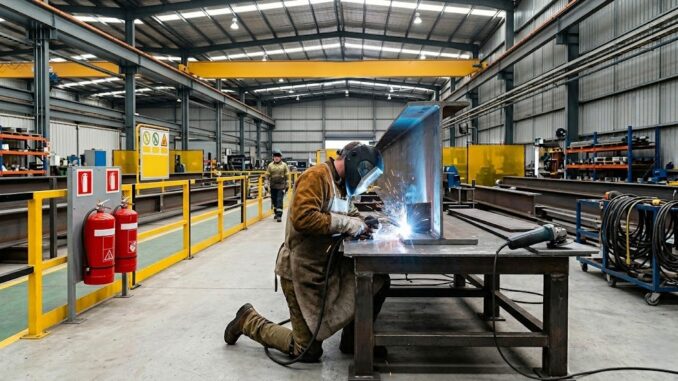
Specifically, establishing a Grinding and Welding Risk Assessment is the first step toward ensuring a zero-harm environment during high-risk hot works. Consequently, this document outlines the essential procedural steps to mitigate fire, electrical, and physical hazards. Moreover, strict adherence to these engineering standards protects both the workforce and the structural integrity of the project.
Therefore, supervisors must implement these controls before any chipping or fit-up activities commence. Browse our Full Library of EHS Method Statements. Additionally, checking international regulations provides a benchmark for local site safety. OSHA Standards for Welding, Cutting, and Brazing.
Finally, follow this checklist to verify that all equipment and personnel meet the required safety criteria for grinding and welding works.
Implementing Your Grinding and Welding Risk Assessment
1. Permit Preparation and Communication
Specifically, the administrative phase ensures that all parties understand the hazards associated with hot work.
| Hazards | Risks Issue | Existing Controls Checklist | Risk Reduction Action Plan |
|
Miscommunication |
Personal injury or property loss |
• Specifically, ensure the permit receiver undergoes authorized site training . • Moreover, establish clear communication and planning prior to permit issuance. |
• Routine monitoring and compliance. |
2. Power Tool Safety and Preparation
Additionally, proper inspection of electrical tools is vital for a successful Grinding and Welding Risk Assessment implementation.
| Hazards | Risks Issue | Existing Controls Checklist | Risk Reduction Action Plan |
|
Exposed cables |
Electrocution |
• Specifically, unplug all power tools before performing any inspection or maintenance . • Furthermore, wear appropriate hand gloves before handling or checking tools . • Consequently, issue the permit prior to starting any hot work activity . • Therefore, conduct a Toolbox meeting to explain hazards and risks to the workers . • Next, use only tools that carry a valid inspection color code . • Finally, check every power cord for exposed wires or damage. |
• Specifically, ensure only competent persons perform tool inspections. |
3. Cutting and Grinding Operational Controls
Furthermore, high-speed abrasive wheels require physical safeguards to prevent projectile-related injuries.
| Hazards | Risks Issue | Existing Controls Checklist | Risk Reduction Action Plan |
|
Uninspected tools and cracked disks |
Bodily injury or electrical shock |
• Specifically, ground and insulate all power tools and equipment properly . • Moreover, wear proper eye protection, including safety glasses and face shields . • Consequently, use leather hand gloves for all grinding tasks . • Additionally, prohibit the use of any homemade hand tools . • Therefore, equip all grinders with a functional ‘dead man’ switch . • Finally, verify the disk RPM is higher than the grinder’s maximum speed. |
• Specifically, never exceed the manufacturer’s maximum RPM. |
4. Welding, Fit-up, and Fire Prevention
Therefore, managing sparks and fumes is a critical component of a professional Grinding and Welding Risk Assessment.
| Hazards | Risks Issue | Existing Controls Checklist | Risk Reduction Action Plan |
|
Spark projectiles and fumes |
Burn injury, fire, or asphyxiation |
• Specifically, provide fire blankets and water sprays or extinguishers in the work area . • Consequently, remove all combustible materials from the vicinity . • Furthermore, ensure all electrical equipment and panels are earthed . • Moreover, provide local or dilution ventilation to direct fumes away from workers . • Therefore, wear the appropriate respirator based on metal coatings . • Next, provide mandatory PPE including aprons and welding screens. |
• Specifically, appoint a trained fire watch for the duration of the task. |
5. Pressurized Cylinder and Arc Safety
Moreover, handling oxygen and acetylene cylinders requires specialized transport and storage protocols.
| Hazards | Risks Issue | Existing Controls Checklist | Risk Reduction Action Plan |
|
Pressurized tanks and welding arcs |
Explosion or fire |
• Specifically, use trolleys with chains for all cylinder tank movements . • Furthermore, avoid exposing cylinders to direct sunlight . • Consequently, provide flashback arrestors for all hoses and gauges . • Additionally, prohibit mobile phones or lighters in the working area . • Therefore, keep the welder’s body safe and away from the welding torch. |
• Specifically, ensure only competent welders perform the job. |
6. Working at Heights and Housekeeping
Additionally, working at heights adds layers of complexity to your Grinding and Welding Risk Assessment.
| Hazards | Risks Issue | Existing Controls Checklist | Risk Reduction Action Plan |
|
Falls from height and dust |
Personal injury or respiratory issues |
• Specifically, inspect the scaffold tag and verify stability before use . • Consequently, use a full-body harness with 100% tie-off at an anchorage point . • Moreover, secure all tools with retaining strings to prevent falls . • Furthermore, provide N95 dust masks for grinding on cement or metal . • Therefore, keep the working area to a high standard of housekeeping. |
• Specifically, ensure man lifts are inspected prior to mobilization. |
7. Hazardous Energy and Commissioning Areas
Finally, procedures for Lockout/Tagout (LOTO) must be followed when working near energized systems.
| Hazards | Risks Issue | Existing Controls Checklist | Risk Reduction Action Plan |
|
Energized sources (Hydraulic/Electric) |
Electrical shock or physical injury |
• Specifically, verify that equipment is isolated from all hazardous energy . • Consequently, follow LOTO instructions and use blue/white barricading tapes . • Moreover, do not change the status of any equipment tagged “Danger” . • Therefore, provide first aider contact information to all workers. |
• Specifically, confirm all workers have completed LOTO training. |
Be the first to comment