
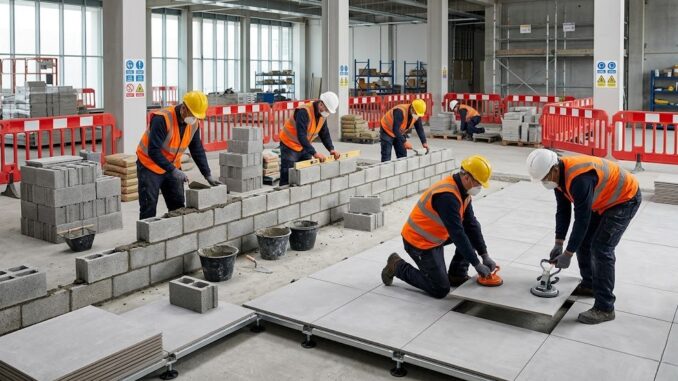
Introduction
Specifically, the Block Masonry and Tiles Installation process requires a robust risk management framework to protect personnel from site-specific hazards. Consequently, identifying risks such as manual handling strain and dust exposure is the first step toward achieving operational excellence. This guide provides a structured breakdown of the necessary safety measures for these critical construction activities.
Furthermore, every supervisor must ensure that the established controls for Block Masonry and Tiles Installation are communicated through daily toolbox talks. Moreover, consistent monitoring of site conditions prevents accidents related to power tools and working at heights. Therefore, following this comprehensive [Internal Link] to our safety policy ensures all projects meet international standards.
Content Body: Safety Checklists
3.1. Block Masonry and Tiles Installation: Permit to Work
| Hazards | Risks Issue | Existing Controls Checklist | Risk Reduction Action Plan |
|
Miscommunication between supervisor and receiver |
Personnel injury |
• Specifically, ensure the ATA is completed only by a competent person. • Furthermore, verify the exact location prior to signing the ATA. • Consequently, conduct joint site inspections between issuer and receiver. |
• Attend safety toolbox meetings prior to start to discuss actual site hazards. |
3.2. Material Mobilization for Masonry and Tile Work
| Hazards | Risks Issue | Existing Controls Checklist | Risk Reduction Action Plan |
|
Heavy and awkward material sizes |
Back injury and skin irritation |
• First, implement proper manual handling techniques. • Additionally, utilize mechanical equipment if materials exceed safe lifting weights. • Moreover, deploy barricades and signboards at temporary storage areas. |
• Routine monitoring and compliance during all loading/unloading tasks. |
3.3. Preparation of Masonry Tools and Electrical Safety
| Hazards | Risks Issue | Existing Controls Checklist | Risk Reduction Action Plan |
|
Exposed cables and uninspected tools |
Electrical shock and trip hazards |
• Initially, use only insulated power tools for all tasks. • Specifically, replace cables immediately if cracks or abrasions are found. • Next, remove all power supplies when changing discs on power tools. |
• Ensure all tools are properly inspected and color-coded prior to activity. |
3.4. Cutting and Installation of Tiles: High-Risk Controls
| Hazards | Risks Issue | Existing Controls Checklist | Risk Reduction Action Plan |
|
Spark projectiles and dust inhalation |
Eye injury, skin burns, and asphyxia |
• Specifically, wear full-face shields and safety glasses during cutting. • Furthermore, utilize N95 dust masks and proper ventilation. • Consequently, provide fire blankets and extinguishers at the cutting station. |
• Verify safety guards are in place and wear suitable gloves for grip. |
3.5. Block Masonry Works: Health and Dust Management
| Hazards | Risks Issue | Existing Controls Checklist | Risk Reduction Action Plan |
|
Contact with cement and excessive dust |
Skin/eye irritation and suffocation |
• First, provide clean water and eye wash stations in the immediate area. • Additionally, wear protective clothing and leather gloves. • Therefore, use blowers to prevent dust accumulation in enclosed spaces. |
• Maintain MSDS availability and ensure constant supervision is present. |
3.6. Elevated Work and Scaffolding Safety
| Hazards | Risks Issue | Existing Controls Checklist | Risk Reduction Action Plan |
|
Falling materials and personnel
|
Severe bodily injury or fatalities
|
• Specifically, use a full-body harness with 100% tie-off at all times. • Moreover, ensure all tools have retaining strings to prevent drops. • Consequently, lock wheels on mobile scaffolds before ascending. |
• Personnel must undergo client-approved “Working at Heights” training. |
3.7. Housekeeping During Block Masonry and Tiles Installation
| Hazards | Risks Issue | Existing Controls Checklist | Risk Reduction Action Plan |
|
Unwanted material and water disposal |
Slips, trips, and environmental issues |
• First, clear unwanted materials from the site at regular intervals. • Next, return all excess materials to the store after finishing the job. • Therefore, keep the working area at high housekeeping standards. |

Be the first to comment