JSA: Block Masonry Safety and Raised Floor Tiles Installation
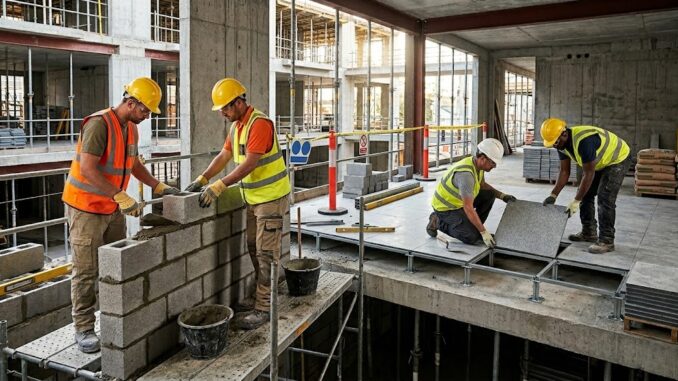
First, prioritizing Block Masonry Safety guarantees a secure environment for all construction personnel. Consequently, site managers must rigorously apply structured procedures to prevent injuries during raised floor tile installation. Specifically, this standardized protocol minimizes severe workplace accidents and equipment hazards.
Furthermore, utilizing a detailed checklist streamlines daily hazard identification, thereby enhancing overall block masonry safety. Therefore, implementing this JSA safeguards teams against common electrical, physical, and respiratory risks. Next, check our safety management protocols for additional occupational safety procedures to integrate into your workflow.
Finally, strict adherence to these measures ensures absolute compliance with strict regulatory frameworks. Moreover, you can reference the OSHA Construction Safety Guidelines to review global best practices in construction risk management and safety training.
Block Masonry Safety Procedure Checklist
1. Processing of work permit system
| Hazards | Risks Issue | Existing Controls Checklist | Risk Reduction Action Plan |
| • Miscommunication and misunderstanding between site supervisor and receiver. | • Personnel injury. |
• First, competent persons (permit receivers) must solely execute the permit.
• Furthermore, operators must verify the exact location before signing the work permit.
• Consequently, issuers and receivers must conduct site inspections to identify hazards before signing the work permit.
• Additionally, supervisors and receivers must communicate properly before applying for the work permit. |
• Routine monitoring and compliance. |
2. Mobilization of materials
| Hazards | Risks Issue | Existing Controls Checklist | Risk Reduction Action Plan |
|
• Heavy and awkward size of materials.
• Improper storage of materials.
• Miscommunication where to put the materials. |
• Personnel back injury.
• Skin irritation.
• Environmental issue. |
• First, all workers must attend a safety toolbox meeting prior to starting any activity to discuss actual hazards.
• Furthermore, workers must use proper methods and techniques for material handling.
• Consequently, personnel must not attempt manual lifts if materials are too heavy.
• Additionally, teams must use proper equipment if necessary.
• Moreover, workers must wear proper personal protective equipment, like dust masks, safety shoes, helmets, gloves, and safety glasses.
• Subsequently, crews must secure materials properly and organize them.
• Next, supervisors must install barricades and signboards.
• Therefore, management must approve the material storage location prior to delivery on site.
• Finally, good communication between crew members must reinforce individual awareness of real and potential hazards. |
• Routine monitoring and compliance. |
3. Preparation of tools and materials for activity
| Hazards | Risks Issue | Existing Controls Checklist | Risk Reduction Action Plan |
|
• Exposed cable.
• Not inspected hand tools.
• Unwanted material on access. |
• Electrical shock.
• Bodily injury.
• Slip, trip and fall. |
• First, management must provide a permit to work before starting any activity.
• Furthermore, supervisors must properly inspect and color-code tools and equipment.
• Consequently, workers must use insulated power tools.
• Additionally, personnel must wear appropriate hand gloves to avoid electrical shock.
• Moreover, inspectors must complete inspections prior to starting the activity.
• Subsequently, workers must never use homemade hand tools.
• Therefore, crews must remove all waste and scrap material from the area.
• Next, teams must not store material near access points.
• Finally, supervisors must provide barricades and signages to temporary material storage areas. |
• Routine monitoring and compliance. |
4. Start of Cutting and installation of Tiles
| Hazards | Risks Issue | Existing Controls Checklist | Risk Reduction Action Plan |
|
• Spark projectile.
• Excessive noise.
• Inhalation of dust or particulate.
• Unforeseen projectile of cracked disk.
• Direct contact to cement. |
• Face & eye injury.
• Skin burn.
• Fire.
• Deafness.
• Suffocation and Asphyxia.
• Cut injury and Bodily damage.
• Skin and Eye irritation. |
• First, workers must maintain proper positioning while doing the activity.
• Furthermore, personnel must always use proper eye protection.
• Consequently, operators must wear leather gloves, long-sleeved shirts, and long pants.
• Additionally, crews must remove combustible material near the activity.
• Moreover, teams must provide fire extinguishers and fire blankets for cutting activities.
• Subsequently, workers must use earplugs while doing grinding and cutting works.
• Therefore, management must provide proper ventilation to direct or collect dust.
• Next, operators must wear the appropriate respirator or N95 dust mask.
• Specifically, workers must use only disks that are appropriate to the grinder.
• Furthermore, inspectors must verify the RPM of the disk is higher than the machine.
• Additionally, teams must provide proper machine guarding.
• Moreover, management must provide clean water to the area.
• Consequently, supervisors must include the location of the nearest shower or eye wash station in the toolbox meeting.
• Finally, management must make MSDS available at the area of activity. |
• Routine monitoring and compliance. |
5. Block Masonry Safety & Wall Construction Works
| Hazards | Risks Issue | Existing Controls Checklist | Risk Reduction Action Plan |
|
• Excessive dust from the cement.
• Heat produce on grinding.
• Direct contact to cement.
• Working at elevated area / scaffolding / Man lift. |
• Asphyxia and Suffocation.
• Fire.
• Skin and Eye irritation.
• Falling of material and personnel. |
• First, teams must provide blowers to the area to reduce dust accumulation.
• Furthermore, workers must wear proper N95 dust masks.
• Consequently, management must provide water spray or fire extinguishers.
• Additionally, supervisors must provide fire watches who undergo proper training.
• Moreover, personnel must remove all combustible material from the area.
• Subsequently, operators must inspect power tools prior to starting the activity.
• Therefore, workers must use proper PPE such as clothing and safety glasses.
• Next, all personnel must undergo working at heights training.
• Specifically, workers must inspect the scaffold tag before using it.
• Furthermore, personnel must immediately stop using defective scaffolds and call a scaffold inspector.
• Additionally, workers must always use full body harnesses and do 100% tie off.
• Moreover, users must check the anchorage point before utilizing it.
• Consequently, crews must equip all tools with retaining strings.
• Subsequently, personnel must not overreach outside the guard rails of the scaffold.
• Therefore, operators must lock the wheels of mobile scaffolds when using them.
• Next, management must provide flagmen when using man lifts.
• Finally, teams must barricade the area of activity to prevent people from crossing. |
• Routine monitoring to ensure block masonry safety compliance. |
6. Housekeeping and Emergency Response
| Hazards | Risks Issue | Existing Controls Checklist | Risk Reduction Action Plan |
|
• Housekeeping and water disposal.
• Unwanted/ excess material.
• Miss communication & miss understanding. |
• Environmental issue.
• Slip, trip and fall. |
• First, management must provide temporary material storage to the site to avoid scattering.
• Furthermore, crews must clear unwanted materials from the site from time to time.
• Consequently, personnel must clean the job area after finishing the job.
• Additionally, workers must return excess material to the store.
• Moreover, teams must keep the working area in a high standard of housekeeping.
• Subsequently, personnel must keep refuse in designated bins.
• Therefore, site managers must keep emergency routes clear of any obstruction or closure.
• Next, nobody must run; everyone must calmly but quickly approach the nearest safe assembly area.
• Finally, supervisors must conduct a headcount and wait for further instructions. |
• Routine monitoring and compliance. |
Be the first to comment