
NFPA 1600 Disaster Management
NFPA 1600 is an internationally recognized standard for disaster management, emergency preparedness, and business continuity planning. It was developed by the National Fire Protection Association (NFPA) to help organizations prepare for emergencies, reduce risks, and recover quickly after disasters.
The standard provides a structured framework that organizations can use to create effective disaster management programs. NFPA 1600 is widely used by governments, businesses, healthcare institutions, and emergency response agencies.
Its main purpose is to ensure that organizations can protect people, property, operations, and the environment during emergencies.
Incident
An incident is an unwanted event that results in injury, property damage, or negative effects on the environment.
Disaster
A disaster is a tragic event that results in major destruction, loss of life, property damage, or failure of normal systems in a community or organization.
Disaster Types
Disasters can generally be classified into three major categories.
1. Natural Disasters
Natural disasters are caused by environmental or natural processes.
Examples include:
- Flood
- Earthquake
- Cyclone (Major)
- Cold Wave
- Thunderstorm (Minor)
2. Man-Made Disasters
Man-made disasters occur due to human activities, negligence, or technological failures.
Examples include:
- Fire
- Pollution (Major)
3. Technical Disasters
Technical disasters occur due to failures in technological systems or accidents.
Examples include:
- Road accidents
- Food poisoning (Minor)
Categories of Disasters
Disasters are generally divided into two categories:
Major Disasters
Events that cause large-scale destruction, severe damage, and significant loss of life or property.
Minor Disasters
Events that cause limited damage and can usually be managed using local resources.
Disaster Management (Definition)
Disaster management refers to an organized system that deals with all humanitarian aspects of emergencies. It focuses on preventing disasters, reducing their impact, and ensuring effective response and recovery.
What Is NFPA 1600?
NFPA 1600 is a comprehensive disaster management standard that establishes guidelines for:
- emergency management
- disaster recovery
- crisis management
- business continuity
The standard helps organizations develop systems that prepare them for unexpected events such as natural disasters, technological failures, and human-caused incidents.
NFPA 1600 is often considered one of the most important frameworks for organizational resilience and risk management.
Purpose of NFPA 1600
The primary goal of NFPA 1600 is to help organizations establish a structured emergency management program.
The standard focuses on:
- reducing potential disaster risks
- improving emergency response capability
- protecting critical infrastructure
- ensuring rapid recovery after disruptions
By following NFPA 1600 guidelines, organizations can improve their ability to respond to emergencies and maintain essential operations.
Core Components of NFPA 1600 Disaster Management
NFPA 1600 organizes disaster management into several core components that guide organizations through emergency planning.
1. Preparedness

Preparedness involves planning and training before disasters occur.
Key preparedness activities include:
- Developing emergency plans
- Training employees and emergency teams
- Conducting disaster drills and simulations
- Establishing communication systems
Preparedness Actions
Preparedness also includes:
- Safe planning
- Removal or evacuation of people and assets
- Effective rescue operations
- Ensuring safe and timely response
Preparedness ensures that organizations can respond quickly and effectively during emergencies.
Aid on Preparedness
Preparedness efforts often receive assistance from different levels of authority and organizations.
These include:
- Local authorities
- Private organizations
- Federal government
- State government
Cooperation among these groups helps improve emergency readiness and disaster response.
2. Mitigation

Mitigation focuses on reducing the impact of potential disasters.
Organizations implement mitigation strategies to prevent disasters or minimize their damage.
Examples include:
- Strengthening infrastructure
- Improving safety regulations
- Installing early warning systems
- Implementing risk reduction strategies
Mitigation helps reduce the long-term consequences of disasters.
3. Response

Response refers to immediate actions taken after a disaster occurs.
The goal of the response phase is to protect lives and limit further damage.
Response activities include:
- Emergency rescue operations
- Evacuation procedures
- Providing medical assistance
- Coordinating emergency resources
Effective response requires communication between emergency services, government agencies, and organizations.
4. Recovery
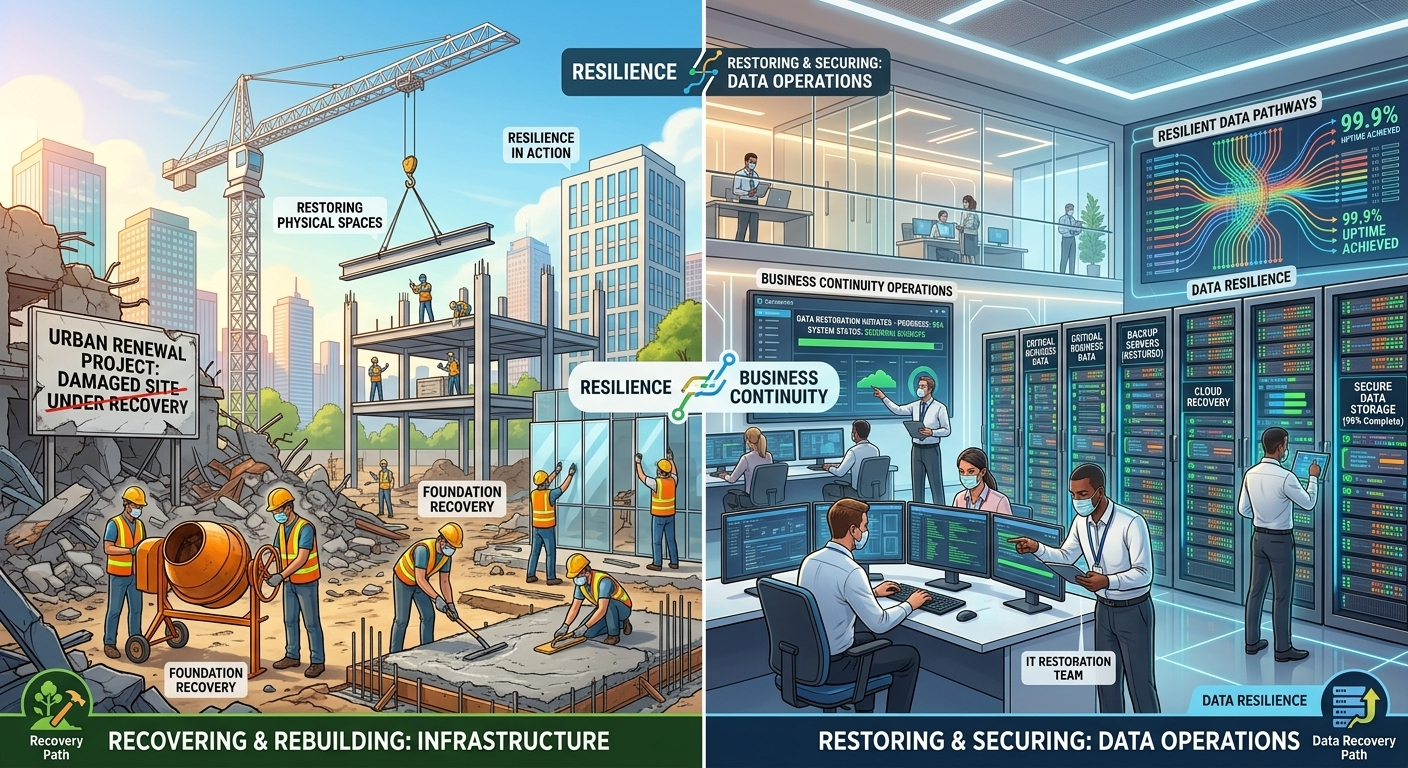
Recovery focuses on restoring normal operations after a disaster.
This phase includes rebuilding infrastructure, restoring services, and supporting affected communities.
Recovery activities include:
- Repairing damaged facilities
- Restoring business operations
- Providing financial and humanitarian assistance
- Rebuilding critical infrastructure
Recovery ensures that communities and organizations return to stable conditions after emergencies.
Disaster Management Plan
A disaster management plan generally includes the following phases:
- Preparedness
- Risk Reduction
- Response
- Recovery
- Mitigation
- Close-Out
These phases ensure that disasters are handled effectively from preparation to recovery.
Disaster Reduction
Disaster reduction focuses on minimizing the impact of disasters through planning and coordination.
Key elements include:
- Time management
- Accuracy in planning
- Effective disaster planning
- Proper implementation of plans
- Effective communication
- Cooperation between organizations
Aims of Disaster Management
The main aims of disaster management include:
- Reducing potential disaster losses
- Supporting effective planning and decision-making
- Achieving rapid and long-term recovery after disasters
Disaster Assessment
Disaster assessment helps organizations evaluate and manage disaster risks.
It includes the following steps:
- Identify Risk – Recognizing possible hazards.
- Assess Risk – Evaluating the probability and impact of hazards.
- Communicate Risk – Sharing information with authorities and communities.
- Mitigate Risk – Implementing strategies to reduce disaster impact.
Risk Assessment in NFPA 1600
Risk assessment is a key element of the NFPA 1600 framework. It helps organizations identify potential hazards and evaluate their impact.
Risk assessment includes several steps.
Identify Hazards
Organizations identify possible threats such as:
- floods
- earthquakes
- fires
- industrial accidents
- cyber threats
Analyze Risk
Each hazard is evaluated based on:
- probability of occurrence
- potential impact
- vulnerability of systems
Develop Risk Reduction Strategies
After identifying risks, organizations implement strategies to reduce or manage them.
Examples include safety protocols, improved infrastructure, and emergency planning.
Benefits of Implementing NFPA 1600
Organizations that adopt NFPA 1600 disaster management programs gain several advantages.
Improved Emergency Preparedness
NFPA 1600 helps organizations develop detailed emergency plans and training programs that improve disaster readiness.
Reduced Operational Risks
By identifying hazards and vulnerabilities, organizations can reduce potential losses and protect critical assets.
Faster Disaster Recovery
Structured recovery planning ensures that organizations can restore operations quickly after disruptions.
Regulatory Compliance
Many industries and government agencies use NFPA 1600 as a benchmark for emergency management programs.
Following the standard helps organizations meet regulatory requirements.
Organizations That Use NFPA 1600
NFPA 1600 is used by many sectors that require strong disaster management systems.
Common users include:
- government agencies
- hospitals and healthcare systems
- transportation organizations
- manufacturing industries
- educational institutions
- corporate enterprises
These organizations rely on NFPA 1600 to improve safety and operational continuity.
NFPA 1600 and Business Continuity
One of the key elements of NFPA 1600 is business continuity planning.
Business continuity ensures that essential services and operations continue even during disasters.
Organizations create continuity plans that include:
- backup systems
- alternative facilities
- data protection strategies
- crisis communication plans
These plans help organizations maintain operations during emergencies.
NFPA 1600 Disaster Management Program Structure
An effective NFPA 1600 program usually includes the following elements.
Program Management
Defines leadership responsibilities and organizational policies for disaster management.
Planning
Develops emergency response procedures and disaster recovery plans.
Training and Education
Ensures that personnel understand their roles during emergencies.
Communication Systems
Establishes communication channels for coordinating emergency response.
Resource Management
Identifies equipment, personnel, and resources required during disasters.
Importance of NFPA 1600 in Modern Disaster Management
Modern societies face increasing risks from natural disasters, climate change, cyber threats, and industrial accidents.
NFPA 1600 provides a structured approach that helps organizations prepare for these challenges.
By implementing this standard, organizations can improve resilience and reduce the impact of emergencies on communities and infrastructure.
Conclusion
NFPA 1600 is one of the most important standards for disaster management and emergency preparedness. It provides a comprehensive framework that helps organizations plan for disasters, reduce risks, respond effectively, and recover quickly.
By adopting NFPA 1600 guidelines, organizations can strengthen their emergency management programs, protect critical assets, and ensure the safety of people and communities during disasters.
Be the first to comment