JSA: Sand Blasting Operation
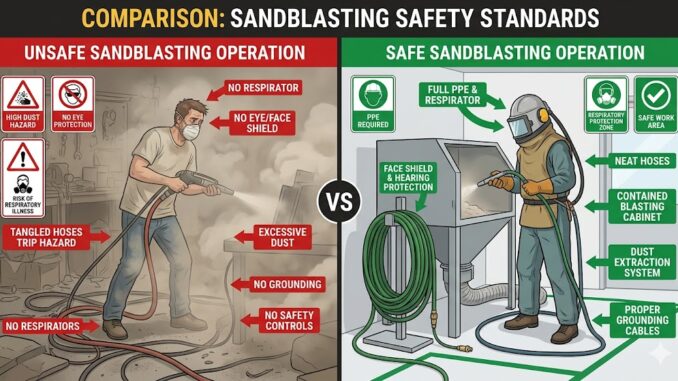
First, implementing a robust JSA: Sand Blasting Operation protects your workforce from severe industrial hazards. Specifically, high-pressure abrasive tasks expose operators to dangerous silica dust, extreme noise, and high-velocity particles. Therefore, construction teams must execute strict control measures to mitigate these risks immediately.
Consequently, safety managers rely heavily on standardized checklists to maintain compliance and prevent accidents resulting in serious injury. Furthermore, integrating these steps with our comprehensive safety procedure templates enhances hazard recognition across complex zones. Additionally, conforming to global compliance frameworks set by OSHA guidelines for abrasive blasting ensures a proactive, legally sound safety culture.
Finally, this article outlines the definitive safety procedure for abrasive operations, including highly searched critical controls like deadman switches, proper abrasive media selection, and grounding protocols. Next, you will find actionable, step-by-step checklists to streamline safe project delivery and secure your hazardous work permits.
Core Operational Safety Checklists
1. Obtain Permit to Work
| Hazards | Risks Issue | Existing Controls Checklist | Risk Reduction Action Plan |
| Untrained personnel. Wrong information or details are written in the PTW. Other activities may not be covered with the PTW. | Accident resulting in serious injury or death to worker. Significant property and appurtenances damage. Loss of production. |
• First, identify the work permit receiver and issuer and issue an appointment letter.
• Furthermore, train and qualify the Permit Issuer and Receiver to guarantee competence.
• Consequently, implement the work permit system properly as per the standard safety work permit procedure.
• Additionally, verify that all activities and safety precautions receive coverage within the work permit. |
• Routine monitoring and compliance |
2. Mobilize Required Materials & Tools
| Hazards | Risks Issue | Existing Controls Checklist | Risk Reduction Action Plan |
| Improper handling of heavy materials. Overreaching of materials. Unorganized or poor storage of materials and supplies. | Muscular injuries including back pain, strain, and fractures. Illness and injuries due to bad ergonomics. Slip, trip, and fall injuries. |
• Specifically, observe the proper storage and segregation of all material supplies at all times.
• Moreover, label storage racks properly for easy identification.
• Next, maintain good housekeeping in storage and working areas to avoid slips, trips, and falls.
• Finally, utilize a trolley or forklift when mobilizing materials from the laydown or store. |
• Routine monitoring and compliance |
3. Execution & Equipment Setup
| Hazards | Risks Issue | Existing Controls Checklist | Risk Reduction Action Plan |
| Exposure to dust and inhalation of dust. Exposure to excessive noise. Unsafe placement of compressor. Static electricity buildup and burst hoses. | Respiratory, skin, and eye injury or ill-health to personnel. Tinnitus or chronic hearing loss. Equipment roll-over hitting people. Fire or explosion from static sparks. |
• First, provide all involved personnel near the equipment with adequate Supplied-Air Respirators (SAR) to limit dust inhalation.
• Furthermore, supply adequate hearing protection that effectively reduces noise to permissible exposure levels.
• Consequently, enforce special personal protective equipment usage, including blast hoods, heavy-duty coveralls, rubber gloves, and clear goggles.
• Additionally, equip all blast nozzles with functional “deadman switches” to automatically shut off flow if dropped.
• Similarly, install whiplash arrestors on all high-pressure industrial hoses to prevent lethal strikes in the event of a hose coupling failure.
• Finally, ground and bond all pipework and equipment to prevent the accumulation of electrostatic charges. |
• Routine monitoring and compliance |
4. Housekeeping and Area Clearance
| Hazards | Risks Issue | Existing Controls Checklist | Risk Reduction Action Plan |
| Tools and materials scattered on the floor. Presence of sharp edges. Inadequate PPE. | Injury due to slips, trips, and falls on the same level. Cuts, lacerations, pinches, and crash point injuries. |
• Specifically, enforce the wearing of appropriate personal protective equipment like coveralls, hand gloves, and eye protection during cleanup.
• Moreover, arrange and remove tools and other excess or unused materials inside the battery room if not in use.
• Next, stage a first aid kit in the vicinity with an adequate quantity of medicines.
• Finally, deploy a spill kit in the area and maintain close supervision by the Engineer, Supervisor, or Foreman. |
• Routine monitoring and compliance |
5. Closing of Permit to Work
| Hazards | Risks Issue | Existing Controls Checklist | Risk Reduction Action Plan |
| Undisposed waste materials. Unaccounted workers. Unsecured or energized electrical equipment. | Accident resulting in serious injury or death to worker. Environmental complaint. Significant cost due to damages. |
• First, direct the Permit Receiver to ensure housekeeping gets done before, during, and after the work.
• Furthermore, properly dispose of all waste materials generated from the work and do not leave them unattended at the worksite.
• Consequently, secure electrical equipment properly, close the distribution board, and deploy a padlock.
• Additionally, account for all workers and confirm that no unreported incident or accident occurred. |
• Routine monitoring and compliance |
Be the first to comment