JSA: Plumbing Construction Safety
Introduction
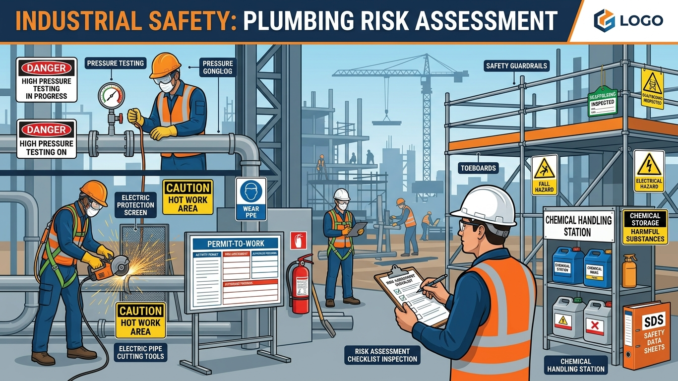
First, plumbing construction safety dictates the baseline for maintaining zero-incident worksites across modern infrastructure projects. Consequently, safety engineering teams must establish clear, actionable guidelines to protect personnel from high-risk scenarios. Furthermore, applying a rigorous Job Safety Analysis proactively mitigates site-specific risks like lacerations, falls from height, and material mishandling. Discover more comprehensive insights in our core guide on Internal Link: Advanced Site Hazard Identification.
Moreover, proactive site supervisors must implement dynamic plumbing construction safety controls daily. Specifically, they enforce strict work permit systems and verify robust personal protective equipment compliance. Additionally, continuous monitoring prevents serious injuries and avoids costly project delays.
Finally, seasoned EHS professionals rely on structured checklists to uphold exceptional safety standards. Therefore, we compiled this detailed operational procedure to help your frontline teams execute complex plumbing tasks flawlessly. For broader regulatory frameworks, review the comprehensive guidelines published by Outbound Link: OSHA Plumbing and Pipefitting Standards.
1. Obtain Permit to Work for Plumbing Construction Safety
| Hazards | Risks Issue | Existing Controls Checklist | Risk Reduction Action Plan |
| Untrained personnel, wrong information, and unidentified hazards. | Accident resulting in serious injury, death, or significant property damage. |
• First, identify and appoint the work permit receiver and issuer utilizing an official appointment letter.
• Furthermore, qualify and train the Permit Issuer and Receiver thoroughly.
• Consequently, implement the work permit system strictly following approved safety standards and procedures.
• Additionally, cover all specific activities and safety precautions within the approved work permit.
• Moreover, complete all necessary information fields required in the permit to work.
• Specifically, utilize the designated specific type of work permit for unique construction activities.
• Therefore, pre-check the workplace to verify it remains free from any obstruction before a combined verification visit.
• Next, display the authorized Permit to Work clearly at the active worksite.
• Finally, mandate that the Permit Receiver oversees the activity without leaving the defined location boundary. |
• Routine monitoring and compliance |
2. Material Handling During Plumbing Safety Tasks
| Hazards | Risks Issue | Existing Controls Checklist | Risk Reduction Action Plan |
| Manual handling, slipping, cutting from sharp edges, and fire hazards. | Hand injuries, strain, shoulder dislocation, fire outbreak, and crushing injuries. |
• First, provide manual handling training emphasizing correct lifting techniques like bending knees and keeping the back straight.
• Furthermore, operate mechanical aids like forklifts and trolleys for transporting heavy pipes.
• Consequently, limit manual lifting weights to below 23 kg per person.
• Additionally, keep all floors clean, dry, and free from obstructions to prevent slipping accidents.
• Moreover, mandate cut-resistant gloves when workers handle sharp materials like metal pipes and fittings.
• Specifically, inspect delivered materials for sharp burrs or jagged edges immediately.
• Therefore, store flammable materials in designated, well-ventilated areas situated far from ignition sources.
• Next, stack materials on firm, level ground securely to prevent hazardous leaning or collapse.
• Finally, inspect stacked materials daily for dangerous shifting or instability. |
• Routine monitoring and compliance |
3. Pipe Cutting and Preparation Safety Controls
| Hazards | Risks Issue | Existing Controls Checklist | Risk Reduction Action Plan |
| Sharp tool injuries, sparks, poor electrical connections, and flying debris. | Personal injury, fire, electrocution, eye penetration, and severe burns. |
• First, operate exclusively sharp, well-maintained tools to reduce the risk of slips during cutting.
• Furthermore, prohibit the use of damaged or makeshift cutting tools strictly.
• Consequently, position an ABC fire extinguisher within immediate reach of the active cutting zone.
• Additionally, secure a Hot Work Permit prior to initiating any spark-producing activity.
• Moreover, utilize double insulated or properly grounded electrical tools exclusively.
• Specifically, mandate safety goggles or face shields rated strictly for impact resistance.
• Therefore, position cutting tools securely facing away from the operator’s body and face.
• Next, inspect erected scaffolding thoroughly using a certified scaffolding inspector before authorized use.
• Finally, secure hand tools securely with appropriate lanyards when teams work at height. |
• Routine monitoring and compliance |
4. Housekeeping for Construction Plumbing Operations
| Hazards | Risks Issue | Existing Controls Checklist | Risk Reduction Action Plan |
| Protruding objects, scattered rubbish, and waste materials lying on the floor. | Musculoskeletal disorder, fire, slip, trip, fall, and hand injuries. |
• First, remove excess materials and store them securely in the designated storage area.
• Furthermore, observe proper body posture during manual lifting, pushing, or pulling.
• Consequently, provide appropriately color-coded waste bins strategically across the site.
• Additionally, enforce strict segregation and proper disposal of used materials.
• Moreover, mandate appropriate personal protective equipment like coveralls, hand gloves, and eye protection.
• Specifically, enforce the ‘use the right tool’ rule consistently.
• Finally, deploy close supervision actively via the assigned Engineer, Supervisor, or Foreman. |
• Routine monitoring and compliance |
5. Closing of Permit to Work Protocol
| Hazards | Risks Issue | Existing Controls Checklist | Risk Reduction Action Plan |
| Poor housekeeping, unaccounted workers, and unsecured energized equipment. | Environmental complaint, serious injury, death, and governmental violation. |
• First, ensure housekeeping protocols are executed perfectly before, during, and after the work.
• Furthermore, close and padlock all electrical equipment and distribution boards securely.
• Consequently, store all chemicals and flammable materials securely within the designated storage at the end of each day.
• Additionally, park all mobile equipment appropriately on a designated equipment laydown zone.
• Moreover, account for all site workers meticulously to confirm no unreported incidents occurred.
• Specifically, execute proper communication protocols reliably between the issuer and receiver.
• Finally, record the task completion by ensuring the permit to work register is completely signed. |
• Routine monitoring and compliance |
6. Advanced Plumbing Construction Safety Hazards (Industry Search Insights)
(Note: Added to address widespread industry search intent regarding common critical plumbing hazards not explicitly covered in the standard site procedure.)
| Hazards | Risks Issue | Existing Controls Checklist | Risk Reduction Action Plan |
| Confined spaces, toxic chemical/asbestos exposure, extreme noise, and pressurized water heaters. | Asphyxiation, mesothelioma, permanent hearing loss, and severe water scalding/explosions. |
• First, test atmospheric air quality rigorously before authorizing entry into any confined trench or enclosed space.
• Furthermore, verify the complete absence of asbestos-containing materials before cutting into older infrastructure.
• Consequently, enforce the mandatory use of high-grade ear protection when operators use noisy electric machinery.
• Additionally, ensure workers review safety data sheets thoroughly before applying any chemical solvents or adhesives.
• Moreover, verify the precise installation of temperature and pressure (T&P) relief valves to prevent superheated water explosions.
• Specifically, route all valve drainage safely to designated exterior locations to eliminate scalding hazards.
• Therefore, maintain water heater factory temperature settings appropriately to prevent Legionella bacteria proliferation.
• Finally, mandate regular safety refresher courses to keep teams updated on evolving plumbing hazard mitigation techniques. |
• Routine monitoring and compliance |

Be the first to comment