
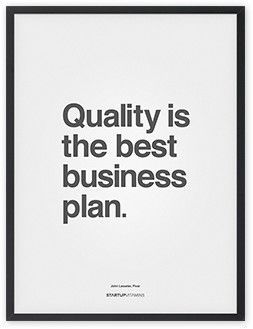
This is an editable policy template for organizations to adapt to their own operations, legal jurisdiction and management system. It is general educational guidance, not a substitute for legal review or your organization’s own risk assessment.
Purpose and Scope
This Quality Policy Statement template gives organizations a starting structure for defining and communicating their commitment to quality. It applies to every department, employee, contractor and supplier involved in producing or delivering the organization’s products or services, from design and procurement through to final delivery and after-sales support.
Document Control
A usable policy needs clear ownership. Record who owns the document (typically the Quality Manager or a designated Management Representative), who approved it, the effective date, and the review cycle — commonly annual, or triggered by a significant nonconformance, audit finding, or change in customer/regulatory requirements. Version history should be kept so changes can be traced over time.
Organizational Commitment
Senior management should state, in plain terms, that the organization is committed to meeting applicable customer, statutory and regulatory requirements, and to continually improving the effectiveness of its quality management system. This commitment should be visible — communicated to employees, referenced in onboarding, and reflected in how resources are allocated.
Customer and Regulatory Requirements
The organization should have a documented process for identifying which customer specifications, industry standards, and legal or regulatory requirements apply to each product or service line, and for confirming that those requirements are met before delivery. This includes tracking changes to relevant regulations over time, not just a one-time check.
Measurable Objectives
Quality objectives work best when they are specific, measurable, and reviewed at planned intervals. Useful examples include: defect or non-conformance rates per batch or project; on-time delivery performance; customer satisfaction or complaint-resolution scores; first-pass yield; and the average time to close a corrective action. Objectives should be revisited at least annually and adjusted as the organization’s risk profile changes.
Responsibilities
Senior management is responsible for providing the resources, training budget, and leadership attention the quality system needs to function. Department heads are responsible for implementing quality procedures within their own teams and for escalating recurring problems. Every employee is responsible for following documented work instructions, using calibrated equipment where required, and reporting nonconformances or near-misses rather than working around them.
Competence and Training
Personnel performing work that affects quality should be competent on the basis of appropriate education, training, or demonstrated experience, and records of that competence should be maintained. New employees and contractors should receive quality-system orientation before beginning unsupervised work, and refresher training should follow any significant process change.
Supplier Quality
Suppliers and subcontractors should be evaluated and selected based on demonstrated ability to meet the organization’s quality requirements — not price alone. Ongoing performance should be monitored through incoming inspection results, delivery performance, and periodic supplier audits or scorecards, with a documented process for addressing repeated supplier nonconformances.
Nonconformity and Corrective Action
When a product, service, or process fails to meet requirements, it should be identified, contained, and corrected before further use or delivery. Root-cause analysis — not just symptom-fixing — should drive the corrective action, and the effectiveness of that action should be verified after implementation to confirm the problem does not recur.
Audits and Management Review
Internal audits, conducted at planned intervals by people independent of the area being audited, verify whether the quality management system is actually being followed and whether it remains effective. Findings feed into a periodic management review, alongside customer feedback, audit results, and performance data, so that senior leadership can drive continual improvement with current information rather than assumptions.
ISO 9001 Context
This template follows the general structure used by ISO 9001, the internationally recognized standard for quality management systems. Organizations pursuing or maintaining ISO 9001 certification should verify their policy and procedures against the current published edition of the standard, since requirements and clause numbering can change between revisions.
Approval
Approved by: [Name, Title] Date: [DD Month YYYY] Signature: [_______________]
Continual Improvement
A quality policy is not a static document. Trends from audits, customer complaints, corrective actions, and process performance data should be reviewed together on a recurring basis to identify systemic opportunities for improvement, not just isolated fixes. Organizations that treat this as a genuine feedback loop — rather than a compliance exercise — tend to see steadier gains in defect rates and customer satisfaction over time.
Related Documents
This policy typically sits alongside a quality manual, documented procedures for key processes (design control, purchasing, inspection, corrective action), work instructions for specific tasks, and quality records demonstrating conformity. Organizations should reference their own document-control system for the current, approved version of each.
Common Pitfalls
Organizations often draft a quality policy once and never revisit it, letting it drift out of step with actual practice. Others set objectives so vague (“improve quality”) that no one can tell whether they were met. A usable policy avoids both traps: it is reviewed on a set schedule, and every objective has a number attached to it.



1 Trackback / Pingback